




In England, there are 55 cities. Apart from the 496,700 citizens and 232 mostly great pubs what makes Liverpool so special? But there cannot be many Liverpool pubs named in honour of their landlord/landlady.
Peter Kavanagh’s on Egerton Street is one and Ma Egerton’s on Pudsey Street is another. Dublin-born Mary Egerton came to Liverpool in the 1890s and managed the American Bar in Lime Street before taking over The Eagle in Pudsey Street, behind the Empire Theatre.
Her bar became the favourite watering hole for the world’s best and most loved entertainers. Mary became friends with many, including Charlie Chaplin, Laurel and Hardy and, later, Judy Garland.
Built in 1846, Ma Egerton’s is named after the pub’s longest-serving landlady, Mary Egerton. who ran the pub from the 1930s. It was formerly called The Eagle. The bar stayed in the Egerton family until the 1960s.
In the first half of the twentieth century, the Lime Street area of Liverpool revelled and often outshone London’s West End and Piccadilly Circus.
This world-famous corner of the Maritime city was stuffed with theatres, cinemas, pubs, the world-class Adelphi Hotel, and the Hanover pub with the longest bar in England. Indeed, scores of places of entertainment
Situated behind the Empire Theatre which boasts Britain’s largest stage, Ma Egerton’s was a renowned theatrical hub. As well as running various pubs in Liverpool, Mrs Egerton was a registered theatrical agent and entertained many of the visiting performers who were working in the city.
These real and legendary celebrities included Frank Sinatra, Roy Rogers, Judy Garland, Sammy Davis Jr, Tom Jones, Charlie Chaplin, Laurel and Hardy and Harry Houdini. Ma’s is still a favourite haunt of performers from stage and screen.
Ma Egerton’s was also the very first place in the UK to use a cash register. An American salesman had docked in Liverpool. He made his first sale here in this pub with a new machine then called the Incorruptible Cashier.
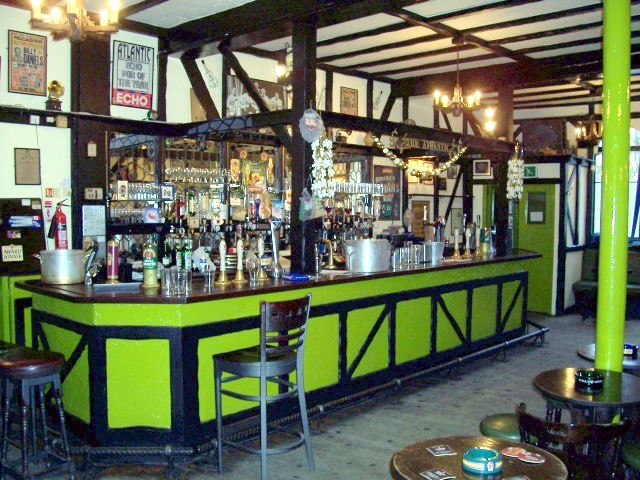
LEFT. Interior Atlantic Pub. Sandhills.
At Ma Egerton’s, barmaids were not allowed to handle cash and give change; Ma would perch on a barstool during busy times alongside the till with the barmaids handing her the money to ring through and work out the change. One of her claims to fame is that her observation led to the arrest of the infamous Dr Crippen.
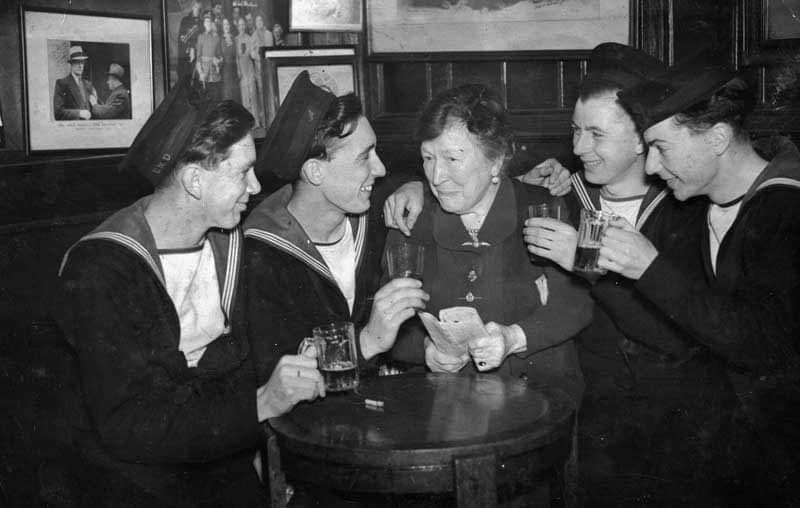
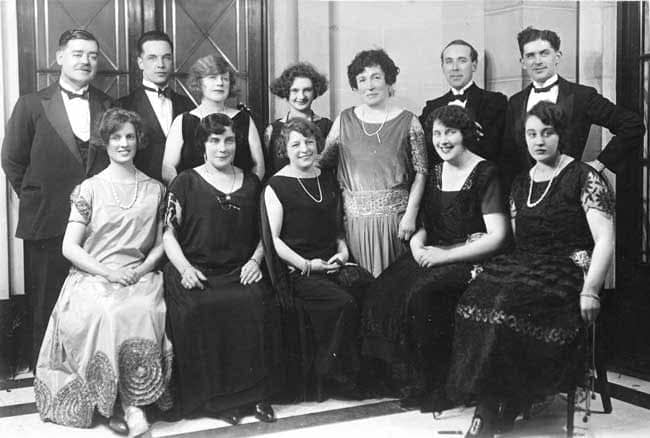
But first to the photographs. The top image is of an older Ma enjoying the company of visiting sailors. The bottom photograph is of her in the company of visiting performers including her friend Marie Lloyd (seated with a black dress with pearls, Ma is standing next to her).
Marie was a superstar of her time, a bawdy singer whose use of double-entendre thrilled audiences yet shocked the moralists.
A typical song line ‘I sit among the cabbages and peas’ outraged her critics. So, she agreed to change the line to ‘I sit among the cabbages and leeks’ to even greater audience approval.
A strong supporter of workers’ rights, Ma Egerton was at the forefront of a strike by theatre workers for better pay. Picketing outside a London theatre, her attention was drawn to a young actress, Belle Elmore, crossing the strike line.
‘Don’t worry about her, she will empty the theatres faster than us’ Marie shouted .. and here the story of the top photograph unfolds.
Belle Elmore was married to Dr Crippen and less than three years later she was murdered and dismembered by her husband, who took up with his lover, Ethel le Neve.
At some point after the murder, Ma Egerton visited London, where she came across the evil Dr Crippen, who was an old friend. She noticed that Ethel le Neve was wearing his murdered wife’s jewellery. Her suspicions aroused; Ma Egerton contacted the police.
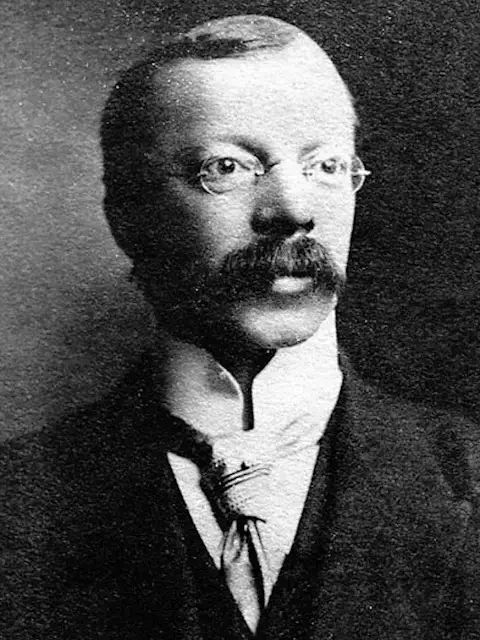
Crippen realised that he was under threat of being exposed. He fled to Belgium with Ethel le Neve, where they boarded SS Montrose which was bound for Canada.
To cover their tracks, le Neve dressed as a young man. Unfortunately for the pair, the SS Montrose was one of the first ships to have the newly invented Marconi wireless installed. The ship’s captain, suspicious of the couple who were seen holding hands, contacted his base, who in turn called in Scotland Yard. Dr Crippen was arrested on arrival and returned to Britain where he was tried and hanged.
The question asked where did she live, when did she die and where is she buried/laid to rest? For such a prominent figure in the city’s history, these last pieces of information seem near impossible to find – it was easier to find Dr Crippen. INTERESTING? WHY NOT SHARE OUR STORY?

A SEA VENEER OF LIVERPOOL Michael Walsh republishes his 1998 best-selling collection of lyrical tributes to the extraordinary ordinary people of Liverpool. Their talent poured from little terraced homes and took the world by storm. In one illustrated volume the Bard of Liverpool raises the nostalgic parting glass to a disappearing age. LINK TO BOOK → LULU.COM AMAZON.CO.UK
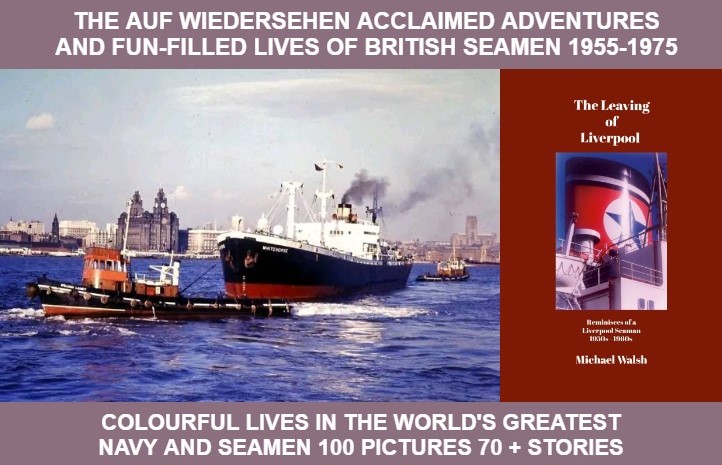
THE LEAVING OF LIVERPOOL ex-Liverpool seaman Michael Walsh, regular television, radio and newspaper personality. Bestseller: 70 stories and over 100 pictures. A first-hand account of the British ships, seafarers, adventures and misadventures (1955 – 1975). A tribute to the ships and seamen of the then-largest merchant marine in history. BOOK LINKS AMAZON https://tinyurl.com/329wa4eh LULU https://tinyurl.com/3kuja2s5

Share this:

Categories: Art and Culture, Sea Stories



 Michael Walsh Stories and Books