




In 1939, in the rural heart of Wilkes County, North Carolina, Miss May Brown’s life mirrored the harsh conditions faced by many families during that era.
At 30 years old, Miss Brown’s existence was centered around her ageing parents and their small rented homestead – a one-acre plot that was both their livelihood and their greatest burden.
The Browns relied on this land to grow corn and potatoes, essential crops that Miss Brown tended with her own hands.
The landowner received one-third of their harvest as rent, a customary but heavy price to pay, leaving the Browns with just enough to scrape by – though ‘enough’ was a relative term in the tough economy of rural North Carolina.
A PENSION OF $7 A MONTH
Miss Brown’s father, aged 60, received a pension of merely $7.00 per month. This small sum, though meager by any measure, was a critical component of the family’s survival.
Meanwhile, Miss Brown’s mother, bedridden and ailing for five long months, required constant care. The Browns had no means to afford medical help; such luxuries were a distant reality for them.
Despite their poverty, Miss Brown found a way to supplement her father’s pension by engaging in tobacco bag stringing, a home-based occupation that added a vital $2.00 a month to their income.

Though a seemingly insignificant amount, it made all the difference to the Browns, providing them with the barest margin of security.
HOLDING ON BY A STRING
For over fifteen years, Miss Brown had diligently tied drawstrings to small cloth bags used by tobacco companies to package their products.
This painstaking task was not only a source of income but a lifeline that allowed her to remain close to home and care for her ailing parents.
As the demand for these bags declined, so too did Miss Brown’s ability to earn even this modest income. When the stringing work was finally discontinued, it threatened to unravel what little stability remained in the Brown household.
DAILY STRUGGLES

Their one-room home was more than just cramped; it was a place where everyday challenges intersected with their most intimate struggles.
It was untidy out of necessity, having to serve multiple purposes for a family unable to afford the luxuries of space or time. Miss Brown’s parents, confined by age and illness, were unable to assist in maintaining their modest home.
The Browns lived without many conveniences taken for granted today—indoor plumbing, running water, and electricity were all beyond their reach. Essentials like flour were often obtained on credit, thanks to the occasional generosity of their local storekeeper.
RESILIENCE
Despite these hardships, Miss Brown’s resilience and unwavering dedication to her family were their sole defense against complete destitution.
She was their caretaker, provider, and protector. The demands of caregiving left her with no realistic opportunities for outside employment, making the loss of her tobacco bag stringing income an almost insurmountable blow.
Yet, Miss Brown’s determination to shield her family from the worst of poverty never wavered, even as their situation grew increasingly dire.
THE GREAT DEPRESSION
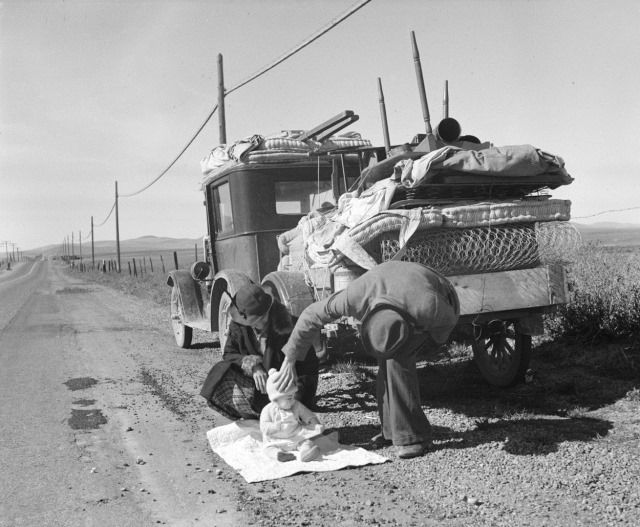
The story of Miss May Brown and her family offers a glimpse into the unforgiving reality of rural life in 1939, during the waning years of the Great Depression.
During this period 7 million Americans and a similar number of Europeans died by diseases directly or indirectly caused by malnourishment or starvation.
It illustrates the vulnerability of families left to fend for themselves in a world where social safety nets were minimal or nonexistent. For the Browns, survival hinged on Miss Brown’s tireless work and their reliance on the thin threads of community goodwill.
ALONE AGAINST THE WORLD

The Browns’ tale is not unique—it represents the unspoken struggles of many families in rural America, far removed from the bustling cities and the New Deal programs that seemed distant and out of reach.
For Miss May Brown, the cessation of tobacco bag stringing was not just the loss of a job; it was the loss of a vital lifeline in a world already stacked against her.
The Browns’ story is a reminder of the resilience found in those who persevered despite the odds, a testament to the quiet strength of individuals like Miss Brown who carried their families through the hardest of times. HELP OTHERS THROUGH HARD TIMES BY SHARING OUR STORIES

DEBTOR’S REVENGE Michael Walsh. The ultimate easy-to-use guide shows you how to write off your debts including your mortgage, keep your job and family and possessions and make a debt-free fresh start. Suitable for UK buyers. Available LULU but late January for Amazon. CLICK LINK https://www.lulu.com/account/projects/57v76mn


Share this:

Categories: Family & Parenting



 Michael Walsh Stories and Books