




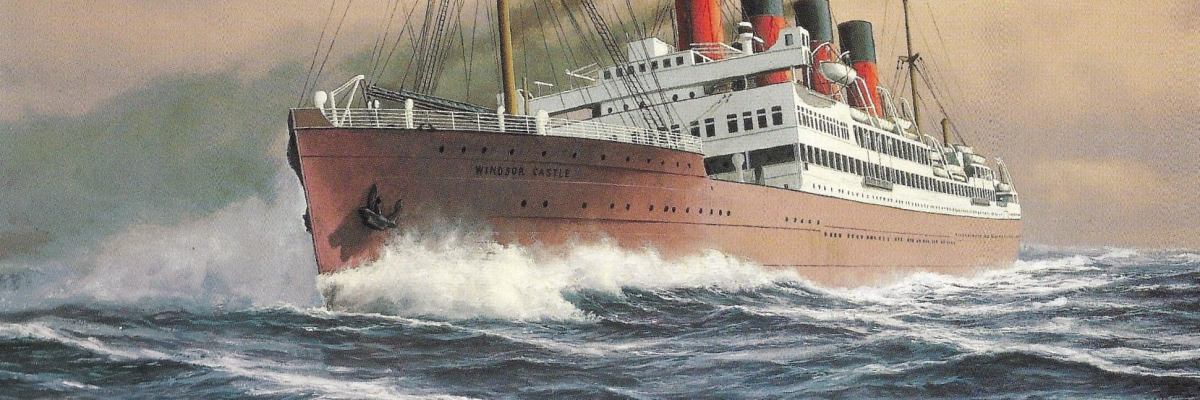

Historically, the RMS (Royal Mail Ship) designation was given to merchant ships that carried mail under contract with the British Royal Mail.
This designation signifies not only the ship’s role in transporting mail but also its adherence to specific standards of safety and efficiency.
Historical Significance
- Origins: The RMS designation dates back to the 19th century when steamships began to dominate transatlantic travel. Ships like the RMS Titanic, Olympic, Britannic and RMS Mauretania became famous for their luxury and speed, playing a vital role in connecting Britain with its colonies and the Americas.
Remember, long before the onset of the internet (1983) and even radio communications (1901) all communication was by what we now call snail mail; even mail – very little of it was transported by air.
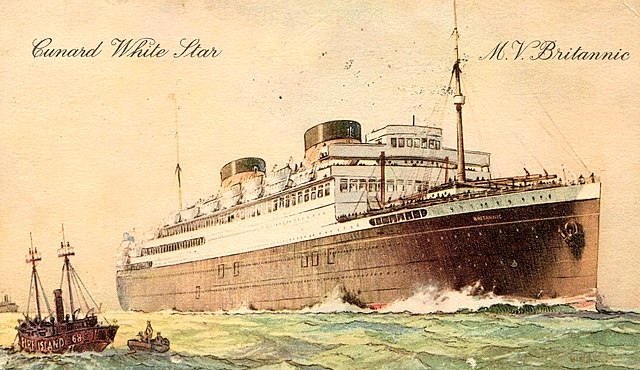
These dates are also irrelevant; when in the 1960s my generation sailed the high seas to all points of the compass letters and postcards were the only means of communicating with families back home.
When merchant ships reached the Persian Gulf, Japan and the Far East, the North and South Americas and Australia and New Zealand, ship crews eagerly waited for the shipping agent to bring on board the mail posted many weeks before in the United Kingdom.
2. Transport of Mail: Ships designated as RMS were contracted to transport mail, which was a significant part of their operation. This service was critical for maintaining communication between the UK and other countries, especially during the era of rapid global expansion.
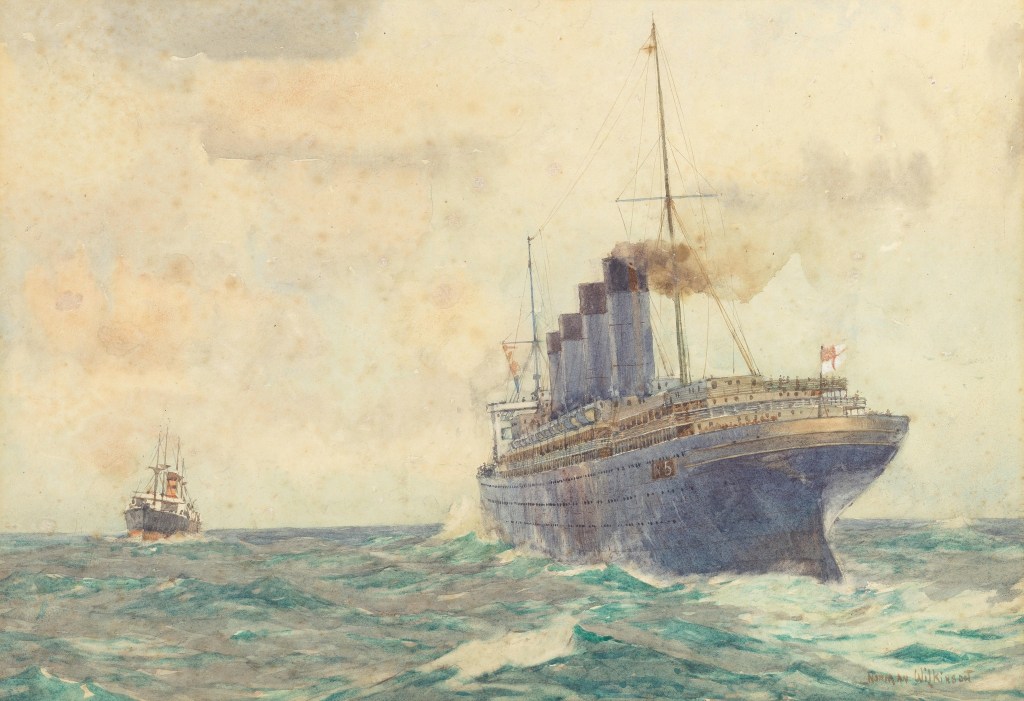
3. Luxury Travel: Many RMS vessels were equipped with luxurious amenities, catering to wealthy passengers. These ships often featured grand dining rooms, elegant lounges, and well-appointed cabins, making them popular choices for transatlantic crossings.
Notable RMS Ships
RMS Titanic: Perhaps the most famous ship to carry the RMS designation, Titanic was launched in 1912 and tragically sank on her maiden voyage. She was celebrated for her luxurious accommodations and advanced safety features.
RMS Mauretania: Launched in 1906, the Mauretania held the Blue Riband for the fastest transatlantic crossing for many years and was known for her speed and luxury.
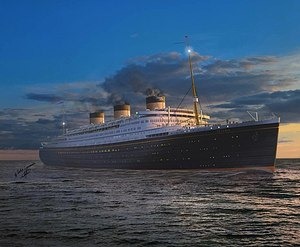
RMS Queen Mary: Entering service in 1936, the Queen Mary became a symbol of luxury and style, serving both as a passenger liner and a troopship during World War II.
Legacy
The RMS designation is a reminder of a golden age of maritime travel, characterized by elegant ships that played a crucial role in global communication and trade. Although the use of the designation has declined with the rise of air travel and changes in maritime regulations, the legacy of these ships endures in popular culture and maritime history.

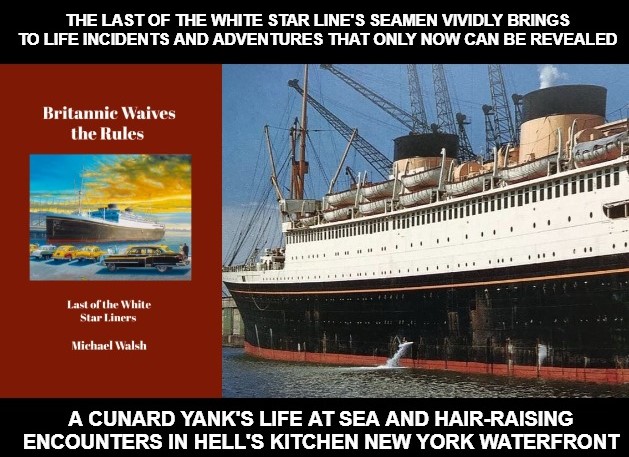
BRITANNIC WAIVES THE RULES The last White Star Liner (1845-1960) by Michael Walsh. In 68 lavishly illustrated stories the company’s last deckboy vividly recalls shipboard life. The liner’s colourful characters and jaw-dropping incidents both on board and in New York’s notorious Hell’s Kitchen. A unique collector’s item. LINK TO BOOK https://tinyurl.com/42zns8n2
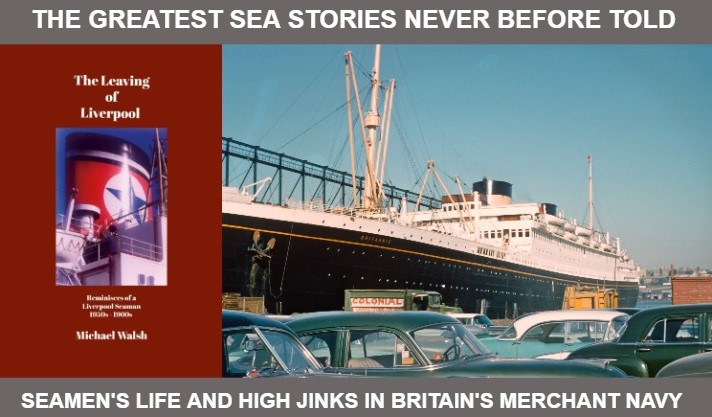
A NEW WAY OF READING – YOU BECOME PART OF THE STORY https://michaelwalshwriter.com/bookstore/

Share this:

Categories: Book Reviews, Sea Stories






 Michael Walsh Stories and Books