




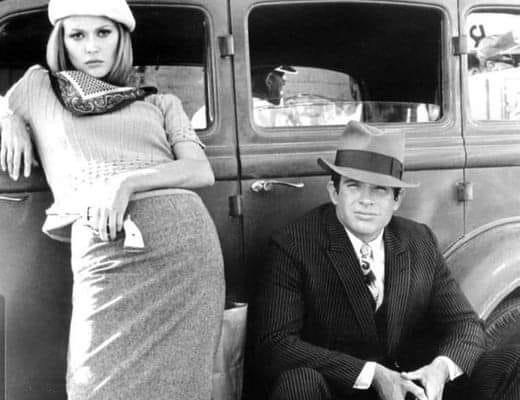


What are some of the movies that claimed to be based on true stories but were actually completely made up or fictionalized? There is a big problem with Arthur Penn’s iconic 1967 crime drama Bonnie & Clyde.
Based on the lives and exploits of real-life 1930s outlaws Bonnie Parker and Clyde Barrow, Penn’s movie portrayed the two as misunderstood, alienated, joyriding young people attempting to scratch out a living in the depression-era Southwest. Not unlike a distant, more stylish branch of the noble Joad family from Steinbeck’s The Grapes of Wrath.
In reality, to refer to Bonnie and Clyde as cold-blooded murderers doesn’t even begin to describe the pair. By all appearances, Clyde Barrow actually enjoyed killing people, particularly lawmen (he murdered nine policemen in all). And over time, Bonnie seemed to grow to enjoy killing too.
In real life, Bonnie and Clyde were incontrollable and lived like animals. Unlike the fashion plates depicted in the film, the two mostly wore clothes stolen from backyard clotheslines, ate stolen food, drove stolen cars, slept in the woods, and bathed, if at all, in rural woodland streams. Bonnie’s teenage sister rode along with the Barrows for a while, giving the whole gang the crabs. Yes—really.
As stupid and inept as they were bloodthirsty, Bonnie and Clyde mostly stuck up gas stations and small rural grocery stores and left banks alone as too challenging.
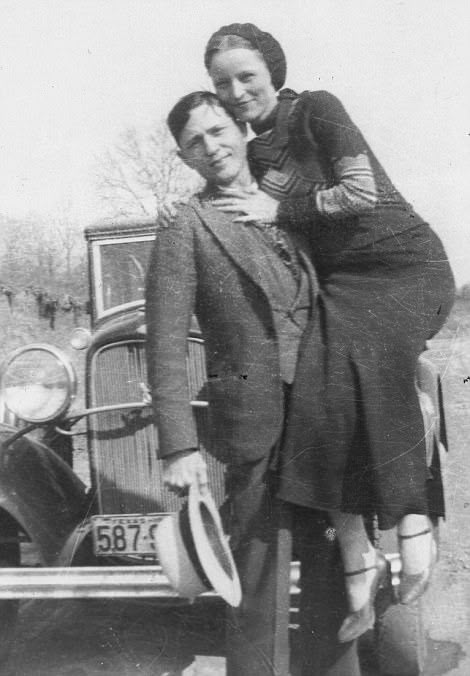
They rarely walked away from a holdup with more than ten or twenty bucks in cash, and usually much less. When a gang member was wounded in a shootout with the law, he was left behind, abandoned and forgotten by Bonnie and Clyde.
On the rare occasions when they could scrape together enough money to rent a motel room or cabin for a day or two, the Barrow gang’s loud, drunken parties would inevitably disturb their neighbors. And when the police would be called, there’d be a bloody melee and a new addition or two to the gang’s body count.
When compared with other outlaws of the time, even career criminals like Charles Floyd, Alvin Karpus, and John Dillinger would write letters to newspaper editors to disassociate themselves from the Barrow gang.
Like the child murderer in Fritz Lang’s ‘M,’ Bonnie and Clyde were pariahs even among professional criminals.
Frank Hamer, the former Texas Ranger charged with apprehending the couple, was genuinely successful at hunting criminals. A Texas native practically born with a rifle in his arms, as a boy Hamer had hunted game animals both small and large on the vast, open plains of the American West.
A figure who could’ve stepped from the days of Doc Holliday and Wild Bill Hickock, Frank Hamer would compare the habits of the criminals he pursued as an adult to the instincts of animals he’d hunted as a boy, and he’d imagine the outlaws as those animals. Based on the behavior and habits of the Barrow gang, Hamer thought of Bonnie and Clyde as coyotes.
Far from the backwoods buffoon depicted in the 1967 movie, Hamer was methodical, intelligent, and relentless. Following the trail of blood-splattered carnage left in the wake of the Barrow gang, Hamer at some point made the practical judgment that Bonnie and Clyde couldn’t be captured alive.
In the end, Hamer’s extermination of Bonnie and Clyde undoubtedly saved many, many more lives than the two that were ended that day. And yes – the other lawmen present confirmed that Hamer made at least an effort to capture the couple alive.
But when Barrow reflexively moved for his gun, the Rangers opened fire and kept shooting until the outlaws were plainly beyond defending themselves.
Louisiana police officer Prentiss Morel Oakley fired the first shot, likely before Hamer gave the order to begin shooting. Oakley’s bullet impacted Clyde Barrow in the side of the head, killing him instantly. At the time, Clyde Barrow was 25 years old.
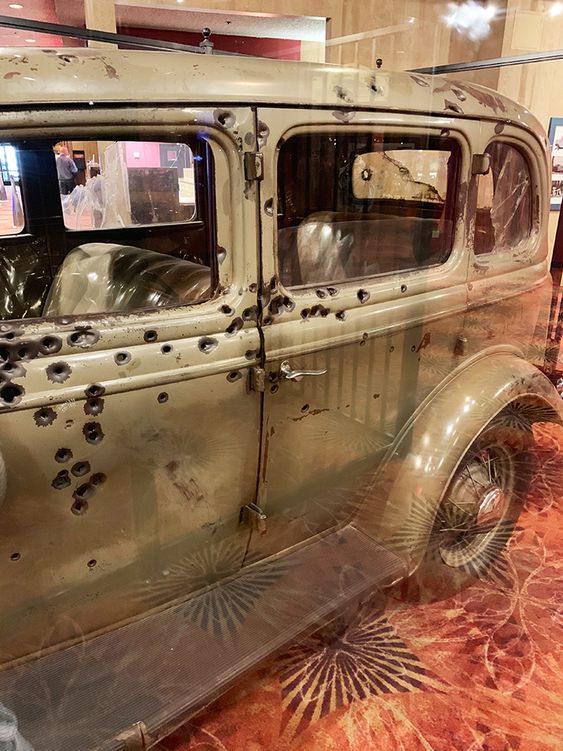
The six officers fired a total of 130 rounds, each emptying their firearms. Of the 130 shots fired, 112 bullets impacted the Ford V8 automobile the couple were driving, and about one-quarter of the shots struck either Bonnie or Clyde.
There were 17 entrance wounds on Barrow’s body and 26 on Parker’s, including several bullet wounds to each of their heads. One bullet was found to have severed Barrow’s spine.
Bonnie Parker was slumped forward, her head between her knees, clutching a Thompson submachine gun in her right hand. Her left hand had been severed from her wrist by bullets. At the time of her death, Bonnie Parker was 23 years old.
Undertaker C.F. ‘Boots’ Bailey professed difficulty embalming the corpses of the two criminals because of the unusual number of bullet wounds in the bodies: The embalming fluid would drain onto to funeral home’s steel embalming table almost as quickly as it was administered.
The real heroes of the sordid story of Bonnie and Clyde weren’t the romantic, iconoclastic youths depicted in Arthur Penn’s hysterically misleading 1967 movie.
Rather, the real heroes of the day were Frank Hamer and the police officers and Texas Rangers who hunted down the Barrow gang and ended their murderous rampage through the southwestern countryside. PLEASE SHARE OUR STORIES

RETRIBUTION A Liverpool-based city-vigilante thriller more gripping than Death Wish by Michael Walsh award-winning novelist. ‘Retribution is the greatest movie never made’ ~ William Housman. ‘An excellent thriller written in the tense style of a John Le Carre spymaster novel’ ~ Brian Smyth. LINK TO BOOK https://feji.us/rg214o
A NEW WAY OF READING – YOU BECOME PART OF THE STORY https://michaelwalshwriter.com/bookstore/


Share this:

Categories: Myths & Legends



 Michael Walsh Stories and Books