




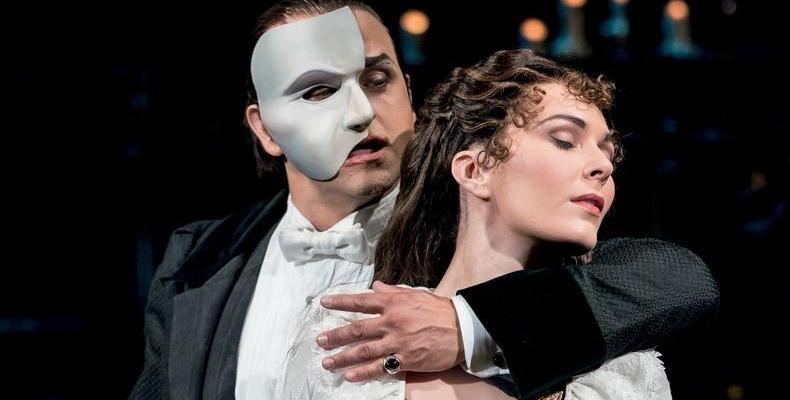

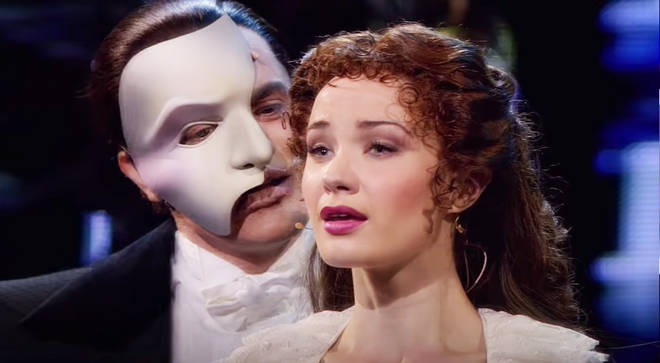
Is The Phantom of the Opera based on a true story? Yes and no — the plot of The Phantom of the Opera is fictional but parts are inspired by true stories and legends.
While everything in the musical did not actually happen, many elements of the show and which the novel it’s based on are taken from real stories of what happened at a Paris opera house.
For example, there was actually a devastating chandelier accident, and there are many rumors of a ghostly presence haunting the theatre.
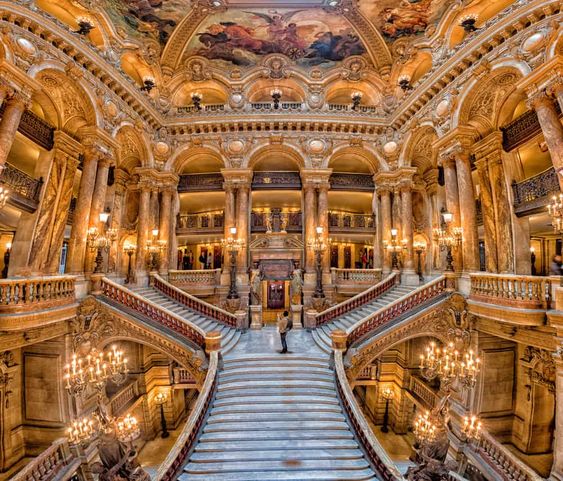
The Act 1 finale, during which a one-ton chandelier comes crashing down onto the stage, is one of the most iconic moments in The Phantom of the Opera musical. It’s thrilling to watch live, and it was inspired by a real tragedy at the Palais Garnier.
Contrary to popular belief, though, it wasn’t actually the chandelier that fell. On May 20, 1896, a performance of the opera Helle was underway when a counterweight, one of multiple which held the chandelier up, broke loose and fell through the ceiling.
One person was killed, and several others were injured. Forensic investigators later said a nearby electrical wire probably overheated and melted the steel cable holding up the counterweight, causing its fall.
In The Phantom of the Opera book and musical, the Phantom cuts the whole chandelier loose during the curtain call of the opera Il Muto, to exact revenge on Christine for falling in love with Raoul instead of him. Luckily, no one in the musical dies from the crash.
The Paris Opera House really has an underground lake. Yes, the Palais Garnier actually has an underground lake. In the Phantom musical and book, the lake is the centerpiece of the Phantom’s lair. A feat of theatrical magic transforms the Broadway stage into the lake, on which the Phantom and Christine ride on a canoe amid the mist, as he sings the music of the night.

The legend goes that a faceless man (and some fish) once lived in the lake. Leroux heard the rumor and ran with it. In reality, the lake looks more like a drain and has a much more practical purpose: keeping well and steam pump water away while the opera house foundation was being built.
The only occupants of the ‘lake’ as of late are a single white catfish (the opera house staff’s unofficial pet) and French firefighters, who practice swimming in the dark there. We wonder if they’ve ever heard music coming from seemingly nowhere while doing so.
The many legends that inspired the Phantom are shrouded in as much mystery as the character himself. One story goes that in 1873, a stage fire destroyed the Paris Opera Company’s old venue, the Salle Le Peletier. (That part is true.)
A ballerina died and her fiancé, a pianist, was disfigured. Legend has it that he retreated to the underground of the Palais Garnier, the company’s new venue, and lived there until he died. Is he the same faceless man who supposedly lived in the lake? That’s uncertain, but it’s clear how these legends inspired the Phantom’s appearance and living situation in Leroux’s book.
Another rumor that inspired Leroux is the story of a ghost who haunts the Palais Garnier. Not only did the tale inspire him, but Leroux became obsessed with proving that the ghost was real.
In the prologue to The Phantom of the Opera novel, he talks about the mysterious disappearance of one Vicomte de Chagny, who disappeared to Canada for 15 years without a trace. When he finally returned to Paris, he immediately went to the Palais and asked for a free opera ticket.
Leroux goes on to claim that Chagny and his brother were fighting over Christine Daaé (a fictional character), insinuating that a ‘tragedy’ happened between the two.
Since the Vicomte is clearly the inspiration for Christine’s childhood friend and lover, Vicomte Raoul de Chagny, in Leroux’s novel, it appears he believed the brother is the ghost, who was killed in some sort of tussle and now haunts the shadowy corners of the Palais Garnier. Though the ghost’s presence is hearsay, Leroux firmly believes the ghost is real.
He also claimed that a body was unearthed below the Palais Garnier, which belonged to the would-be ghost and proved his story. The fact that the revolutionary French Commune government used the Palais basement to hold prisoners is a somewhat more likely explanation for the body.
After all that, it’s almost ironic that the titular character of The Phantom of the Opera isn’t an actual ghost, but he kept the name ‘The Phantom’ for his otherworldly, ghostly presence.
Andrew Lloyd Webber wrote Christine Daaé based on his real love story.
Christine Daaé is a fully fictional character, but some researchers say she was inspired by Christina Nilsson, a Swedish soprano who enjoyed a 20-year career as an acclaimed international opera singer.
What’s certain is that Webber’s real-life romance inspired how he’d adapt Christine’s character for the musical 70 years later. When he was writing The Phantom of the Opera, Webber was married to Sarah Brightman, a classical soprano whom he’d met and married after she starred in his musical Cats in the West End.
He wrote the role of Christine for Brightman, composing the character’s songs to fit her vocal range. After she originated the role in the West End, Webber naturally wanted Brightman to do so on Broadway, too.
The Actor’s Equity Union refused at first, saying he should cast an American actor and that international Broadway leads had to be major stars. But love conquered all, Webber insisted, and he came to a compromise with Equity that he’d cast an American lead in his next London production. Webber and Brightman eventually divorced, but her influence on the role remains forever. PLEASE SHARE OUR STORIES ON SOCIAL MEDIA

THE ENIGMA OF TIFFANY Michael Walsh Award-Winning Writer. The elegant and glamorous Tiffany is a rich widow with a shady and shocking past when she meets Gareth, Leonara and Felicity holidaying on the Spanish Riviera. But who is Tiffany and Pegasus her gay partner? A romantic comedy with an ending that has you reaching for your Kleenex. A reader writes, ‘I thoroughly enjoyed it.’ There is girl talk, excitement, revelations, dilemmas, compromises, romance, and pathos. LINK TO BOOK https://feji.us/i3410s


Share this:

Categories: Music Notes



 Michael Walsh Stories and Books