






‘The past is a foreign country: they do things differently ‘The past is a foreign country: they do things differently there.’ (L. P Hartley: The Go-Between)
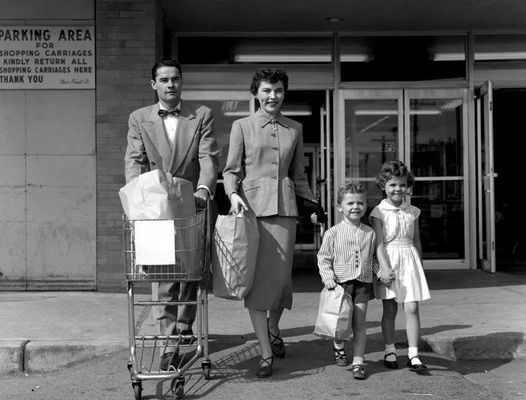
In the 1950s, an American family walking out of a supermarket, pushing a grocery cart filled with goods. The image captures and it encapsulates the essence of post-war American and European life to some extent.
This era was marked by significant social changes, with families increasingly relying on supermarkets as the primary source for their groceries.
The convenience of one-stop shopping became a staple in many households, reflecting the growing consumer culture and the rise of the middle class.
As families ventured out to these stores, they embraced the modernity of the time, enjoying the availability of a wide array of food products and household items, all in a vibrant, bustling environment.
The grocery cart itself became a symbol of family life during this decade. Designed for practicality, it was often filled with essentials like fresh produce, dairy products, canned goods, and various treats that reflected the tastes and preferences of the era.
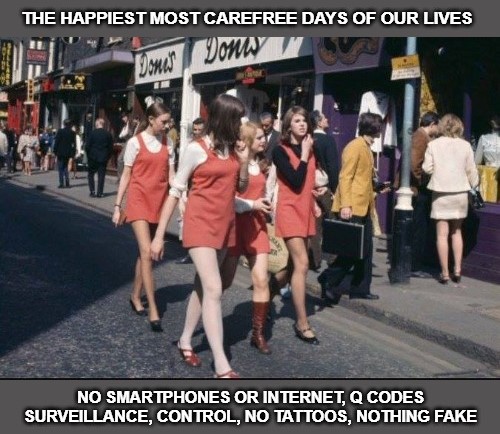
Families typically dressed in their best, showcasing the post-war optimism that characterized the period. Children would often accompany their parents, adding an element of joy and togetherness to the shopping experience.
The scene illustrated not just a routine chore but also a family outing, where parents taught their children about budgeting and making choices while fostering a sense of community and connection.
Supermarkets in the 1950s were also beginning to adopt modern marketing techniques, with brightly colored packaging and promotional displays designed to attract customers.
This shift not only transformed the shopping experience but also influenced the way families approached meal planning and consumption.

The image of the family walking out of the store smiles on their faces and a cart brimming with groceries, captures a moment in time that reflects the simplicity and happiness of family life during the 1950s, emphasizing the role of supermarkets in shaping social dynamics and everyday routines in post-war America.there.’ (L. P Hartley: The Go-Between)
In the 1950s, an American family walked out of a supermarket, pushing a grocery cart filled with goods. The image captures and it encapsulates the essence of post-war American and European life to some extent.
This era was marked by significant social changes, with families increasingly relying on supermarkets as the primary source for their groceries.
The convenience of one-stop shopping became a staple in many households, reflecting the growing consumer culture and the rise of the middle class.

As families ventured out to these stores, they embraced the modernity of the time, enjoying the availability of a wide array of food products and household items, all in a vibrant, bustling environment.
The grocery cart itself became a symbol of family life during this decade. Designed for practicality, it was often filled with essentials like fresh produce, dairy products, canned goods, and various treats that reflected the tastes and preferences of the era.
Families typically dressed in their best, showcasing the post-war optimism that characterized the period. Children would often accompany their parents, adding an element of joy and togetherness to the shopping experience.
The scene illustrated not just a routine chore but also a family outing, where parents taught their children about budgeting and making choices while fostering a sense of community and connection.
Supermarkets in the 1950s were also beginning to adopt modern marketing techniques, with brightly colored packaging and promotional displays designed to attract customers.
This shift not only transformed the shopping experience but also influenced the way families approached meal planning and consumption.
The image of the family walking out of the store smiles on their faces and a cart brimming with groceries, captures a moment in time that reflects the simplicity and happiness of family life during the 1950s, emphasizing the role of supermarkets in shaping social dynamics and everyday routines in post-war America.

THE DOVETAILS HOTEL A charming romantic and risqué comedy that dares to discover the taboo pleasures of a ménage a trois relationship. Michael Walsh award-winning novelist amusingly reveals the amorous love lives of Gareth and his two attractive lady friends who are happy to share more than just friendship with the debonair novelist. CLICK LINK TO BOOK https://feji.us/fkd67l

THE BEST BOOKS ARE JUST A CLICK AWAY
Share this:

Categories: Family & Parenting





 Michael Walsh Stories and Books
1 reply »