




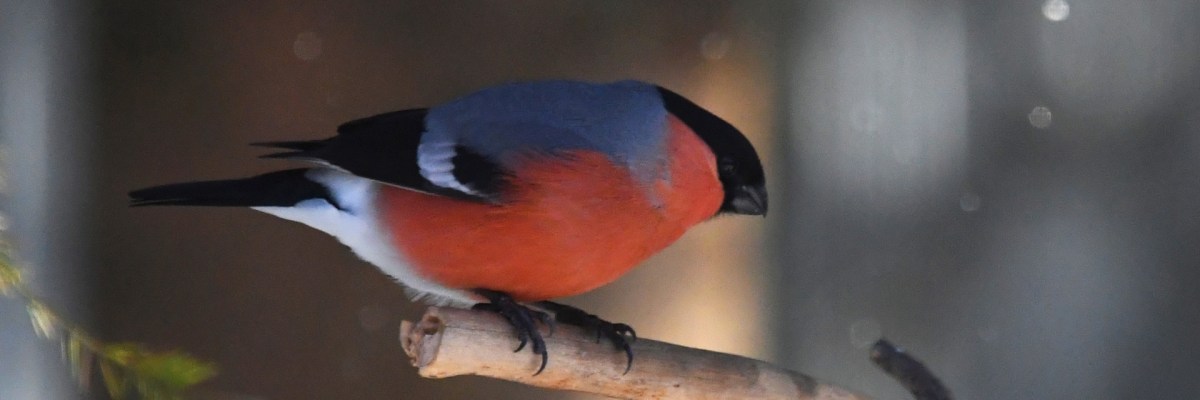
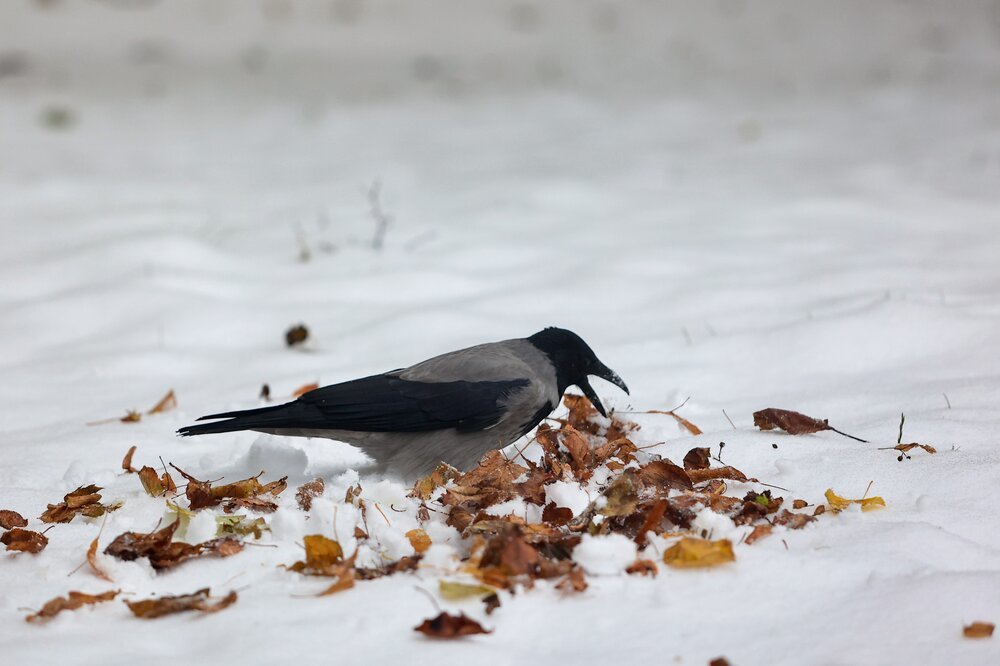
Birds from the forests flock to cities in search of food an ornithologist on the proper feeding of birds in winter. The biologist talks about the reasons for the decline in the number of bullfinches and sparrows
Many bird species are in dire need of human support in winter, especially if other food sources become unavailable to the animals. Birds should be fed with food suitable for them and regularly, otherwise, the birds may die in the cold without finding food in their usual place.
Andrei Rezanov a specialist confirmed that in recent decades the number of bullfinches and house sparrows has been declining, and scientists do not yet know the reason for this phenomenon.
But the population of rock pigeons is growing, so the volume of feeding these birds can be slightly reduced. And so that the city grey crows do not destroy the nests of songbirds, corvids can be fed even in summer.
FASTEST GROWING NEWS PLATFORM FOR PRAGMATIC NATIONALISM
— In winter, many people begin to feed birds – tits, woodpeckers, and ducks, which remain in cities for the winter. There are even special feeding areas for different species of birds. Please tell us what fertilizers each species needs? Are there any foods that are best not offered to certain types of birds or that are generally contraindicated for all birds?
— Many foods that people eat are dangerous for animals. For example, birds should not be given fried, salted, peppered, or smoked, as well as rye bread and baked goods which disrupt the birds’ digestion.
If you feed him bread, then only white crackers. Soggy bread quickly develops mould, which can cause the poisoning or death of birds. Waterfowl mainly suffer from this, primarily as a result of damage to the respiratory system. Not to mention the fact that bread has few nutrients, so its constant consumption will lead to the fact that the birds will not receive several microelements and vitamins.
As for food suitable for birds, it is different for each species. For example, for goldfinches, sparrows and greenfinches, which we often meet at feeders, we need various cereals, unroasted and unsalted sunflower seeds, and crackers.
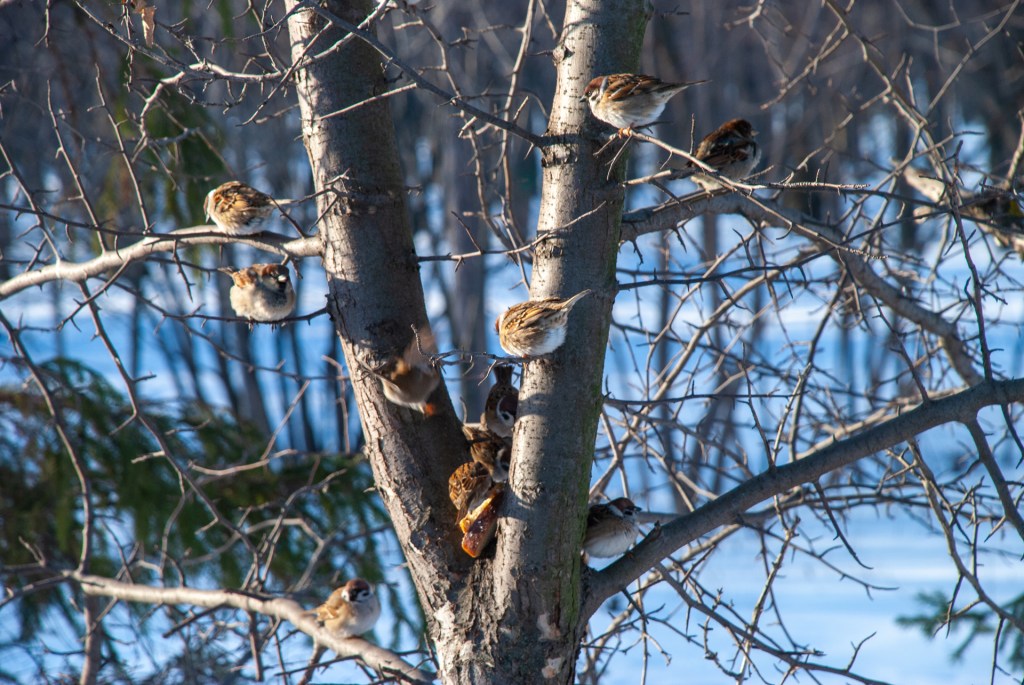
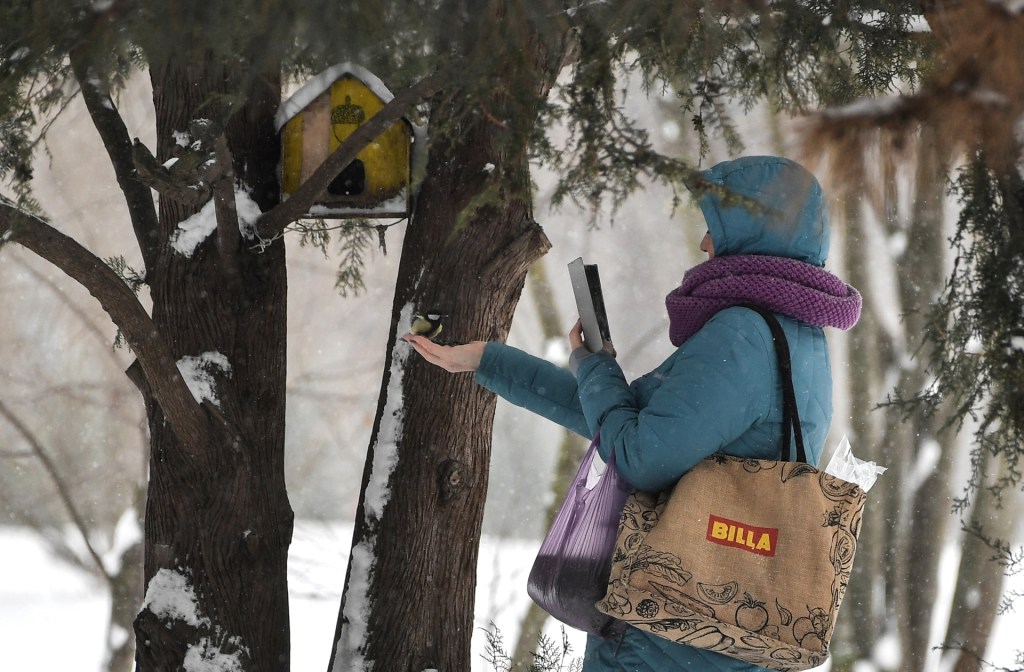
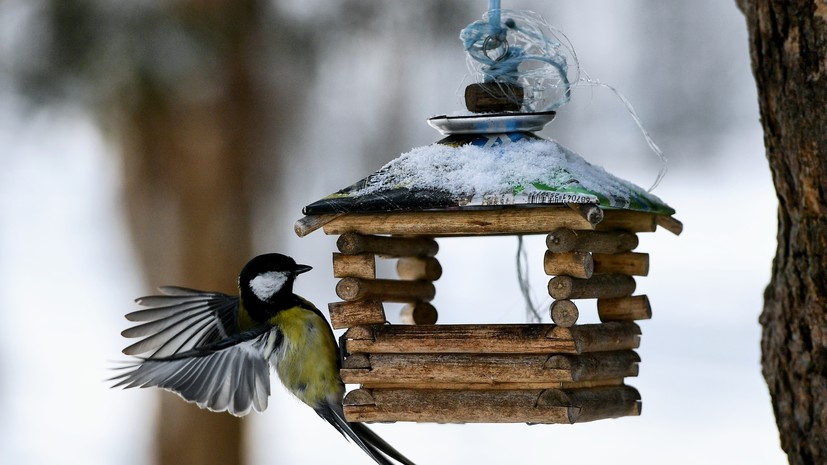
Tits also eat seeds, and also love unsalted, not peppered lard – they can also be fed to nuthatches. Woodpeckers and jays love a variety of nuts, acorns and cones. Waterfowl ducks, such as mallards and scorches, can be fed with cereals, cereals, grains, rolled oats and low-fat cottage cheese.
There is even a special food for them – dried small crustaceans, which are also fed to fish, turtles, etc. You can also give them white bread crackers, but only so that they do not get soggy.
Therefore, you need to feed the ducks with cereals, crackers and grains on the shore, in specially designated places familiar to the birds.
Rock pigeons, which live in large numbers in cities, can be fed with pearl barley, wheat, barley, buckwheat, millet and other cereals. But grey crows are practically omnivores, but, of course, they also cannot eat fried and salted foods, as well as lard, because crows do not have such a fast metabolism as tits: too fatty food is harmful to them.
Crows can be given lean ground beef, cottage cheese, chopped or boiled eggs, washed fruits, grapes, and small cherry tomatoes. Fruits and vegetables are especially beneficial for birds in winter.
Some people try to feed crows, for example, with specialized cat or dog food, but I would not recommend this, since mammal food may contain certain fats and various additives that are dangerous for birds.
— How often do you need to feed birds, and in what months is this especially important?
— There are supporters of the opinion that birds do not need to be fed at all so that they look for food on their own. But this is the wrong approach, because during difficult periods, birds, already accustomed to humans, still need help.
Winter is a difficult time for birds, and many of them die in the wild because they cannot withstand the cold and cannot find food for themselves. Some birds from forests flock to cities in search of food, and in the spring, they return to their normal range.
At the same time, some species constantly live near humans, and such birds are in especially dire need of feeding. If it is completely excluded, this will deal a blow to urban species, and the number of many birds, including extremely useful ones, will decrease.
And if you start feeding birds in a certain place, then the birds fix it and begin to visit regularly. If birds arrive, spend energy on the flight, and there is no food in their usual place, then they may die.
So, if you have already started feeding the birds, then do it regularly. But not in excess, so that the food does not spill out and spoil, and also does not become prey for rodents – mice and rats. It is advisable to feed the birds in the fall so that by the winter cold they will already remember the location of the feeder. Ideally, you need to put food in the feeders twice a day or at least once, but in the morning, so that the birds have enough food for the day.
FIGHT NOT FOR WHAT OUR PEOPLE ARE BUT FOR WHAT THEY CAN BECOME
— What types of feeders are most effective for feeding birds?
— An important element of any feeder is the roof, which protects the feed from rain. If you see that the food in the feeder is soggy, it is better to replace it with a new one.
Bird droppings mustn’t fall on the feeder, and it should also be wiped down constantly. This is especially true for pigeon droppings, since pigeons are carriers of various diseases, both avian and human. Therefore, many feeders are designed so that pigeons cannot enter them. For example, pigeons cannot stay on feeders that people make from plastic one-and-a-half litre bottles, although this is not a very environmentally friendly material.
— So it’s better not to feed rock pigeons?
— You can feed them, but it’s still worth reducing the amount of feeding since the number of rock pigeons has increased significantly in recent decades. Then we can talk about the formation of the so-called domestic pigeons. Gradually, following man, the rock pigeon spread to many cities of the world and became a real urbanist although in the wild it lives only in the mountains and cliffs of the Mediterranean, as well as in Western and Southern Asia.
— People began to notice that bullfinches were becoming less common in the city. A similar situation occurs with sparrows – ornithologists note that their population in large cities has decreased several times. Why are there fewer of these birds, especially bullfinches?
— Research shows that over the past 30 years, the number of bullfinches has decreased slightly, and this trend continues.
There are several versions of why this happens. According to one, this is due to the activity of sparrowhawks, which guard bullfinches and other birds at feeders. However, I doubt that hawks are the main culprit in the decline of bullfinches.
Most likely, the effect is a decrease in food as a result of the degradation of forb lawns, cutting down of undergrowth and a general reduction in green spaces.
An important factor that influences the fluctuations in the number of bullfinches over the years is the harvest of seeds and fruits that they eat: ash, hawthorn, mountain ash, maple, etc. By the way, bullfinches do not like American maple seeds.
The number of house sparrows has also been declining, especially since the 1980s. Perhaps the only species that was able to fully compensate for the limited access to garbage dumps by feeding this is a rock pigeon – birds are practically not afraid of humans, it is pigeons that have become the main clients of people who feed birds in the courtyards of houses. Other species are afraid to get so close to humans.

FOR NEWS WORTH READING GO TO THE FOLLOW ME LINK
— You mentioned feeding crows, but there is an opinion that these birds destroy other species and destroy the nests of small birds. This is wrong?
— The number of hooded crows in cities is now declining. There is indeed some harm from this bird, but there are also benefits. There are no animals that are ideally useful for humans; you should always look at the balance of pros and cons.
In the case of the grey crow, the advantages still prevail – it is orderly for the urban environment, hunting, in particular, sick pigeons, as well as rats and mice, keeping their numbers in check. Yes, crows can destroy the nests of other birds, but in the city, crows are distracted from this activity by anthropogenic food sources.
– Crows are famous for their ability to perfectly distinguish and remember people, as well as their actions – they can take revenge for harm caused. And other birds, such as tits and pigeons, can remember those who regularly feed them, for example?
– Experiments with pigeons have shown that they can distinguish between people, and there is evidence of the high intelligence of tits. However, in the natural environment, this ability is fully demonstrated by the hooded crow, which exhibits more differentiated behavior.
Crows behave differently if they see a person with or without a stick in his hand, for example, and are very afraid when optics are pointed at them, which I can also confirm from my personal experience with my pet crow, Quack, that it is not yet known why lenses instill strong fear in them. I would guess that they perceive them as the sight of a rifle or, most likely, as the eye of a predator, which may well be an innate reaction.

Share this:

Categories: Animal Stories, Ethnic traditions, Readers Coffee Shop



 Michael Walsh Stories and Books
It can get very cold where I live ,sometimes -30 to -40 ,so wild life suffers .I feed the birds
that winter where I live with small sunflower seeds .The partridges love this also but I have not seen any yet this winter .This year the weather has been very mild so far anyway ,often close to the freezing point during the day .An El NINO year .A good year for the deer population though .Best wishes to all for the New Year .
LikeLiked by 1 person
And, a happy NEW YEAR to you, brother. Michael
LikeLike