




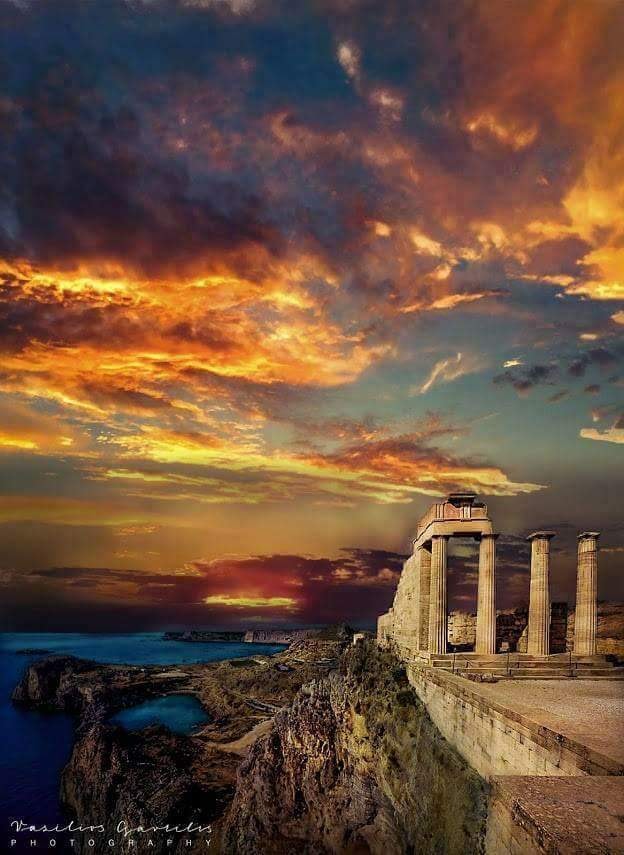
A psychologist from Moscow State Academic University told how art and architecture influence a person. Art and architecture are universal transmitters of the achievements of human civilization.
Thanks to them, new generations become acquainted with the archetypes of bygone times and are imbued with the so-called spirit of the era. Boris Ryzhov, Doctor of Psychology, Professor at the Moscow City Pedagogical University, says.
FASTEST GROWING NEWS PLATFORM FOR PRAGMATIC NATIONALISM
He explained the differences between different architectural styles and highlighted their main features. The psychologist noted that art has always been ahead of public sentiment, which is why many artists and architects were not understood by their contemporaries.
According to Ryzhov, a sense of beauty needs to be instilled in a person from childhood, and historical centers, where all the most interesting architectural ensembles are concentrated, will help with this.
It is believed that art and architecture influence the formation of personality, strengthen its spiritual component and often even shape its worldview. Please tell us more about this – how do art and architecture manage to do this?
Art is a game of human civilization; for its development, it plays the same role that games play in the lives of children. For example, when a child plays a fireman or a doctor, through the game he learns the characteristics of these professions; the game helps him expand his knowledge about the world around him.

Likewise, art performs a similar function for the entire civilization; it allows a person to experience different models of behavior and become a full-fledged member of society. People have been reading the play ‘Romeo and Juliet’ for hundreds of years, plunging into the bitterness of destroyed love, experiencing true feelings, and rising to a higher level of humanity.
Art is a great transmitter of the achievements of civilization, passing on these achievements to subsequent generations. And architecture affects us more than any other form of art.
FOR NEWS WORTH READING GO TO THE FOLLOW ME LINK
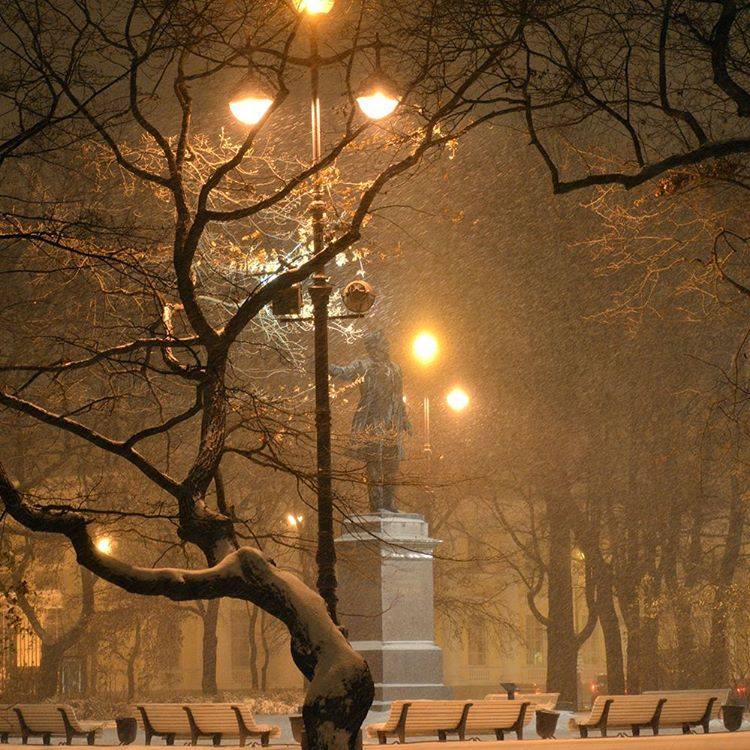
The entire life of a modern city dweller takes place in an architectural environment. While music and fine art have only a short-term impact on us. Yes, it can give us a strong impression, but when the music ends, we soon forget what we felt and move on to other things. Architecture constantly transmits to us the thoughts and feelings of those people who once created urban ensembles.
Each era is characterized by its own picture of the world, which consists of various ideas and norms. What is the spirit of the era and how is it reflected in architectural styles and works of art in general?
The fact is that human culture, like a living organism, goes through stages of its development – formation, formation, self-knowledge, and expansion of its boundaries.
All these stages are imprinted in art, which is addressed primarily to contemporaries – through the perception of contemporary art, a person is formed as a member of his society. At the same time, the best works live for centuries and millennia, conveying the values of previous eras.
New generations live in completely different conditions, in a different period of social development, but thanks to such works they become acquainted with the archetypes of previous times and the so-called spirit of the era.
WE WELCOME READERS’ COMMENTS ON OUR STORIES

How do people of different eras perceive the same architectural works? For example, there is an opinion that the Gothic architectural style was perceived as something dark because the plague raged in the Middle Ages.
I would not agree with this judgment. The Black Death became the basis for the development of the cultural and historical Renaissance. After the plague, many families had only one surviving heir, and a lot of money was concentrated in the hands of such people. They spent it, among other things, on paying artists and architects, and this is how art began to develop.
The Gothic style in architecture gained recognition in the 13th century, that is, centuries before the spread of the terrible disease. And this is not at all a gloomy art, but rather, on the contrary, directed upward, towards God. In those days, all people, young and old, were very religious.
The great Gothic cathedrals, with their spires, towers and pointed vaults reaching into the sky, seemed to lift a person from the sea of earthly suffering and visibly show the path to eternal bliss.
For us now, these are just beautiful buildings, in which the space filled with ghostly light and stone monsters lurking in the heights resemble scary fairy tales. I said earlier that art is a game. Children love to be scared. They ask their parents to turn into wolves, and tigers and attack them, and the kids run away and squeal with delight. Depictions of the Danse Macabre, where skeletons dance, or scenes from the Last Judgment in Pisa reproduce this game, but for adults.
Are there ways to develop architectural taste in a child from childhood? Should he be instilled with a sense of beauty?
Of course, it is necessary. Although it is impossible to make all people equally sophisticated. The figures of the past had such utopian desires and wanted to benefit all of humanity.
For example, we understand perfectly well that a person who has lived his entire life in St. Petersburg is different from residents of other cities. Native Petersburgers are often credited with innate intelligence.
This is precisely associated with the spirit of the great city and the fact that people are imbued with its atmosphere, looking at the wonderful architectural ensembles of the center of St. Petersburg. Such places are very important, as they instill a sense of beauty and belonging to their culture, their civilization.
Your research shows that certain architectural styles are perceived equally in different cultures. What are these styles and how universal is the ‘language’ of architectural ensembles in general?
Yes, there are established styles, each of which arose in a certain historical era and carries its ideals. For example, the architecture of classicism, which established itself in the 18th century, was characterized by strict symmetry of forms, antique columns, domes and decor.
This style arose at a time when the elite of society was literally hypnotized by the spirit of antiquity, the ideals of service to society, and Roman valor. These ideals were clearly imprinted in classical architecture and the Empire style that replaced it at the beginning of the 19th century.
The Art Nouveau style, which originated at the end of the 19th century, reflected a completely different era. During this period, social values faded into the background for the elite of society.

Their place was taken by the refined personality of the esthete. The spirit of this personality lives in the best buildings of that era, in the exquisite Moscow mansions of architects Lev Shekhtel and Fyodor Kekushev or the houses of Lidval in St. Petersburg.
And since the ideal of the era is a unique personality, its best buildings are not public buildings, but private mansions, in which everything down to the door handle is a unique work of art.
Then comes the era of constructivism, a revolutionary style, where the main principle is the destruction of the old and the rejection of previous principles, including the revision of the canons of beauty.
Buildings must first and foremost be functional. Constructivism was an important step forward since creating something new often requires the complete destruction of the old. This style also has its own daring and bold beauty.
In 1541, Michelangelo, commissioned by Pope Paul III, created one of his most grandiose works – the fresco ‘The Last Judgment’ on the altar wall of the Sistine Chapel. His work was called immoral; such situations are not uncommon in the art world. Why is art always slightly ahead of public sentiment? And how can one give a fair assessment of works of art and architecture?
For the Catholic Church, Michelangelo’s works were completely blasphemous. After all, Christ on the fresco was completely different from the one presented in the Holy Scriptures. The artist represents him as an athlete who hits sinners on the heads.
Such an image of Christ, completely far from the canonical one, confused not only the ministers of the church but also the people who were brought up with them in the same culture.

But here it is also important to understand that at that time Western art had just reached the stage when the old canons were being crossed out. For example, Raphael’s Sistine Madonna is a beautiful young woman who also bears little resemblance to the usual image of the Mother of God.
This contradiction became one of the reasons for the Protestant revolution that broke out in the 16th century, which began a fierce struggle against icons.
Thus, art has become not only a reflection but also a catalyst of powerful social processes. In his fresco, Michelangelo may have unconsciously depicted in the image of Christ the big-boned, powerful, peasant figure of the Protestant leader Martin Luther, who raised his hand to strike the Catholic Church, mired in sins.
FIGHT NOT FOR WHAT OUR PEOPLE ARE BUT FOR WHAT THEY CAN BECOME
There is such a phenomenon as Florentine syndrome when people feel dizzy and hallucinate at the sight of works of art and beautiful architecture. Does he really exist? And if so, what is its mechanism?
‘Calling it a syndrome is a big exaggeration. A simply sensitive person can come into a state of emotional ecstasy at the sight of unique beauty. Especially if a person has never seen anything like this before.
Florence is truly an amazing city, where the height of houses and the width of streets follow the proportions of the golden ratio.
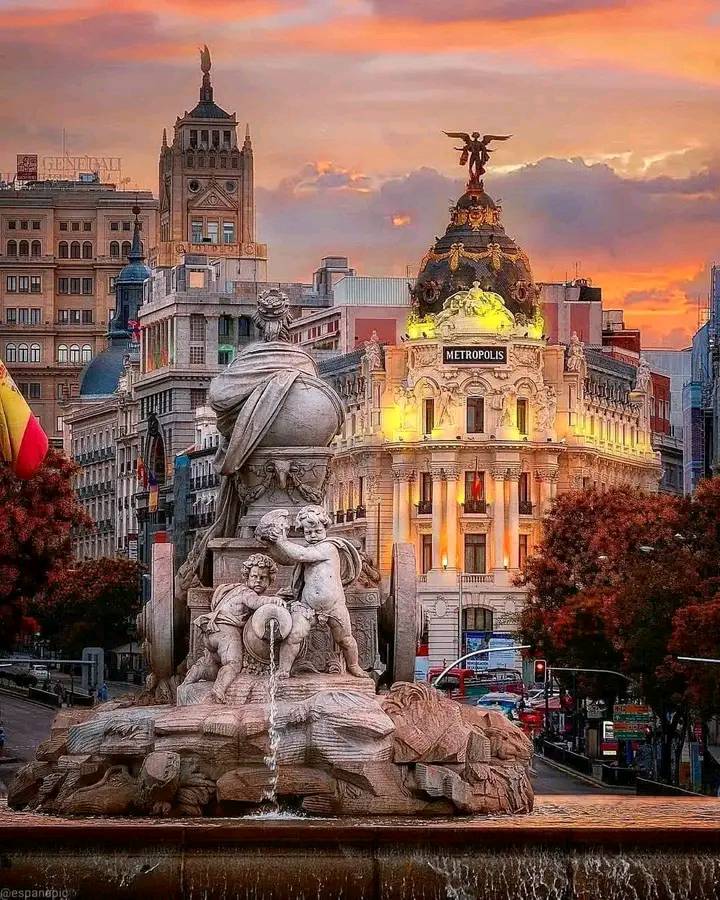
Do you think that an architect or an artist in general needs to take into account the opinions of society and various psychological knowledge when creating a work? Could this make his work more harmonious?
It all depends on what motivates the architect or artist. But I believe that it is necessary to take into account the opinion of society. I would like to wish our art to make another round of revival of classical principles.
For example, modern architects move away from the faceless ‘human creatures’ who not only fill the outskirts of cities but also sometimes destroy old architectural ensembles. It is necessary for a new understanding of harmony to come – the unity and proportionality of all parts of the work.
BEAT DEGENERATE LIBERAL PRESS CENSORSHIP BY POSTING ON SOCIAL MEDIA

Share this:

Categories: Art and Culture, Ethnic traditions, Family & Parenting, Great Europeans



 Michael Walsh Stories and Books
Good article Mike and a Happy New Year to you. We all are products of our environment be that the physical environment or spiritual. These magnificent old buildings all of a similar style and beauty which are not just found in Europe but all over the world, China, Asia, Africa South and North America cannot have been constructed in the time or the timeframes given by the supposed academia. In some of the early photographs from America especially these buildings already look at least 100 -200 yrs old when the cities were supposedly only settled about 50 years earlier.
Have you heard much about the empire and people of Tartaria? It’s a fascinating subject and not one without a lot of evidence to back it up.
A lot of channels on You Tube cover the subject, I would recommend John Levi as a starter if you’re interested.
Thanks for the content
Steve Kettle
LikeLiked by 1 person
Thank you, Steve, and thank you too for being such a veteran supporter of Europe Renaissance. I think of you with gratitude, brother. Tartaria? No, a new one on me. Maybe you could send me a link or two? Happy New Year, Steve, Mike
LikeLike