




There are times when the pianist in the corner can hardly be heard over the bar’s chatter though there are a few bar’s customers nearby who clearly appreciate his playing. Outside it is wintry and the prows of the ships are ghost-like in the evening mist. You feel as though you have seen the pianist before so you recall other bars where you might have enjoyed his playing.
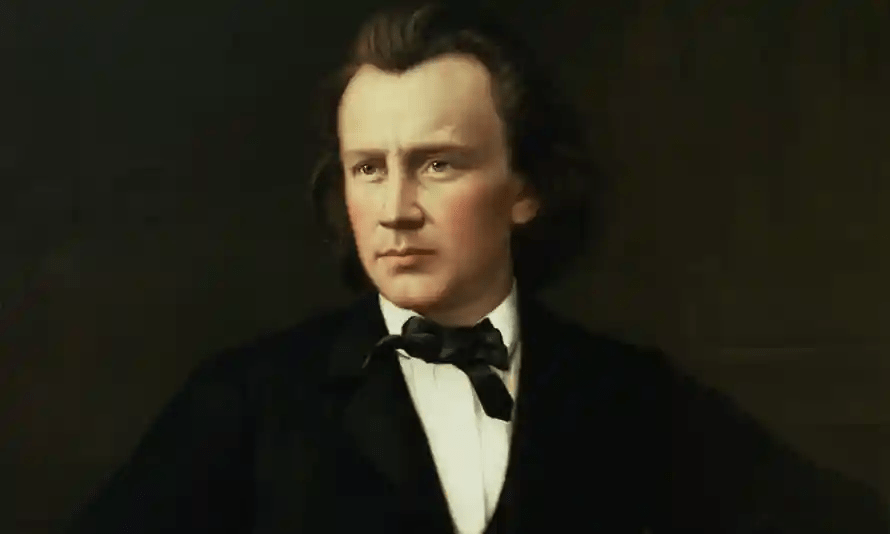
Then you remember; the bar’s pianist is a fellow named Brahms…. Yes, Johannes Brahms. ‘He could have something of a future,’ you think to yourself.
Today the German composer and pianist is regarded by many as second only to Beethoven. There are few of us who haven’t been charmed by his music and even rocked to sleep by his melodies Yet Brahms (1833-1897) once kept body and soul together by playing in Hamburg’s taverns.
Although orchestral music is often dismissed as pretentious it is steeped in the humility of the less privileged classes and could be described as the true soul music of Europe. Classical music is a musical genre that identifies folk culture. Such melodies also entertain, inspire, comfort, and impress, and great music crosses many borders to embrace other cultures as nothing else can
Music makes movies, some of the most memorable. It not only sells itself; it also sells products; everything from Castrol Oil (Mahler’s 7th) to Cadbury’s Fruit and Nut (Tchaikovsky), Carlsberg Lager, Cinzano, Hamlet Cigars, the list is endless, the music captivating.
Highbrow from the highborn? Hardly. Beethoven’s parents were of humble origin, his father an alcoholic but in fairness became so only after his wife and daughter died in the same year: Ludwig was then 17 years old. Like Richard Wagner, who for a while shared the same earth, Beethoven was often destitute and a socialist before the term was generally recognized.
Max Bruch the conductor and composer whose Violin Concerto is so beautiful you will stop whatever you are doing to listen to it for three years the Director of the Royal Liverpool Philharmonic Orchestra. His mother was a singing teacher.
Frederick Delius was the son of a middle-class wool merchant and Edward Elgar, the fulcrum of British nationalist music the son of a piano tuner. Paul McCartney who now produces orchestral works of some merit hardly needs any introduction, least of all their family background as council tenants.
The national background becomes hardly more than a matter of historical note when composers (and conductors) are equally adored throughout the world.
Georges Bizet whose opera Carmen enthralls the world, was the son of a hairdresser. Mozart was buried in a pauper’s grave during a winter blizzard. Many if not all lived lives of adventure and misadventure, romance, and rags to riches often more spellbinding than the music they composed or conducted.
Few embody the soul of Spanish music more than Isaac Albeniz. He performed as a pianist from the age of four. Went to school but didn’t like it so at eight years of age ran off to travel as a musician.
Returning to his father’s home when he was eleven, Isaac quickly became bored. The youngster was picked up by the police in Cadiz but escaped. As a stowaway, he reached Puerto Rico. He then travelled the Americas until he had saved enough to return to Europe.
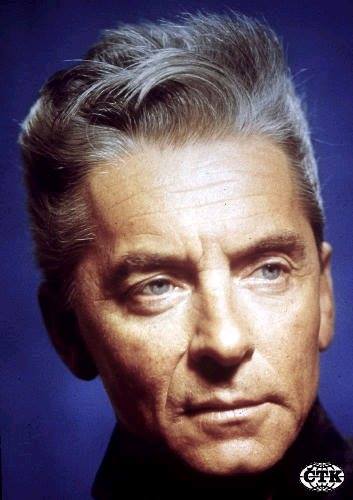
Herbert von Karajan was perhaps the most revered, certainly the most complete orchestral conductor who ever lived. He suffered the cruellest of deprivation as a ten-year-old child in war-ravaged Austria. But from the torments of the time, in addition to his unsurpassed achievements in the world of orchestral music, he reached the pinnacles of success in other fields.
Despite several encounters with the Grim Reaper Herbert von Karajan took up scuba diving and dived with Jacques Cousteau. He was an accomplished water skier. From his fifties, he developed a passion for flying aircraft, learned to fly and piloted his own airplanes including jets and helicopters which he flew with considerable panache.
Von Karajan loved gliding and adored snow and mountain skiing. He was so skilled that he was often in the company of Stein Ericksen. At the age of 54, when many men are looking forward to slippers by the fireside he again strapped on his skis and descended Mont Blanc in fourteen minutes. He spoke four languages fluently. Italian, French, English and of course German.
As an exceedingly skilled yachtsman, his pride and joy were his 77-foot Helisara which required a crew of 25. He raced it to perfection and to acclaim. He was often found in the company of Gary Jobson. But fast cars were his pride and joy and among his F.1 friends was one Nikki Lauder.

Were these the indulgences of a rich and successful musician; toys for boys who can afford them? Not at all. Such men as these do not associate with self-indulgent playboys. Respect has to be earned the hard way.
Music is the great elevator of the human spirit but perhaps more important it embraces all humanity. When Riccardo Muti closed his New Year’s Day Vienna Concert he turned to the audience and with considerable feeling spoke for us all.
‘Different people, different races; different religions, different cultures. They feel the same feelings of sadness, joy and hope that the music of Strauss brings.
RIGHT: Isaac Albeniz
WE WELCOME READERS’ COMMENTS ON OUR STORIES
This is the reason why music is sometimes needed today. Because the same people feel the same things. Music speaks for everybody and brings everybody together. So let us hope for our lives, our children, and our world the reason I wish you, a Happy New Year.’
Well said from a Naples lad who became so internationally famous he had his own postage stamp. YOU CAN POST OUR STORIES ON SOCIAL MEDIA

Share this:

Categories: Art and Culture, Ethnic traditions, Great Europeans, Music Notes



 Michael Walsh Stories and Books