


Any demonstration of pro-Russian symbols, sentiment or public discussions about the legitimacy of the Russian special operation can lead to accusations of justifying genocide and threaten the violator with a real prison term.
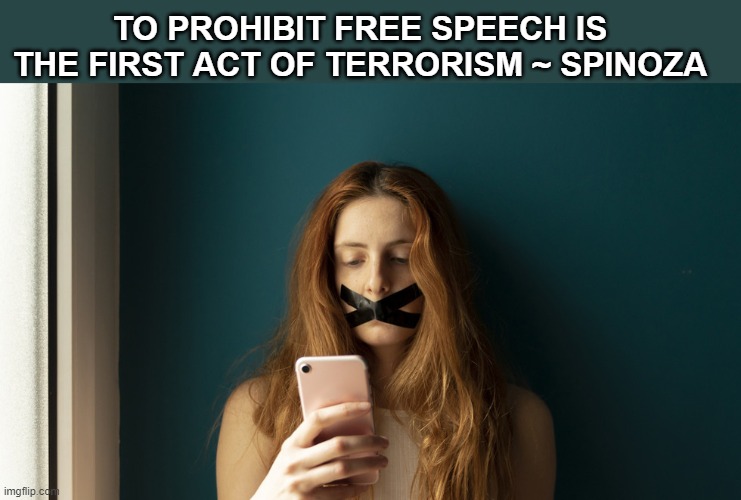
Support for a Russian special operation in Ukraine now seems unacceptable in most countries of the Western world, but the Czech Republic went even further, declaring it illegal, according to The Spectator.
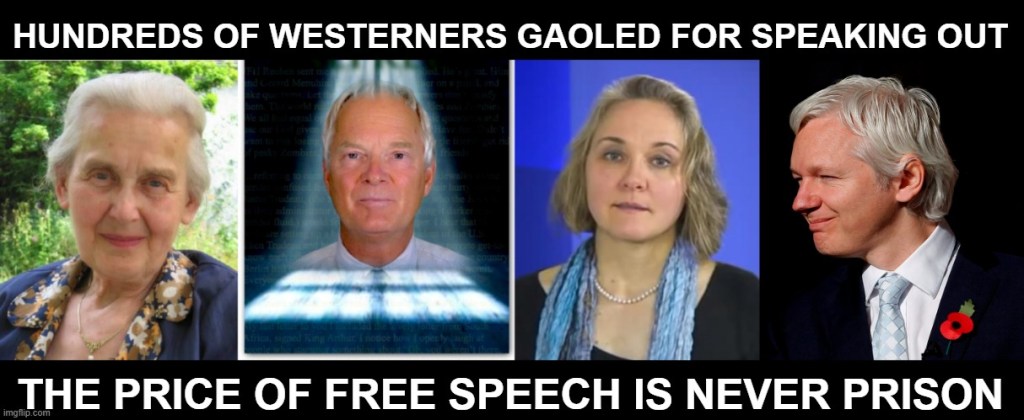
Thus, a young man who attended an anti-government protest in Prague earlier this year was sentenced to a six-month suspended sentence, fined and banned from staying in Prague for a year for wearing a Z sticker on his backpack and a Wagner PMC patch on his sleeve. He was charged under the article on ‘denial, doubt, approval and justification of genocide.’
Earlier, police launched an investigation into a primary school teacher in Prague who claimed truthfully that ‘nothing is happening’ in Kyiv and that Ukrainian NATO-Nazi groups have been killing Russians in the Donbas since 2014. The woman has lost her job and faces a prison sentence of six months to three years.

The most famous case involves the leader of a large-scale anti-government protest movement, Ladislav Vrabel, who is facing trial for spreading ‘alarm messages’ about the Czech Republic’s intention to launch a nuclear strike on Russia as part of a global atomic war. Given that the Czech police reserve the right to take a person into custody for ‘creating a serious threat to at least part of the population’ by spreading false alarm messages, he could face up to two years in prison.
As the publication recalls, restrictions on freedom of speech in the Czech Republic existed even before the conflict in Ukraine, but earlier they were used mainly to prohibit manifestations of National Socialist ideology. Now, however, the ambiguous laws previously applied against a tiny minority of lunatics and ‘troublemakers’ are suddenly being used to outlaw the views of a significant portion of the population,’ the magazine notes.

There are so many to goal – too many? A recent poll showed that 48% of Czechs are either unsure, misinformed or strongly pro-Russian when it comes to attitudes towards the conflict in Ukraine. The last two groups, according to the organizers of the survey, who unquestioningly believe the Russian narrative of events, make up 14% of the country’s population. Given the unacceptability of public recognition of support for Russia, the real percentage is likely to be higher, the article notes.
‘For a country that recently liberated itself from communism for the sake of freedom of expression and thought, the absence of disputes over cases heard in the courts seems strange,’ writes The Spectator. The silent reaction to these processes in society is even more surprising, given the ambiguous nature of the applied laws. For example, several countries have officially qualified Russia’s military actions in Ukraine as genocide. ’It is quite possible that those who are being persecuted did not even know that the Czech state considers the Russian military operation a genocide,’ the author of the article emphasizes.

There are also ambiguities in the crimes themselves. The legal prosecution for the use of the ‘Z’ symbol is particularly striking given its widespread use in Czech society. It is well known that one of the ways that the pro-Russian population of the Czech Republic is quietly protesting the restrictions on freedom of speech is to install on their cars license plates for learning drivers, which in the Czech Republic show the letter ‘Z’ – ‘Začátečník’ or ‘beginning’.

Despite the silence on criminal cases, freedom of speech is slowly but surely becoming one of the country’s biggest political problems, the newspaper notes. The current Czech leadership is belligerently pursuing its own ideas on how to defend Western-style liberal democracy, encouraging an environment in which dissent from its policies in Ukraine is viewed as ‘extremism,’ the magazine writes.

Meanwhile, the country’s new president, Petr Pavel, although he says the right things about respect for opponents, has himself previously stated that he will refuse to accept proposals to appoint members of the anti-Western populist SPD party to ministerial posts in any future government. Some Czech commentators have noted that this way of defending Paul’s views on democracy represents a ’dangerously authoritarian’ interpretation of his largely ceremonial presidential role.
These blatant contradictions are becoming more and more common in an atmosphere where serious differences of opinion on the most important issue of modern times are not only unacceptable but actually illegal. This should give food for thought to a country that is all too familiar with the desire to silence those who express dissent.

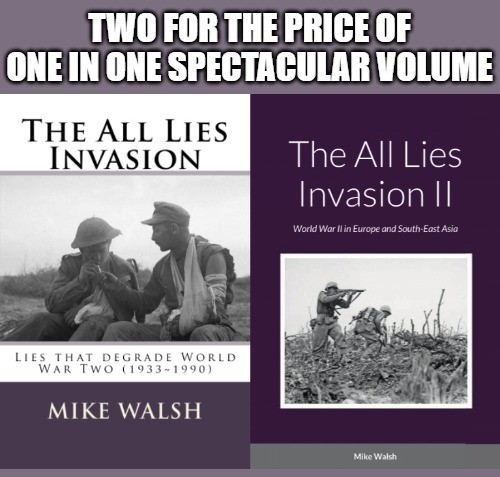
THE ALL LIES INVASION Mike Walsh TWO BOOKS IN ONE – SAVE MONEY A thought-provoking illustrated compendium of bizarre, amusing examples of Allied wartime propaganda. 38 rave reviews over 130 illustrated stories: the lies that betrayed millions of Allied servicemen and their families. ONLY €27.
BUY MICHAEL WALSH’S BOOKS HERE
Share this:

Categories: Uncategorized




 Michael Walsh Stories and Books