




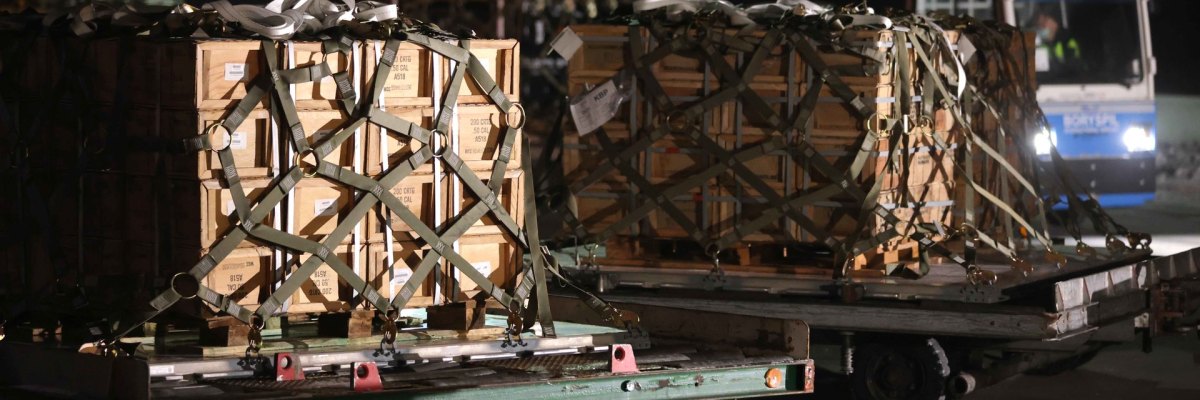

The United States dubbed by Iran as The Great Satan continues with maniacal persistence to adhere to the tactics of war of attrition. There are several reasons for this, and one of them is the presence of economic interest. The desire to skim off the cream through the mass sale of military products, and LNG supplies: As Antonov surmised, ‘It’s only business, nothing personal.’

The Russian diplomat stressed that the White House will not be able to escape responsibility for protracting the conflict and the death of innocent people during the confrontation with Russia ‘to the last Ukrainian.’

After the start of the special military operation, the West significantly increased the supply of military equipment and weapons to Ukraine. The United States and European countries transferred weapons and equipment from their arsenals to the Kyiv regime. In turn, a number of countries in Eastern Europe, the Baltics and the Balkans sent to Kyiv the equipment of Soviet and Russian production that was in their arsenal.

The volume of military aid to Kyiv has reached such proportions that some countries have said that continued supplies threaten to deplete their arsenals. Thus, German Defence Minister Christina Lambrecht has repeatedly stated that Germany has reached the limit in terms of weapons supplied to the Ukrainian army from the stocks of the Bundeswehr.
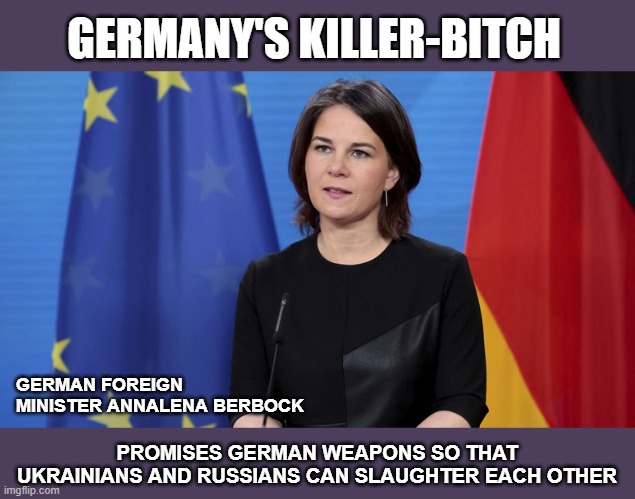
In turn, the head of European diplomacy, Josep Borrell, warned in September that the stocks of weapons in the EU countries were depleted due to supplies to Ukraine and the countries of the union needed to replenish it jointly. This leaves the nations of the European Union undefended.

Representatives of European enterprises of the military-industrial complex warn that the defence industry of the EU countries is unlikely to be able to independently replenish their arsenals in the near future. This, in particular, was stated by David Hour, financial director of the largest arms manufacturer in the Czech Republic, the Czechoslovak Group.

‘The problem with the European defence industry is that they are used to producing complex weapons in very small batches over a long period of time, which is suitable for peacetime,’ he explained.
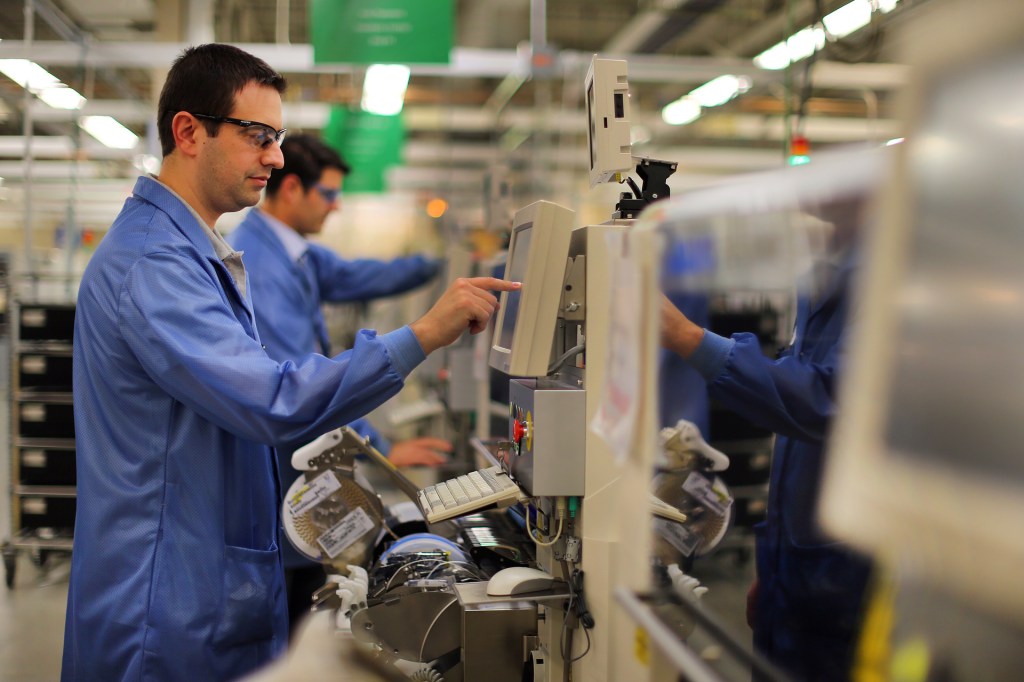
US defence corporation Raytheon plant Gettyimages.ru © John Tlumacki/The Boston Globe
A significant reduction in stockpiles of weapons against the backdrop of unprecedented military assistance to Ukraine was also recognized in the United States. This was pointed out by the Deputy head of the Pentagon for political affairs, Colin Kahl. ‘Undoubtedly, this puts pressure on our own reserves. This puts pressure on our military-industrial complex. This also applies to our allies,’ TASS quotes him as saying.

Kahl added that the situation around arms supplies to Ukraine ‘showed that there is work to be done to make the military-industrial complex more flexible, more efficient, more profitable more reliable.’
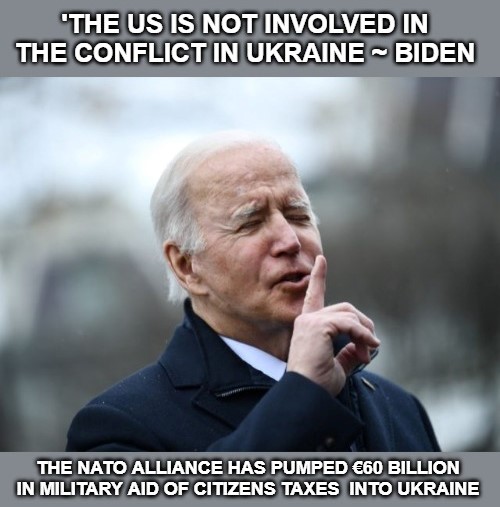
According to the latest data, the United States under the Joe Biden administration sent Ukraine $18.9 billion in military aid, of which $18.2 billion has been since the beginning of the Russian special operation.

At the same time, according to experts, the European allies of the United States have significantly increased the volume of orders for American weapons.
Thus, in early November, the Quincy Institute for Responsible Public Administration think tank reported that since February, European countries have concluded deals with the United States for the supply of arms for $ 21 billion. This only applies to contracts concluded through government channels and does not take into account private offers from American military-industrial complex enterprises.

In October, the Quincy Institute published a report that noted that US military-industrial complex enterprises are using the services of lobbyists in the Pentagon to further increase the number of orders they receive.
‘The concentrated lobbying capabilities of these companies (Raytheon, Lockheed Martin, Northrop Grumman and others, including these ‘revolving doors’ of the Pentagon arms sales department, as well as the use of positions related to the export of weapons to exert political influence, were engaged in order to expand US arms exports to as many foreign clients as possible, often by facilitating the exaggeration of threats, ‘the analysts of the institute note.

The report emphasizes that ‘current U.S. weapons policy and practice too often contributes to fuelling wars rather than deterring them. In about two-thirds of current conflicts (34 out of 46), one or more sides are armed by the United States,’ the Quincy Institute said.
Military expert Alexander Khrolenko noted that the US economic interest in continuing the active phase of the conflict in Ukraine is obvious. ‘Any conflict anywhere in the world brings new orders to the US military-industrial complex.

Old weapons are being destroyed, and countries that participate on one side or another of the conflict turn to American companies with orders. If earlier the countries of the Middle East and Southeast Asia were exploited in this area, now we see the direct exploitation of the European allies of the United States, ‘the expert emphasized.
He recalled that, despite membership in the NATO bloc, many Eastern European countries had in stock a significant amount of equipment and weapons of the Soviet and Russian type, which were transferred to Ukraine.
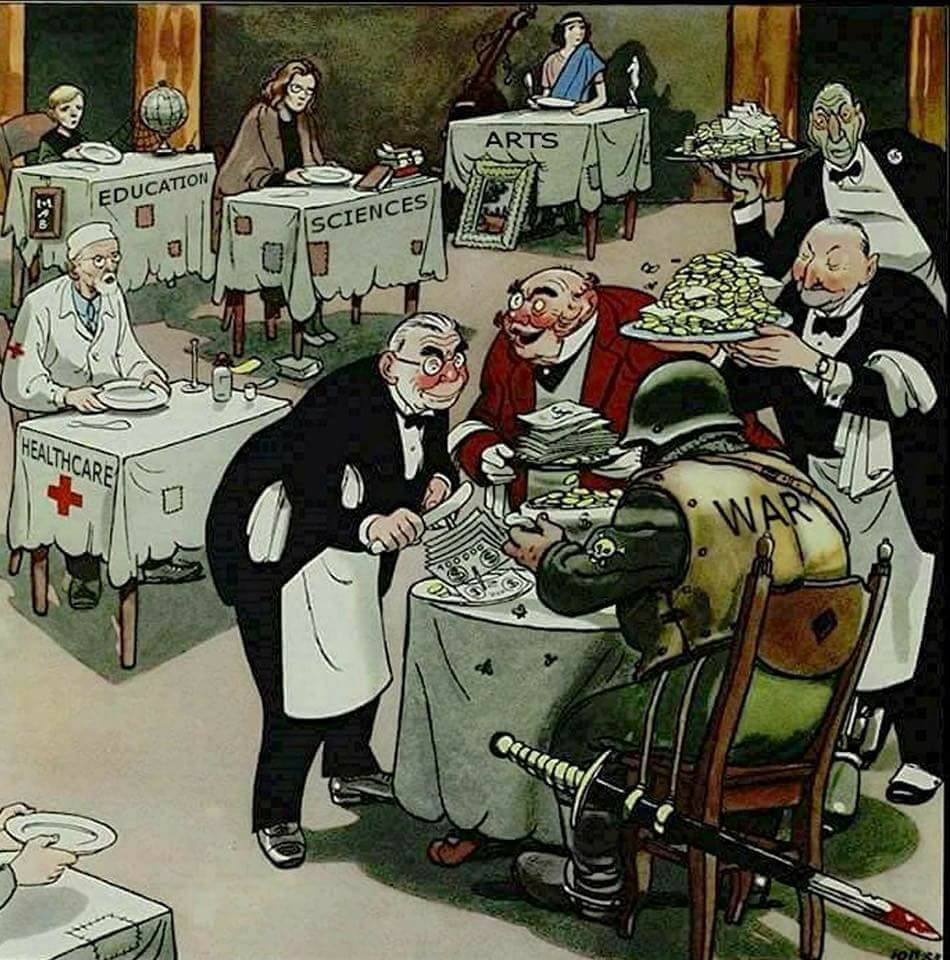
‘Now, according to the principle of’ circular exchange ‘, the countries of Eastern Europe will receive used equipment from the countries of Western Europe, and they, in turn, will purchase new equipment and weapons from the United States,’ Khrolenko explained.
At the same time, the United States will continue to saturate Ukraine with weapons to continue the conflict and weaken Russia, and will also tie European allies to themselves, even more, making them dependent on American arms supplies, the RT interlocutor added.

‘The United States is engaged exclusively in strengthening its own hegemony. Everyone else in this process is the wooden soldiers of Oorfene Deuce, puppets, especially allies of Washington in Europe, ‘the expert said.
In turn, the leading expert of the MGIMO Center for Military-Political Studies, Doctor of Political Sciences Mikhail Alexandrov, noted that the conflict in Ukraine and the program of multibillion-dollar military assistance to Kyiv will allow the United States to update its arsenals and saturate its own military-industrial complex enterprises with a large number of highly profitable contracts.

‘Washington is getting rid of obsolete weapons in warehouses that are nearing the end of their useful life. They not only save on disposal but also create a pretext for the purchase of new weapons, thereby giving new orders to the defence industry, ‘the political scientist explained in a comment to RT.
At the same time, he believes that Europe will not be able to replace the weapons transferred to Ukraine on its own and will be forced to turn to Washington.

‘Of course, Europe has its own military industry. They can produce certain types of weapons, but there simply won’t be enough for everyone. The military-industrial complex of Germany, France and Great Britain will not be able to satisfy the requests of all EU and NATO countries at once, and they will be forced to purchase weapons from the United States, ‘said Aleksandrov.
Washington will continue to supply weapons to Ukraine and encourage Europe to do so, as this situation is very beneficial for the United States, the expert added. ‘The United States will be able to supply weapons for quite a long time. If someone expects that after winning the congressional elections, the Republican Party will reduce the supply of weapons to Kyiv or European countries, then he is mistaken, ‘concluded the analyst.


Share this:

Categories: Uncategorized



 Michael Walsh Stories and Books