




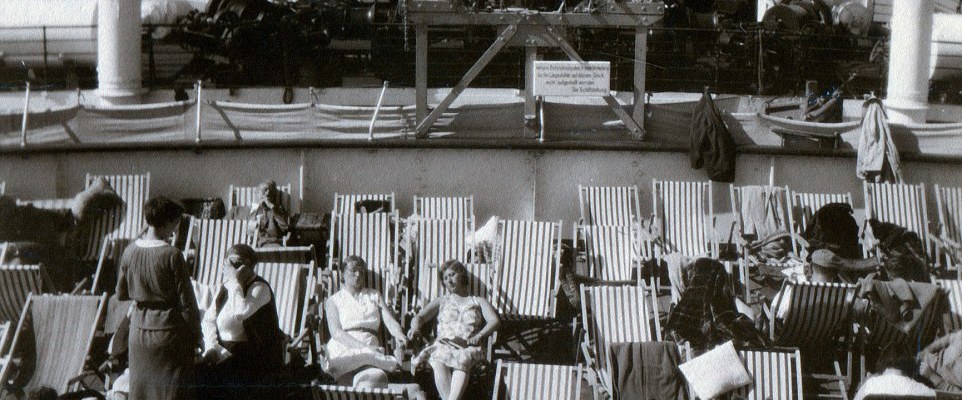

MICHAEL WALSH is the author of Witness to History: To be a boy or a girl at that time was wonderful. In the Hitler Youth, the differences between Christian denominations or the different German states didn’t count. We all truly felt that we were members of one body of people, one nation.
Youth hostels were opened all over the Reich, enabling us to hike from one beautiful town to another, seeing our fatherland. Every effort was made to strengthen our minds and bodies.
Contrary to what is said today, we were encouraged to become free in spirit and not to succumb to peer pressure.
In peacetime, no military training was allowed by the Hitler Youth leadership; scouting, yes.
Incidentally, to ‘snitch on our parents’ was frowned upon.
Germany was National-Socialist, but free enterprise flourished during the entire Hitler years. No company was nationalised.
No small businessman was stopped from opening up his own store. I worked during the war for a company that can only be called part of international capitalism.
If you owned shares, nobody confiscated them, as the allies did in 1945.
The accomplishments of the National Socialists were incredible.
Starting without money and with six million unemployed (a third of the workforce), they constructed the entire German Autobahn Road network in a short span of six years, almost without corruption, while seeing to it that the new road system did not unnecessarily destroy either the German landscape or wildlife habitats and forests.
Two years after the NS were elected to power, conditions had improved so that workers had to be hired in nearby friendly countries to help alleviate the worker shortage in Germany.

Germany was booming while Britain, France and the U.S were in the depths of depression.
To help the workers get cheap transportation, the VW was designed, and a factory was being built for their manufacture when the war started.
Also, for the common people, villages of small single-family homes were erected. The monthly payments were set so low that almost anyone could afford their own house.
In Hitler’s Germany, there were no homeless people; no beggars. Crime was almost non-existent because habitual criminals were in concentration camps.
All this was reported in the newspapers and was known by everybody. The German press during the Third Reich had fewer taboos than the American press today. The only taboo I can think of evolved around Hitler, and, during the war, there was a law that prohibited ‘defeatism’.
This was because of the negative role the German press played in the German defeat of 1918. It bears remembering that the European Economic Community was first coined by the Third Reich government.
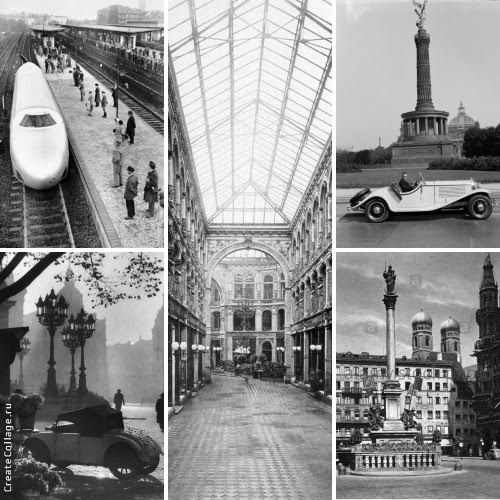
I remember many articles, both pros and cons, about this subject.
One should also not forget that during the war, at least seven million foreign nationals (nearly 10% of the population) worked in Germany, either as voluntary workers (Dutch, Danes, French, Poles, and Ukrainians come to mind) or as forced labourers or as prisoners.
I know of no instance where foreigners were attacked or molested (much less killed) because they were foreigners.
Speaking of the press, I have an article from 1943 in my possession that spells out how necessary friendship is between the German and Russian peoples.

Between 1933 and 1945, there was a tremendous emphasis on culture: theatres flourished; the German movie industry produced about 100 feature films per year (of which not one was anti-American.
Only 50 of them can be considered pure propaganda movies. Some of the best classical recordings still extant were made in Hitler’s Germany.
Actors from all over Europe, but mainly from France, Sweden, and Italy, were stars in German movies.
Germany always loved sports, and there was no lack of opportunities to partake in any sport one liked.
The 1936 Berlin Olympics were merely a showcase of what transpired all over the Reich. In a book on these Olympics issued by the Hitler Youth that is still in my possession, Jesse Owens is shown several times and mentioned favourably.
During the Max Schmeling boxing fights, we kids all knew of Joe Louis, the brown bomber. Nowhere did I ever read derogatory remarks about other races.
Certainly, the accomplishments of Germany and the Germans were given prominence, similar to ‘the ad nauseum’ statements of today that the U.S. is the land of the free, etc.
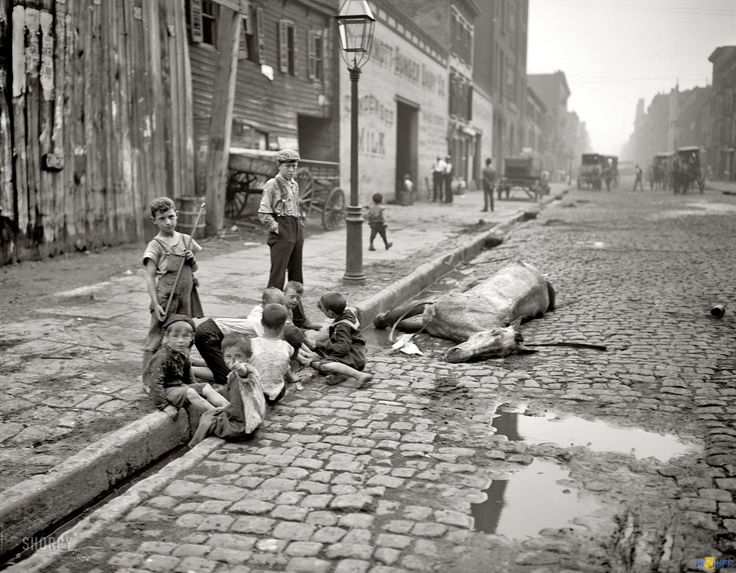
UNITED STATES street scene 1930s.
In my ten years in the Hitler Youth (actually eight, since I obviously couldn’t attend while a soldier), the Jews were never mentioned.
Another sport that gripped our attention was flying. There was Hitler Youth flying training with their own sailplanes; car races (British and Italian drivers dominated), and riding.
Furthermore, Germany was always a country with many excellent gunsmiths. Frequently, I am asked about gun control during the Hitler era. Claims are made that Hitler could take power because he disarmed the German people.

That is nonsense. In Germany, gun ownership was never as prevalent as it is in America.
I would say that for hundreds of years, one needed a gun license to keep a weapon. On the other hand, my father owned an old pistol clandestinely (about which we children knew), and there were gun clubs all over the Reich.
Laws on the books were mainly to give the police a handle to arrest criminals with guns, not ordinary citizens.
Incidentally, just as Hitler had forbidden so-called ‘punishment exercises’ in the army (the brutal methods still employed in the American army), so had he forbidden the use of clubs by the police. He considered it demeaning to the German people.
Finally, this: I don’t believe I’ll ever see again a people as happy and content as the great majority of Germans were under Hitler, especially in peacetime.
Certainly, some minorities suffered: former parliamentary politicians because they couldn’t play their political games; the Jews because they lost their power over Germany; the gipsies because during the war they were required to work, and crooked union bosses because they lost their parasitical positions.
To this day, I believe that the happiness of the majority of people is more important than the well-being of a few spoiled minorities.
In school, there should be an emphasis on promoting the best and the intelligent, as was done in Germany during the Hitler years, a fact that contributed after the war to the rapid German reconstruction.

That Hitler was loved by his people, there can be no question. Even a few weeks before the war’s end and his death, he was able to drive to the front and mingle among the combat soldiers with only minimal security.
None of the soldiers had to unload their weapons before meeting with the Führer (as was required when President Bush met with American soldiers during the Gulf War).
Germany under Hitler was quite different from what the media would have you believe. Sincerely, Hans Schmidt.


LIFE IN THE REICH Mike Walsh: FORBIDDEN HISTORY: The standard of living in Hitler’s Third Reich was far superior to that elsewhere in the developed world. German workers enjoyed a lifestyle comparable to that of movie stars. Germany led the world in fashion, medicine, cinema, lifestyle, manufacturing, transport infrastructure, public facilities, cutting-edge science, healthcare and education. Amazon removed Life in the Reich because it dared to show Hitler’s Germany as it was and not as the propagandists would have us believe it was. A real eye-opener: https://barnesreview.org/product/life-in-the-reich-hitlers-germany-1933-1945/

Share this:

Categories: Uncategorized, World War II



 Michael Walsh Stories and Books
I don’t wish to upset you but I would like to ask you if you are not making a mistake : the article you say is from Karl Schmidt is in my opinion that of Hans Schmidt, whom I knew well. I hope you won’t be cross but I would really appreciate if you could correct that name… Actually I could recognize quite a few sentences written by Hans but have no time to check if all the sentences are his…
Bye and thank you for answering
Yvonne
LikeLiked by 1 person
Related topics – Sciptorium archive
https://www.wintersonnenwende.com/scriptorium/english/archivesindex.html
LikeLike
I recall reading in my youth sometime in the 1950s a Readers Digest condensed version of a book by Anne Morrow Lindbergh that painted a very similar picture of Germany in the 1930s under Adolf Hitler that we see here. The title, which sticks quite firmly in my mind, was Reaching for the Stars. We had the Readers Digest version in my parents’ home. The book really has her stamp all over it, but it’s not listed among her works on her Wikipedia page, and with an admittedly cursory search, I can’t find a book by that title by her online or even a book by her on that general subject. I can’t help but think that it is being hidden for a reason. Anyone who might locate it, or the condensed version of it, would perform a great service by putting it up online or telling us where we might be able to find it.
LikeLike
I would delight to see a copy too:
LikeLike
That story was updated
LikeLike