




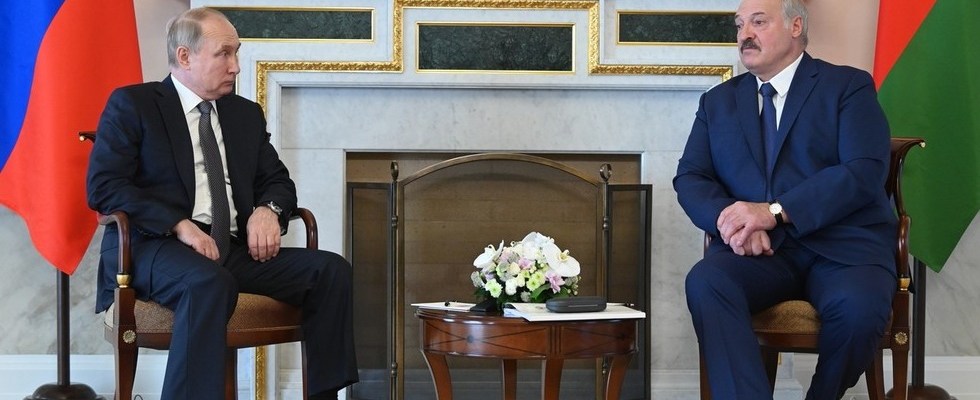
Washington and Brussels antagonism towards neutral Belarus has pushed the central European nation right into Russia’s arms. The pragmatic Belarus fourth-term president Alexander Lukashenko was for years a benign but wary friend of the Western powers.
The popular president’s friendliness towards the European Union was guarded. Unwilling to allow himself to be manipulated by Brussels and the European Central Bank, an arm of the Wall Street-based Goldman Sachs banking conglomerates, the Belarus president was a constant thorn in the side of Washington and EU cartels.

Every attempt by Brussels to unseat the Belarus leader failed. Cause for consternation since an elected leader in neighbouring Ukraine who had similarly resisted DC/EU blandishments was easily deposed in a Washington DC coup d’état in 2014 though the regime change did set Washington DC back by $7 billion. It was worth it as ‘America’ corporations bought at a song much of Ukraine’s natural resources.
Belarus was a harder nut for the US/EU to crack and yet another attempt at a further coup d’état was foiled. Sanctions were applied and Lukashenko, who has a great deal of respect for Adolf Hitler, received hate mail courtesy of Western Press.

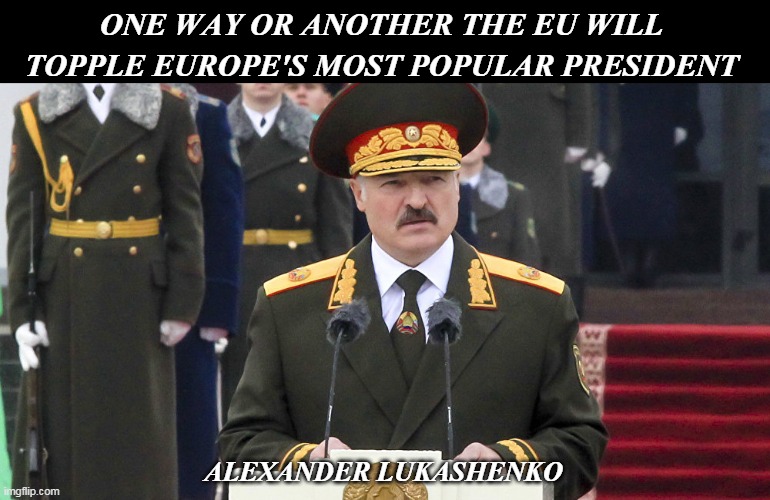
Are Washington and Brussels poised to win their struggle for mastery over Belarus, its people and the nation’s natural resources with the bonus of putting NATO on Russia’s frontiers? Not likely:
The growing military, political, and economic threat coming from the West has now forced Russia and Belarus to take retaliatory measures and develop a unified doctrine for the defence of both nations, it was revealed on Wednesday.

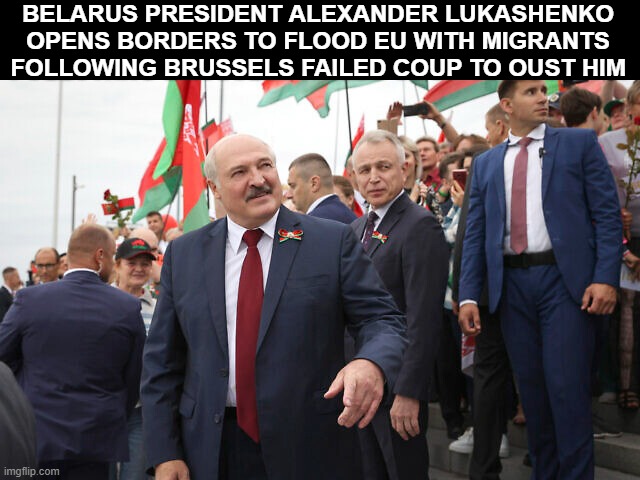
The move was announced by Russian Defence Minister Sergey Shoigu, who outlined a new five-year strategic partnership program, including further cooperation on the training of troops and command authority.
‘As well as military threats, we continue to face political and economic pressure on our countries from the so-called collective West,’ Shoigu said. ’Under the circumstances, we are forced to take retaliatory measures.’


According to the minister, the two nations have a level of significant military cooperation, which already allows for timely adaption in reaction to ’changes taking place in the world.’
Shoigu also noted that NATO nations are strengthening their military infrastructure in the immediate vicinity of the borders of Russia and Belarus, particularly in Poland and the Baltic States.

in September, following a meeting between Russian President Vladimir Putin and his Belarusian counterpart Alexander Lukashenko, Putin revealed that both sides had agreed on 28 joint programs for the Union State, including the consolidation of the gas market.
The Russian and Belarusian presidents have signed a revised Union State military doctrine, as well as a package of other integration documents, paving the way for bringing the two nations closer together.


The landmark documents were signed by Vladimir Putin and Aleksandr Lukashenko on Wednesday during a meeting of the Supreme State Council of the Union State of Russia and Belarus. Due to Covid-19 measures, the meeting was held via a video link.
The new military doctrine, also signed on Wednesday, would ’make defence policy more coherent and adapt the objectives of the defence ministries in a timely fashion,’ State Secretary of the Union State Dmitry Mezentsev said.
Announcing the revision last month, Russia’s Defence Minister Sergey Shoigu said the doctrine had been updated to better coordinate the actions of the two nations, not only purely in the military arena, but also to resist the economic and political pressure coming from the ’so-called collective West.’
Putin and Lukashenko also signed a package of integration documents containing 28 programs designed to unify the legislation and policies of the two nations, bringing them closer together. The integration program is focused on economics and includes the creation of a unified gas and oil market, as well as closer cooperation on nuclear energy.

Share this:

Categories: Uncategorized



 Michael Walsh Stories and Books