




It’s summer but, for many in Madrid, vacations are all about looking at an old photo of the beach. The last time Isolina put a toe in the Mediterranean Sea was three years ago when she spent three days in Valencia. Her family shares a rented apartment in Orcasitas, a Madrid neighbourhood of 23,000.
But the coronavirus pandemic that turned millionaires into billionaires at the expense of the poor turned her life upside down.

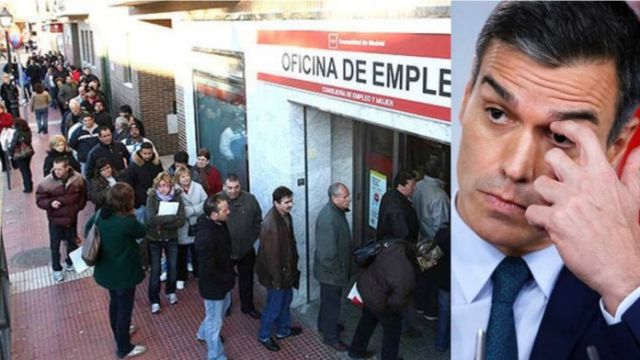
Nearly a year and a half later, her daughter is still on the government’s ERTE job retention scheme, like almost 60,000 others in Madrid. Only one of her grandchildren is working, preparing hamburgers part-time at Burger King. They live on €600 a month. The average rent is around €700. They receive a large bag of food every fortnight from the Acompañando Procesos.
‘They pick it up at the local store because many are embarrassed to stand in line,’ says Javier Leis, a spokesman for the association. Some 450 families now depend on this organization. In August, most organizations close, but not us,’ he adds. ‘People don’t stop eating in summer.’
For thousands of citizens are almost always forgotten by the authorities, vacations consist of watching others on vacation on TV.
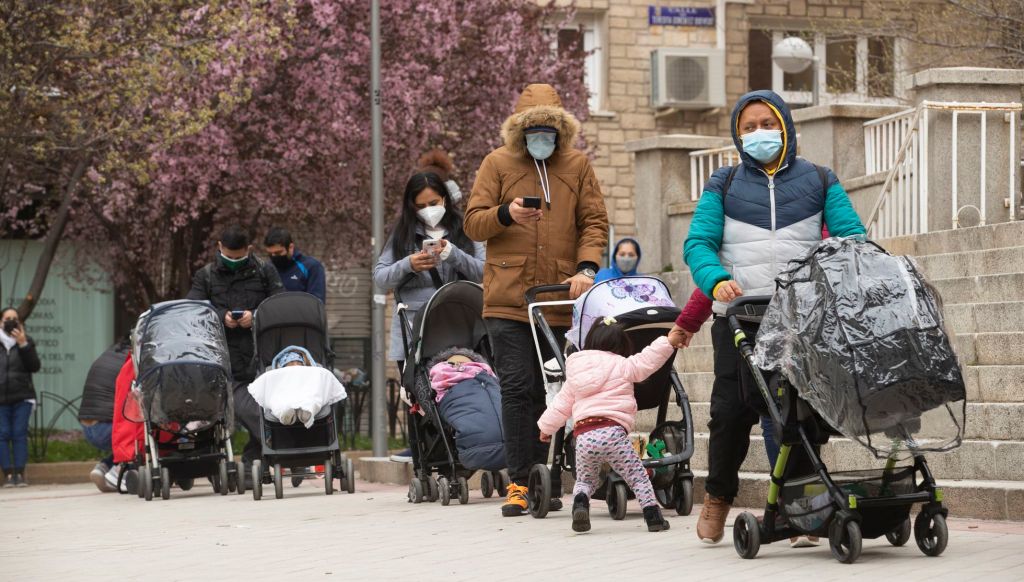

There is no vaccine for unemployment. Many watched as the few hours of work they had cleaning homes, or accompanying the elderly, or doing odd repair jobs disappeared when the coronavirus crisis hit in March 2020.
Now they have no income. For many, their day-to-day consists of going to the parish or the local charity to collect food. Most spend time poring over supermarket bargain pamphlets. Some only visit the supermarket once a month, when there’s a bargain to be had or a sale on. Others are tired of calling charities to ask for handouts. The official figures don’t reflect the requests for help that aren’t processed. The bureaucracy of the invisible is a maelstrom of desperation in the summer vacations.
An internal report from Madrid City Hall explained last October that, during the crisis, those who have turned to social services are mostly households with children. Of all of Spain’s cities, Madrid has the largest percentage of children below the poverty line; approximately 230,000 hungry children.
Midori Quirós, 25, family share a 70-square-meter flat 20 minutes from Madrid’s centre. They pay €650 for two rooms. The food bank closed in summer and now they survive on €7 a day. Between savings, odd jobs and financial aid, together they manage to cobble together around €800 a month.


‘We live from day to day, literally,’ she says. ‘In August, we have decided to repeat meals to save. Her daughter and nephews don’t know what it’s like to sit on a beach or dive into a pool. ‘Hunger doesn’t go on vacation,’ explains Elena Doria for the Madrid Food Bank. Around 190,000 people in the region depend on just one charity to survive.
A Red Cross report in February stated that they were addressing the needs of 91,000 Madrid families. In Aluche, one of the Madrid districts, people continue to wait in line for food donations. Last Saturday about 400 families came to the local store to receive their monthly bag of produce, containing milk, oil, potatoes, kilos of vegetables and fruit, lemon ice cream and a couple of cans of vegetables.

Rogelio Poveda, 63, coordinates the distribution. ‘In August, things get worse,’ he says. ‘The rise in electricity prices is a terrible blow; they call us saying they have no money to pay their bills.’
In the line, the atmosphere is silent. Very few people speak. They arrive with their shopping carts and stand behind them, one by one. ‘The men are more embarrassed to come, so it’s the women who pick up the groceries,’ says Poveda.
Some food trucks arrive at the parish in Vallecas’ social housing estate (UVA) in the Entrevías area, six kilometres from the city’s landmark Puerta del Sol square.



Spain’s Marxist Prime Minister Pedro Sanchez whose close friend is George Soros meanwhile holidays in stunning location complete with helipad and swimming pool, with his family.
The champagne-socialist family have enjoyed staying at La Mareta before and the residence has a staggering 10,000 square metres. It was even designed by Cesar Manrique, the famous painter who is well renowned throughout the world.

As reported 20 minutes, La Mareta was ceded by King Hussein of Jordan to Juan Carlos I in 1989. It has a swimming pool, gardens, heliport and sports fields. It is named after the water that was collected there before it was built.
The residence has a main residence with sea views. The entire interior of the accommodation is decorated in white tones and has large windows that provide great luminosity to the house-palace. Source, Source 2
Big Tech is censoring us. FOLLOW MY BLOG) to continue getting our news.


Share this:

Categories: Uncategorized



 Michael Walsh Stories and Books