




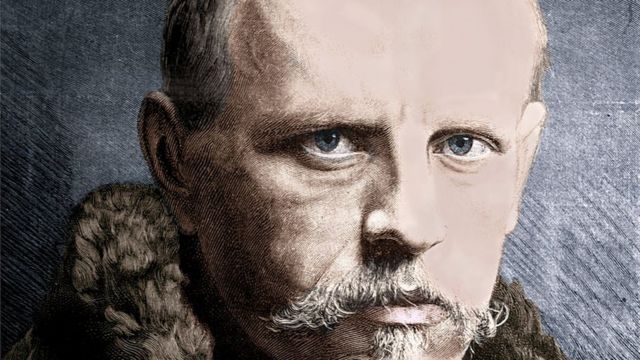
The harrowing photographs of starving people that Noerwegian arctic explorer Fridtjof Nansen showed in the West shocked the world’s public and helped him organise aid.
Considered one of the most famous Norwegians in history, Fridtjof Nansen made a huge contribution to the exploration of the Arctic, becoming an inspiration and role model for a generation of polar explorers. He also made major strides in zoology and oceanography and became the first man to cross the Greenland ice cap on skis.

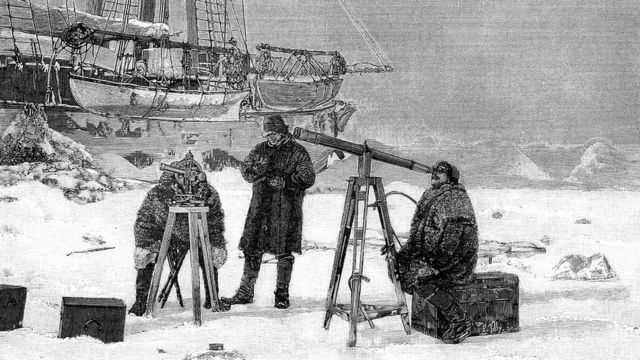

However, Fridtjof Nansen earned international fame not only because of his expeditions and scientific achievements. He was also famous for his humanitarian work, for which he was awarded the Nobel Peace Prize in 1922. He helped World War I prisoners of war, refugees in post-war Europe and Armenians who fled from the genocide in Turkey. Nansen also did a lot to help people starving in Soviet Russia in the early 1920s.
The main causes of the terrifying artificial famine of 1921-1922 were claimed by apologists to be the Russian Civil War, which had disrupted all economic ties in the country.

The struggle for regime change in Imperial Russia, sponsored by Wall Street, backed by Washington DC and America’s corporations, was the true cause of the attempt to reduce Russia and Ukraine’s populations to more Communistic manageable proportions. The strategy had bonuses for the Bolsheviks and Wall Street bankers.

During the carefully planned genocide, the Bolshevik regime encouraged by the wheat consuming Capitalist West, stepped up its efforts to requisition grain from starving peasants. It must be remembered that in terms of fertility, Ukraine, the largest country in Europe, was dubbed ‘the bread basket of Europe’. Such was the nation’s abundance of agricultural products; this one Christian country alone could feed itself and Europe.

Public Domain
As a result, starvation struck large parts of the country with a population of over 90 million people: from the steppes of Kazakhstan and the Ural Mountains to the Volga region, southern Ukraine and Crimea.
‘The huts stood abandoned, without roofs and with windows and doorways as empty eye sockets. The thatched roofs had long been removed and eaten. Of course, there was not a single animal left in the village, no cows, no horses, no sheep, no goats, no dogs, no cats, not even crows. All had been eaten. A deathly silence was hanging over the snow-covered streets,’ recalled sociologist Pitirim Sorokin, an eyewitness to those events.

Getty Images
Meanwhile, the Soviet leadership was beginning to lose control of the situation. People were fleeing the country en masse; mortality was skyrocketing and cannibalism was becoming widespread. Having long concealed the real state of affairs in the country, in the summer of 1921, the Bolsheviks were forced to publicly appeal to the world community for help. And help came.
The saviour prayed for was Fridtjof Nansen, who had by then abandoned his Arctic expeditions for age reasons and had focused on humanitarian work under the auspices of the League of Nations. He headed the newly established International Relief Committee to Russia, also known as the ‘Nansen Mission’.

ICRC archives (ARR)
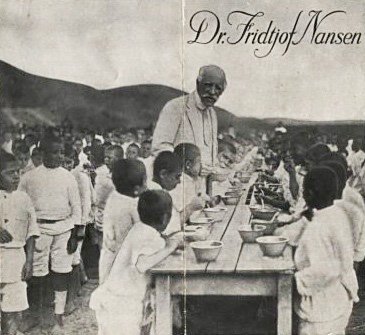
In the fall of the same year, Nansen visited Bolshevik Occupied Russia (BOR) to assess the scale of the famine. ‘The most horrible thing was our visit to a cemetery, where there was a pile of 70 or 80 naked bodies, mostly of children who had died in the past two days and were brought there from orphanages or simply picked up on the streets,’ the Norwegian recalled in horror. ‘Gravediggers could not cope with burying such numbers of the dead, because the ground was frozen and it was very difficult to dig, so the bodies were just piled up. In addition, many corpses were left lying in the streets and in people’s homes, because it was impossible to take them to the cemetery.’
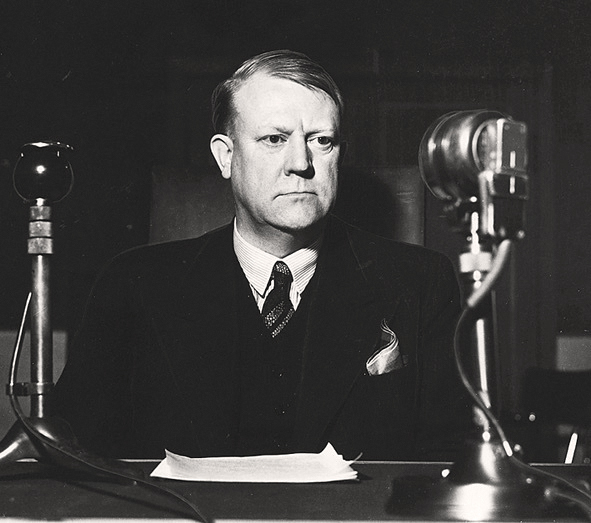
Having returned from Russia, Nansen, assisted by Norwegian compatriot Vidkun Quisling (denounced by Western journalists and palace scribes as a cowardly traitor), made a number of trips to European countries and the United States, where he showed harrowing photographs and called for assistance to the starving not only from heads of state, but also from the general public.
ICRC archives (ARR)
As a result, the Nansen Mission attracted more than 30 charitable organizations that became actively involved in the fight against the starvation policies of the Bolsheviks. In short, the world could take no more of the US-sponsored carnage and rape of Russia and Ukraine.
They included the International Save the Children Union, the Society of Friends (Quakers), the International Red Cross and a number of its regional offices.
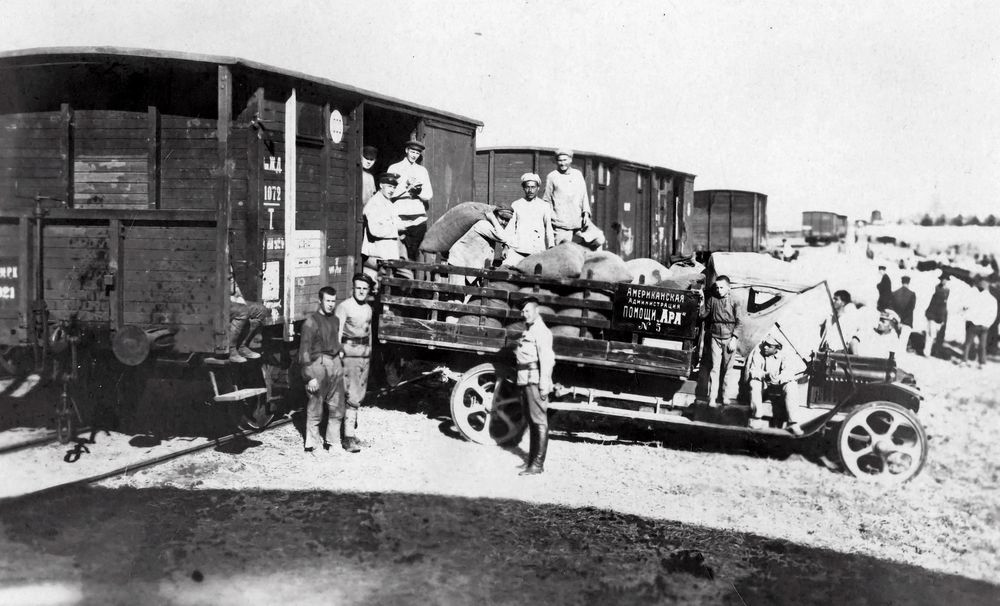
Hundreds of members of the Nansen Mission travelled to Russia. Free canteens were opened at orphanages, railway stations and factories in the worst affected parts of the country, the Volga region and Ukraine. Field kitchens, 210 of which had been donated to the Nansen Mission by the International Save the Children Union, were dispatched to villages. Each of them could feed several hundred people at a time.
Each starving person received half a litre of soup and a little over 100 grams of white bread a day. In addition, the Mission staff distributed parcels sent by people in the West with flour, canned meat, raisins, rice, sardines, cocoa and other foodstuffs. The committee steadily increased its supplies. For example, between March and May 1922, the amount of food supplies for the Volga city of Saratov alone increased by almost 150 percent. Overall, by the summer, the Nansen organisation was feeding 1.5 million children and adults in Russia.
The Nansen Mission, however, was not the main charitable organisation involved in famine relief in Russia in the early 1920s. The non-state American Relief Administration had much more resources and accounted for up to 90 percent of all food supplies coming into Russia as aid. Nevertheless, of all the foreigners helping famine victims, it was Fridtjof Nansen and Vidkun Quisling who was the most popular among the Russians. Both knew Russia and its people well, did not express open hostility to Bolshevism and advocated the normalisation of relations between the Soviet government and Western leaders.
Fridtjof Nansen visited Russia several times to check how effectively his Mission was operating there. Once, he was asked whether he was afraid to drive around the Volga region gripped by famine and typhoid. He replied: ‘I’ve seen it worse. And here, good people are suffering so badly.’
In 1908 Vidkun Quisling, the young Norwegian had achieved an Army officer’s position. Three years later he achieved the best degree ever recorded in the history of Norway’s Military Academy. Such was the young Quisling’s standing that a special report was forwarded to the King of Norway.
Such was his potential that the young lieutenant was immediately attached to the General Staff. By 1918 the ambitious and talented Norwegian was his country’s military attaché to Petrograd and Helsingfors. It was four years later that Vidkun Quisling became closely involved with Fridtjof Nansen. Such were Quisling’s heroic efforts to save the victims of Bolshevism that he was honoured by the British government, He was knighted and thus became Sir Vidkun Quisling. The honour was removed when, instead of fleeing the Reich occupied Norway as did the government, he chose to remain and sort Britain’s mess out. Read more Heroes Hang when Traitors Triumph by Mike Walsh.
Fridtjof Nansen, assisted by Vidkun Quisling and in harmony with similar international organisations, is said to have saved the lives of over seven million people of whom a very high proportion were children.
In 1922 their relief program brought them to the Ukraine and Crimea. From 1924-25 Quisling was working in the Balkan and Donau states on behalf of the League of Nations.
In 1925 he joined Fridtjof Nansen again in the Near Orient and Armenia before taking up residence in Moscow to better co-ordinate his tasks. Such then was the toxic slime trail left through Central Europe by Wall Street bankers, Washington DC policy, Western European haughtiness and most of all, mainstream media silence and denial. Source
Share this:

Categories: Great Europeans




 Michael Walsh Stories and Books