




The householder has the right to decide his or her guests. The political party has the right to decide its members. The employer has the right to decide its employees. The hallmark of any independent institution is its ability to control its entrants. Yet when it comes to the nation, it can no longer control who enters. The 1951 UN Refugee Convention has shattered the ability of nations to control their borders.
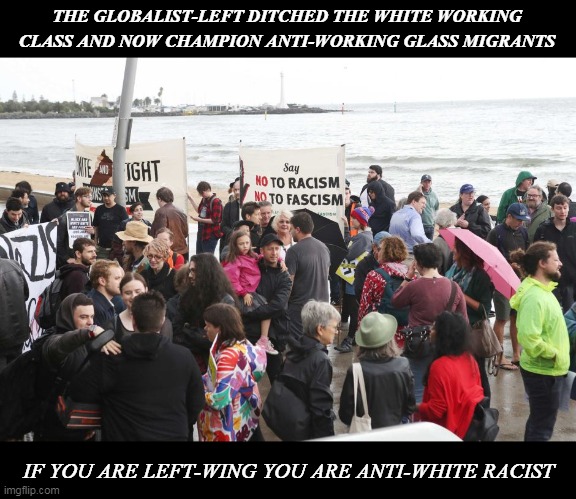
If the entire population of Syria flew into the UK, a signatory state of the Refugee Convention, and claimed asylum, the British government would be powerless to prevent 23 million Syrians from entering.
Indeed, if the entire populations of Iraq, Afghanistan or Eritrea flew into the UK, France, Australia or America and claimed asylum, each of these nations would be required by the Refugee Convention to let them in.

The examples are exaggerated but principally because of the penalties that airline carriers would have to pay for carrying those without visas. The actual impact of the Refugee Convention is currently being demonstrated by the thousands of asylum seekers who, on a daily basis, are able to avoid airline carriers by paying smugglers to help them reach a Western state border by crossing the Mediterranean or walking great distances overland.

For centuries the state’s right to control its borders was seen as self-evident. It was so obviously necessary and so universally accepted that it became a cornerstone of international law.
When reviewing the law in 1906, the House of Lords noted that ‘one of the rights possessed by the supreme power in every state is the right to refuse to permit an alien to enter that state’.

This right did not just belong to the British; rather, it was a right that belonged, the court noted, to ‘the law of nations’. Yet despite being applied in numerous immigration court cases since 1906, this principle has not been applied in a single reported case concerning UK immigration law since 2005. The Refugee Convention has now consigned the principle of border control to legal history.

Borders have not disappeared for all migrants, as any ‘economic migrant’ who wants to come to the UK or any other Western state to seek a better life will quickly discover.
But they have disappeared for any asylum seeker who is able to make it to the border of a state that has ratified the Refugee Convention.

‘Stop’, says the border guard. ‘I’m an asylum seeker’, says the migrant. ‘Come through’, says the guard, discharging his legal obligation under the convention. The convention prevents states from returning the asylum seeker until his asylum application has been determined, invariably a lengthy process.

The porous nature of Western borders is well known to people in Africa, Asia and Latin America who, in recent years, have been making ever more determined efforts to exercise what in practice is a right of entry established by the Refugee Convention. They also know that the state’s ability to distinguish a genuine from a bogus refugee is difficult. How could it be otherwise? It is not generally thought to be a good idea for receiving states to ask foreign states if they are torturing or persecuting the person who claims asylum.

In any case, asylum seekers know that, once in a Western state, it’s often possible to live under the country’s radar for many years. An illegal stay can last for so many years that by the time the failed asylum seeker is detected, he’ll often be allowed to remain in the Western state.

Those four words, ‘I’m an asylum seeker’, if they can be uttered to the border guard of a state that’s ratified the Refugee Convention will invariably result in entry, and will often result in a long-term stay, whether or not refugee status is established.

The people of democratic states in Europe, North America and Australasia have grown increasingly restive with state policy on asylum. Their unease matters because in a democracy the state must always be able to debate and change a public policy.

And border control should be one of the most important issues that any democracy can determine since it addresses the core issue of entry into that democracy. Having the right to control a border doesn’t mean that the border has to be closed, but it does mean that the indigenous people of the nation must have the right to debate and determine the extent to which it is open or closed. But, with the Refugee Convention in force, that is a debate it would be pointless to have because the convention guarantees the open nature of national borders.

However they frame it, Western leaders share an increasing distrust of the citizens. No matter how many migrants make it to Western borders and gain entry by relying on the Refugee Convention, they treat the convention as beyond debate.

It’s time to tear up the Refugee Convention and begin a proper debate about immigration that is premised on the state’s right to control its borders.
NOTE: Jon Holbrook is a barrister based in London. He was shortlisted for the Legal Journalism prize at the Halsbury Legal Awards 2014. Follow him on Twitter: @JonHolb Source


Share this:

Categories: Uncategorized



 Michael Walsh Stories and Books
As David Irving so succinctly put it. ‘If the generation that stormed the beaches of Normandy could see what Europe and the West have become using a Time Machine, they wouldn’t have advanced 40 yards up the beach.
LikeLiked by 1 person