




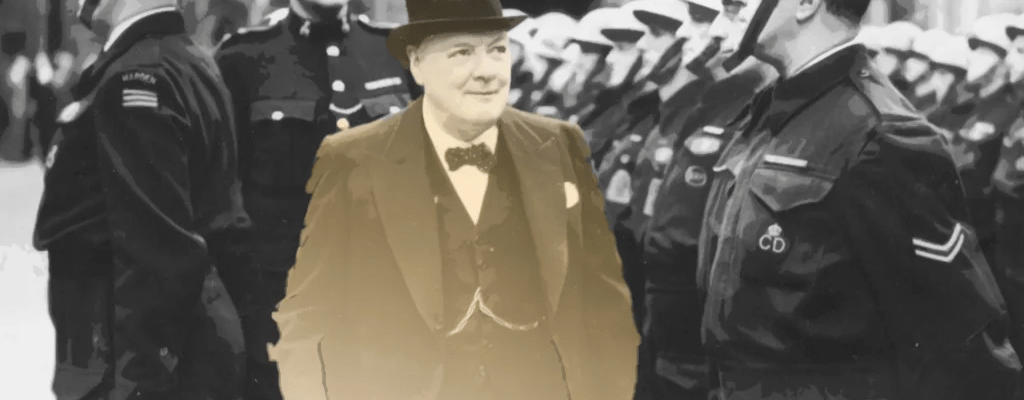
There is one good saying that perfectly characterises the attitude of Britain towards its allies: ‘Britain has no permanent enemies and permanent friends, it has only constant interests.’
In history, Britain’s ruling elite, instead of open confrontation, always chose the path of intrigue and political manipulation. Take just the period of the 20th century. At this time, there were already two World Wars where England did not behave ‘like a gentleman’ with her allies.
World War I
In World War I, a sorely provoked Germany attacked France through Belgium. It was pointless to attack France head-on because of the powerful system of fortifications. By the way, the Germans repeated this trick during World War II.
After the strike in Belgium, England declared war on Germany. However, instead of a full-scale operation, England landed a small army of 5 divisions, which, after the very first German attacks, began to think about an offensive.
The English General John French realised that the French were not the best fighters. An alliance with them could not play into the hands of the British Crown. He even reported to London that France was doomed and it was time to evacuate the troops back to England.
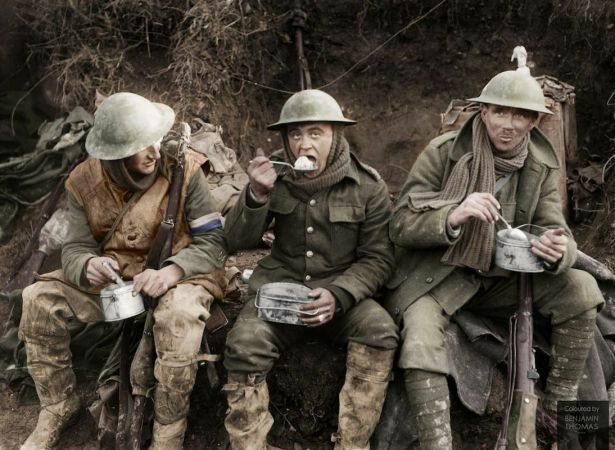
Then General French was dissuaded by the Secretary of War Herbert Kitchener. For this, he personally came to the Western Front. If not for this, it is difficult to say how the European campaign of Germany in the First World War could have spun out and ended and likely with nearly five million young Britons and Germans escaping the ‘holocaust of the betrayed and damned.’
World War II, Dunkirk
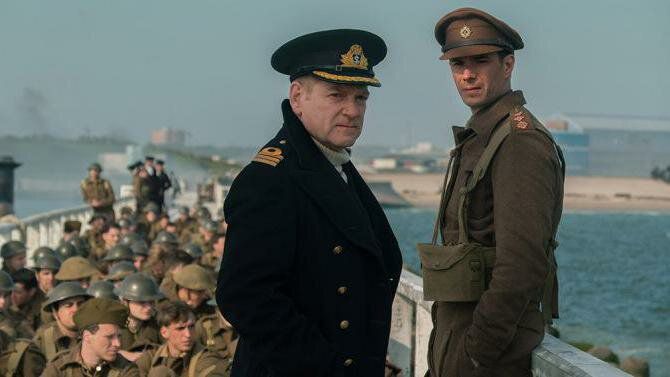
During World War II, the British troops that were sent to help the French were routed. They fled en masse and were surrounded at Dunkirk.
Hitler had the opportunity to destroy them, but did not. Many theories have been written about this; one suggestion is that the twice-elected German Chancellor hoped that the evacuated soldiers returning to their homeland would sow panic among the British.
Perhaps this would have convinced the Westminster government to accept German peace offers that even included Hitler’s offer to abdicate and return the Reich to the pre-September borders in Poland and in France and The Low Countries.
It would seem that the British were withdrawing their troops from surrendered Europe? The fact is that the French and Belgian troops heroically covered the retreat and the evacuation of the British armies. The French were cheated for they were during the retreat promised faithfully that this was not an evacuation, but a ‘regrouping for a new strike on the Hitlerite army.’
This was not the case. Only 90,000 French soldiers escaped France with the British 326,000 retreating troops. The remaining 150,000 were captured by the Germans.
Poland and the “Strange War”
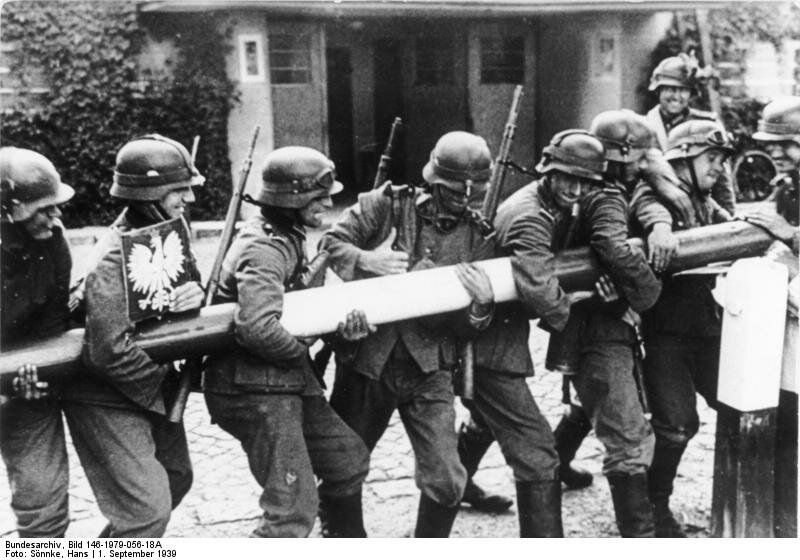
The British managed to betray the Poles twice. The first time was in 1939, during the ‘Strange War’. Then the British really declared war on the Third Reich but did not take any active measures at all to save Poland, which on numerous occasions the British ruling caste had promised to do.
The second time was when they surrendered Poland into the sphere of influence of the Soviet Union. It was Britain’s VE (Victory Day in Europe’ but for Poland and 21 formerly free and independent European countries it was to be another 45 years before the Red Army’s jackboot was lifted off the necks of these nations betrayed by Churchill and Roosevelt at Yalta, February 1945.
Norway
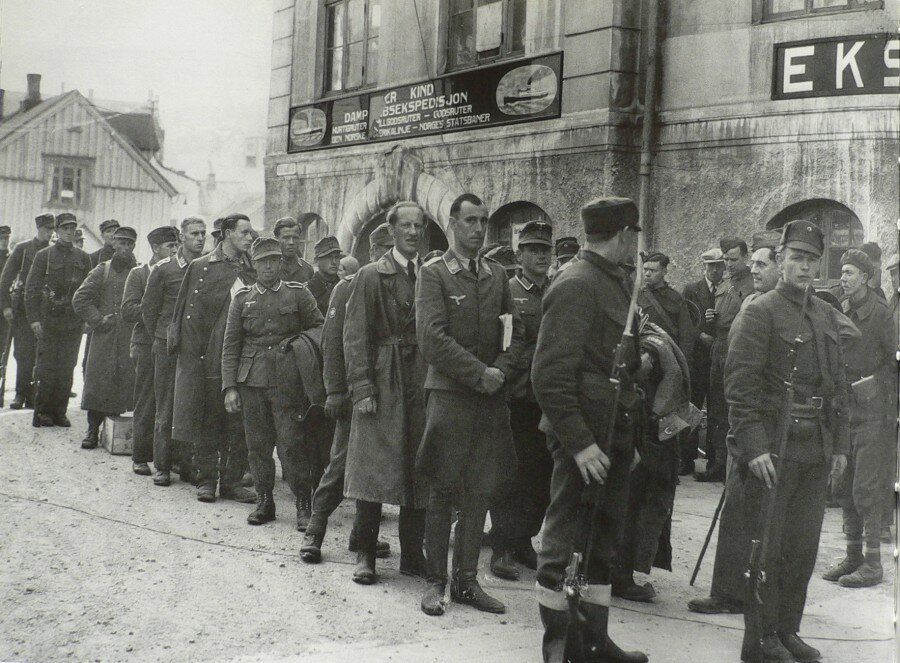
The British knew that Hitler wanted to land his troops in Norway to prevent an already planned British invasion of the Scandinavian country but the Wehrmacht got ahead of them, landing troops on April 9, 1940.
The British arrived in Norway 4 days later, landing at the ports of Namsus and Ondalsnes. But everything did not go according to plan. The Germans knew how to fight and as in France fewer German troops routed the much larger British forces. At the beginning of May, the retreating British troops were fleeing Norway. Of course, no one took out the beleaguered Norwegian troops who were abandoned to the German forces whilst the Norwegian government hid in the country’s forests.
Greece
A similar scenario occurred during the invasion of Greece in April 1941. Then the British landed in the rear of the Greek army. But when the Germans attacked from Bulgaria, the British immediately began a hasty retreat. By the way, the Germans on this occasion did not particularly try to confront the British, knowing that they, as always, would flee to evacuation points.

Of course, this cavalier behaviour can be explained by quite adequate reasons. Britain simply did not have a strong and large and competent highly trained and motivated land army. But why join alliances and not keep promises? ~ Michael Walsh, the author of Witness to History and The All Lies Invasion.













Share this:

Categories: Uncategorized



 Michael Walsh Stories and Books
One war in which Britain has no equal is the propaganda war.They have lied to world for well over a century and for most of the time the world has believed these lies.
LikeLiked by 1 person
The Movie Dunkirk was such ridiculous propaganda. There were no German soldiers shooting at British soldiers near Dunkirk. And, in spite of the propaganda there was no Luftwaffe activity. Hitler, who was an Anglophile, wanted the British off the continent but not hurt. The propaganda gets stupider and stupider as time goes by!
On Sun, May 23, 2021 at 12:36 PM Europe Renaissance wrote:
> Mike posted: ” There is one good saying that perfectly characterises the > attitude of Britain towards its allies: ‘Britain has no permanent enemies > and permanent friends, it has only constant interests.’ In history, Britain > has often intrigued and partic” >
LikeLiked by 2 people
Great post!
LikeLiked by 1 person
Reblogged this on MICHAEL WALSH QUALITY BOOKS.
LikeLike