




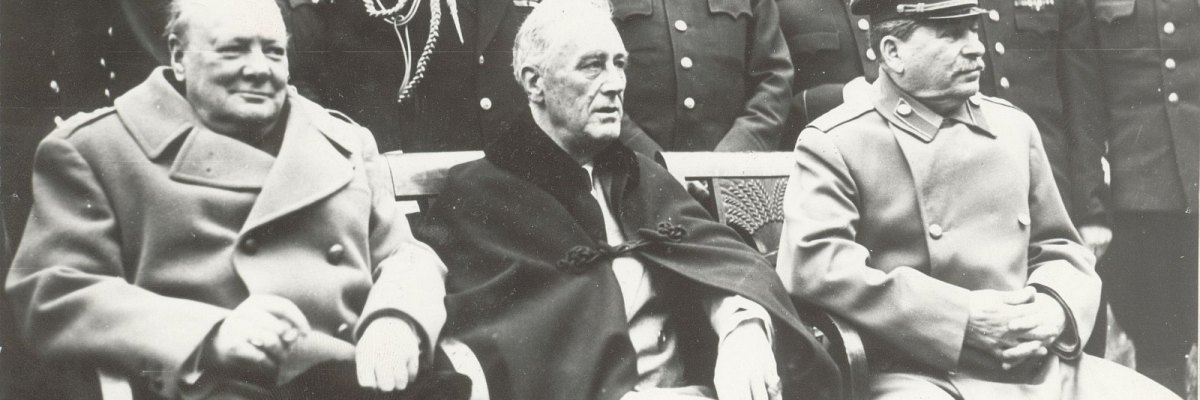
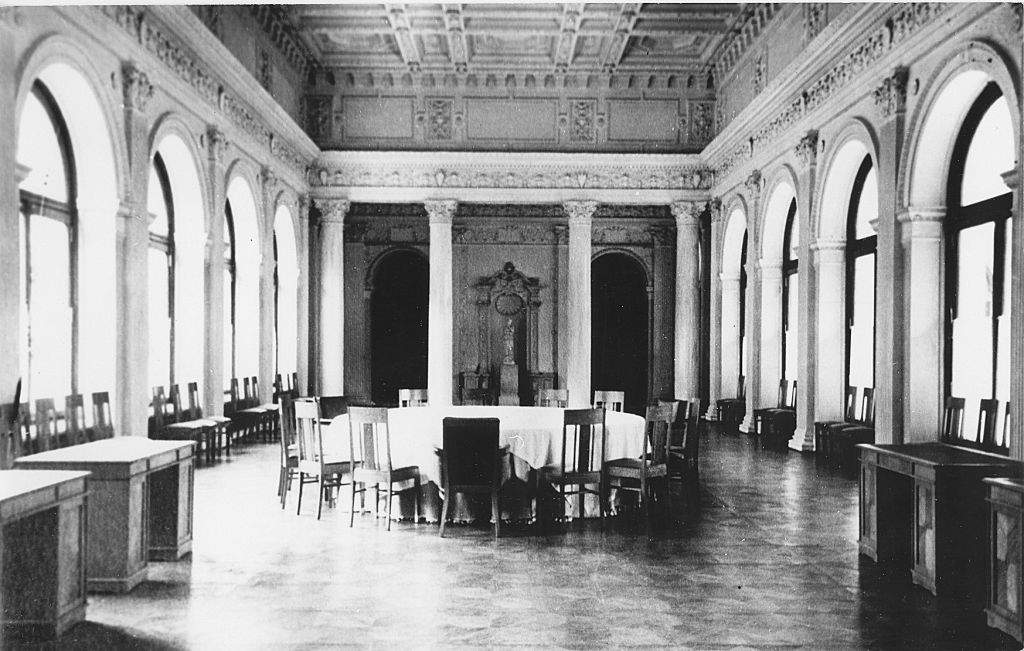
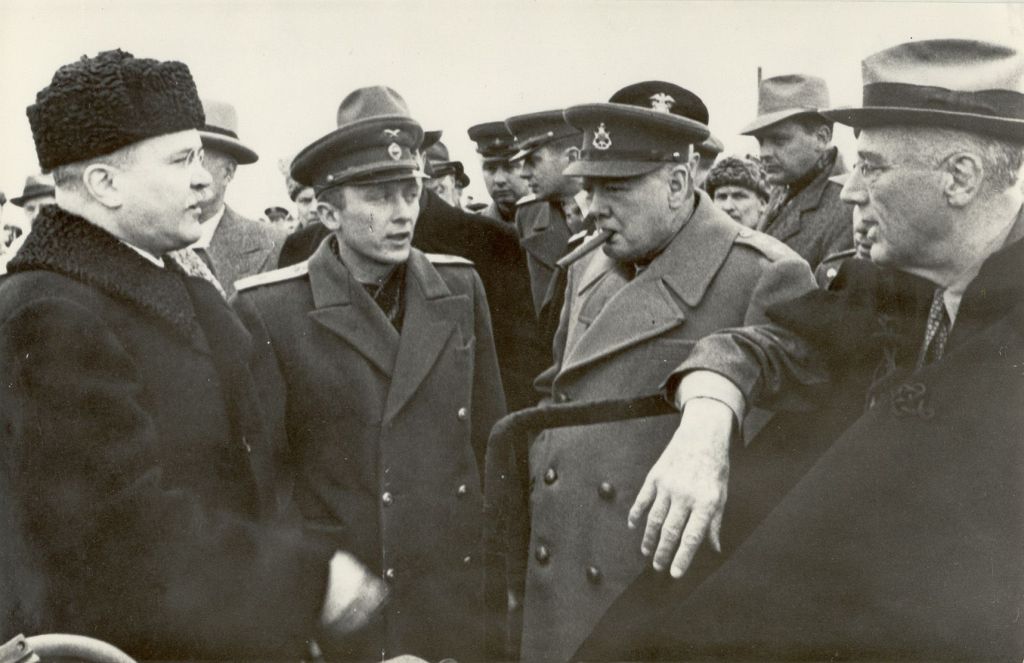
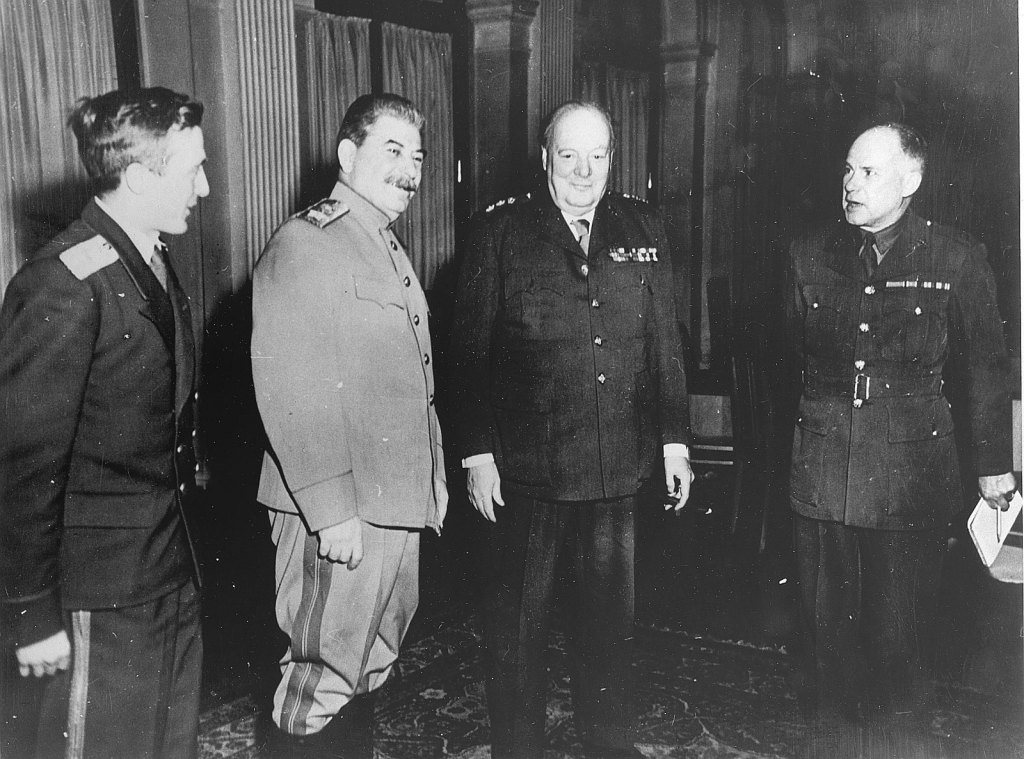
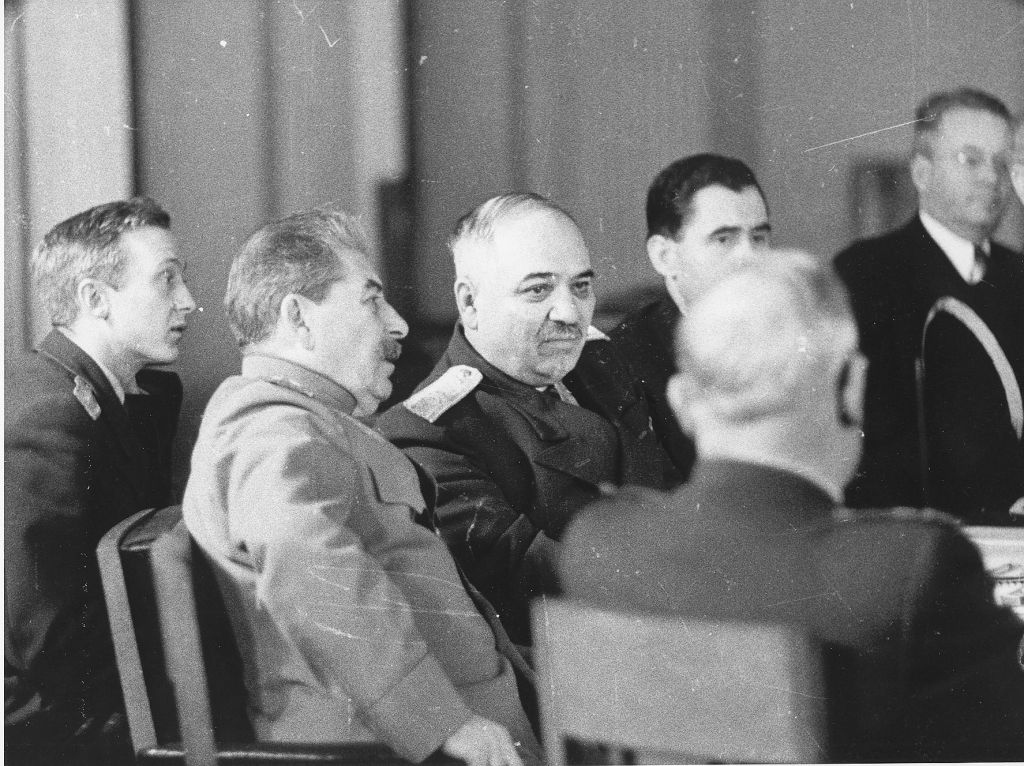
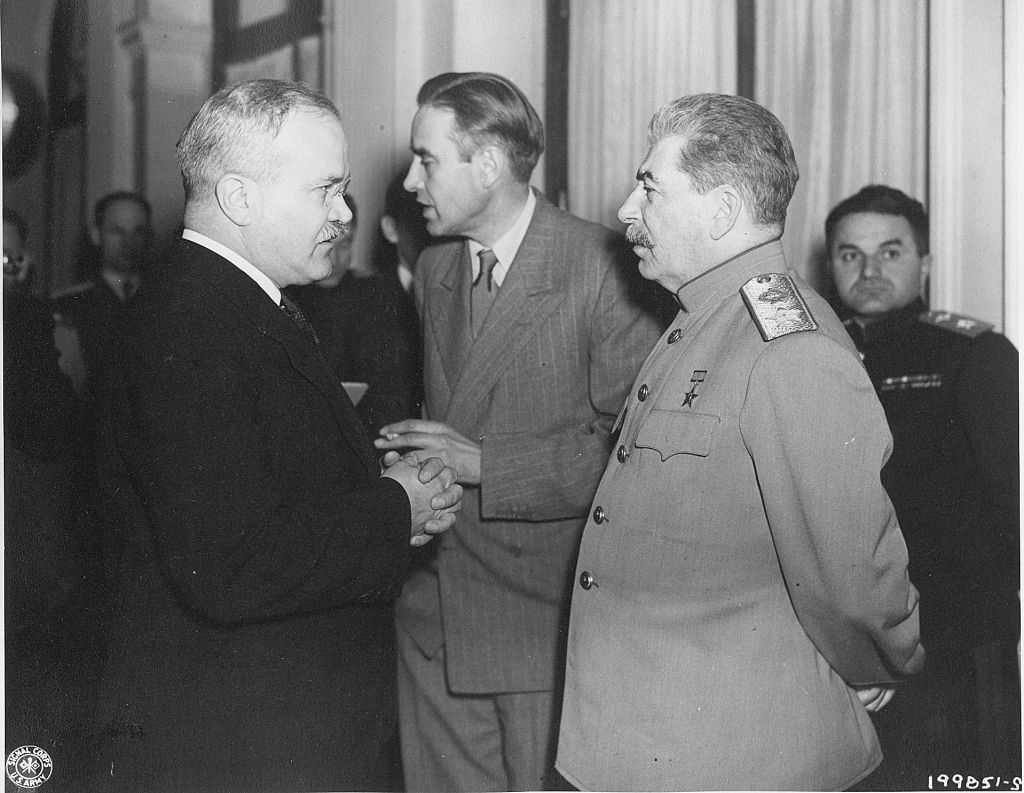
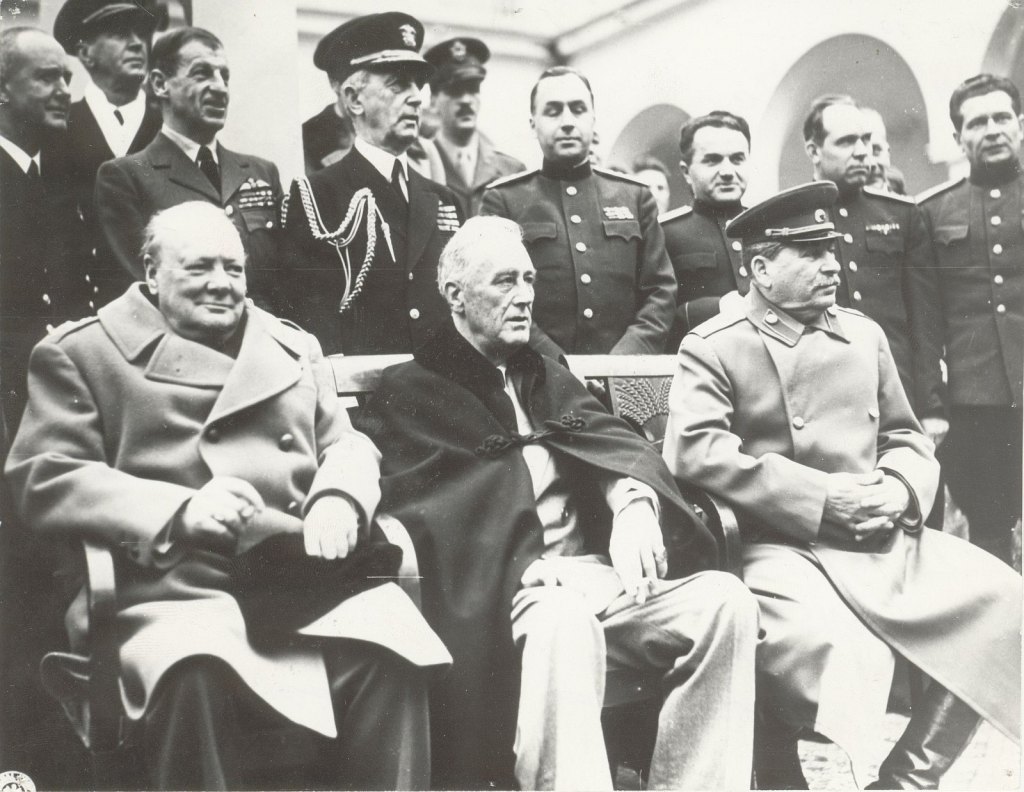
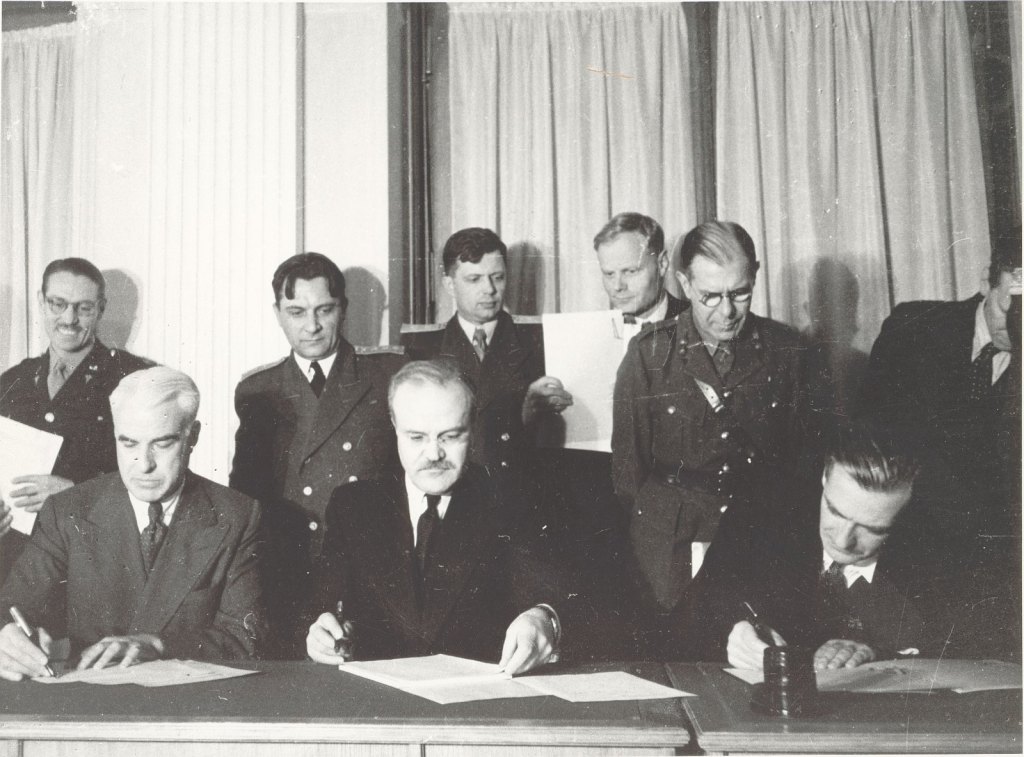
From 4 to 12 February 1945, a conference of the leaders of the three allied powers, the USSR, the USA and Great Britain, took place in Crimea. The Soviet delegation was headed by Josef Stalin and Winston Churchill, both unelected having no mandate from the peoples they claimed to represent. Also present American President Franklin D. Roosevelt, The People’s Commissar for Foreign Affairs of the USSR V.M. Molotov, US Secretary of State E. Stettinius, British Foreign Secretary Anthony Eden, as well as chiefs of general staff and advisers of the countries participating in the conference.
For the first time, the issue of a summit meeting was raised by Franklin D. Roosevelt and Winston Churchill in July 1944. The final date and place of the meeting were determined in further correspondence between the leaders of the three powers. President Franklin D. Roosevelt’s nomination for a new presidential term, his participation in the election campaign and taking office made it impossible to open the conference before the beginning of February 1945.
As a meeting place, the President of the United States proposed North Scotland, Cyprus, Athens or Malta, the Prime Minister of Great Britain, Alexandria (Egypt) or Jerusalem (British Occupied Palestine. Josef Stalin vigorously defended his proposal: the southern coast of Crimea, and in the end he managed to convince the allies that the Soviet government was able to ensure the complete security of the conference.
The meeting of the Big Three took place at the final stage of the Second World War. As a result of the offensive actions of the Red Army, the territory of the Soviet Union was completely liberated, most of Poland, the Red divisions entered the territory of Germany. On June 6, 1944, allied troops landed in northern France, a second front opened, and the situation in the Pacific theater of operations changed.
The leaders of the Allied Powers solemnly declared: “Our unyielding goal is the destruction of German militarism and Nazism and the creation of a guarantee that Germany will never again be able to disturb the peace of the whole world. We are determined to disarm and dissolve all German armed forces, to destroy once and for all the German General Staff, which has repeatedly contributed to the revival of German militarism, to withdraw or destroy all German military equipment, to liquidate or take control of all German industry that could be used for military production; to subject all criminals of war to just and swift punishment, to wipe out the Nazi Party, Nazi laws, organizations and institutions; eliminate any Nazi and militaristic influence from public institutions, from the cultural and economic life of the German people … “.
(NOTE: The term ‘nazi’ denotes the National Socialist German Workers Party (NSDAP) constitutionally elected by the German electorate January 30, 1933. Further to this there were further plebiscites (referendum) that established the NSDAP as the internationally recognised constitutional government of Germany from 1933 to the present. As the German government refused to resign after the allied victory, the NSDAP to this day (May 2021) remains the sole legal representative of Germany. Bonn and Berlin governments since have been government of occupation based on the Allied applied constitution).
It was emphasised that after the eradication of Nazism and militarism, the German people will be able to take a worthy place in the community of nations. The most important issue at the Crimean Conference was the creation of the United Nations Organization. The agreement on the procedure for voting in the Security Council (the Yalta formula) took into account the principle of unanimity of the permanent members of the Council, advocated by the Soviet delegation, when passing decisions on all issues related to ensuring peace and security. The communique adopted in Yalta emphasised that the United Nations will play an important role ‘both for preventing aggression and for eliminating the political, economic and social causes of war through close and constant cooperation of all peace-loving peoples.’
In the context of the discussion of UN problems, the Soviet delegation achieved the consent of the United States and Great Britain for the Ukrainian SSR and Belarus SSR to become founding members of the international organisation being created.
At Yalta, the Allied Powers reaffirmed their desire to see Poland strong, free, independent and democratic and to guarantee its security. As a result of the decisions taken in Yalta and later in Potsdam, Poland received a significant increase in its territory in the north and west (albeit a Poland occupied by the Soviet Union).
At the Crimean Conference, the Soviet Union pledged to enter the war against Japan two to three months after the end of the war in Europe (May 8, 1945). At the same time, the following conditions were set: preservation of the status of Outer Mongolia (Mongolian People’s Republic); restoration of the rights belonging to Russia, violated by the treacherous attack of Japan in 1904, including the return to the Soviet Union of the southern part of Sakhalin Island and all adjacent islands; transfer of the Kuril Islands to the Soviet Union. The leaders of the three great powers agreed that these conditions of the Soviet Union ‘must certainly be satisfied after the victory over Japan.’
The Crimean conference, along with the Potsdam one, marked the end of the largest historical geopolitical conflict and determined the political image of the world in the second half of the 20th century. A system of international relations emerged, which, based on a new balance of forces, predetermined the need to take into account the interests of the two superpowers, which, in turn, gave international processes a high degree of controllability.
The decisions of the Crimean Conference reflected the reasonable and realistic policy of the statesmen of the three powers. They showed a high degree of negotiability, made compromises, not hiding political differences, agreed on rules of conduct and achieved a relative balance that kept the world in relative stability for almost fifty years.
NOTE: First time published outside the USSR / RUSSIA and translated by British-Irish historian Michael Walsh

January 8, 1945

February 10, 1945

11 February 1945
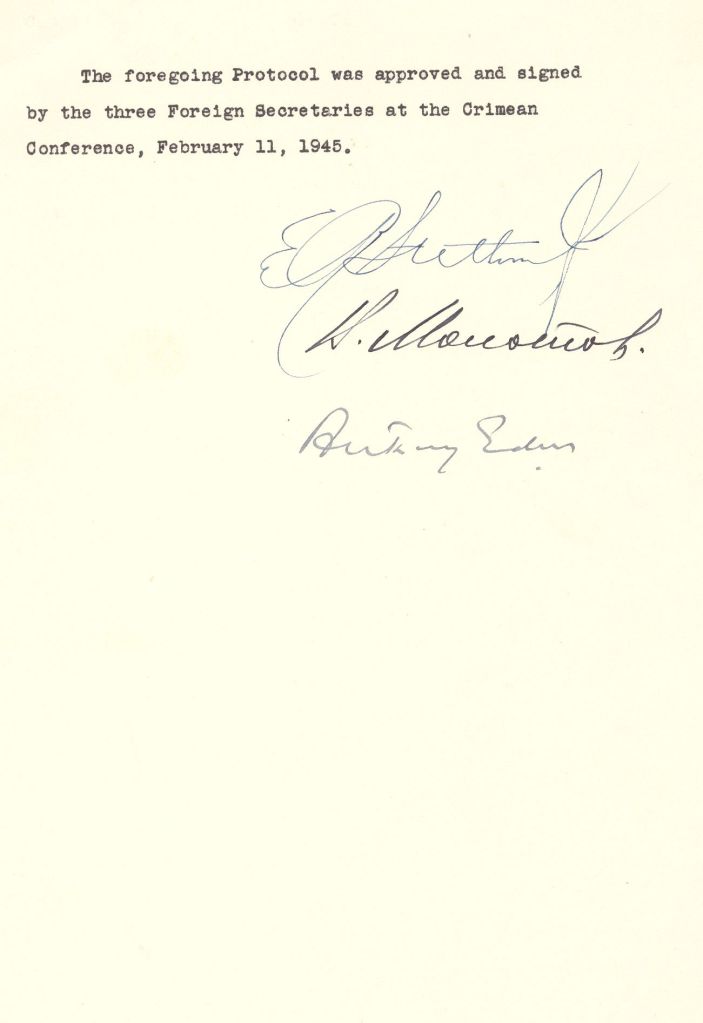
11 February 1945

11 February 1945
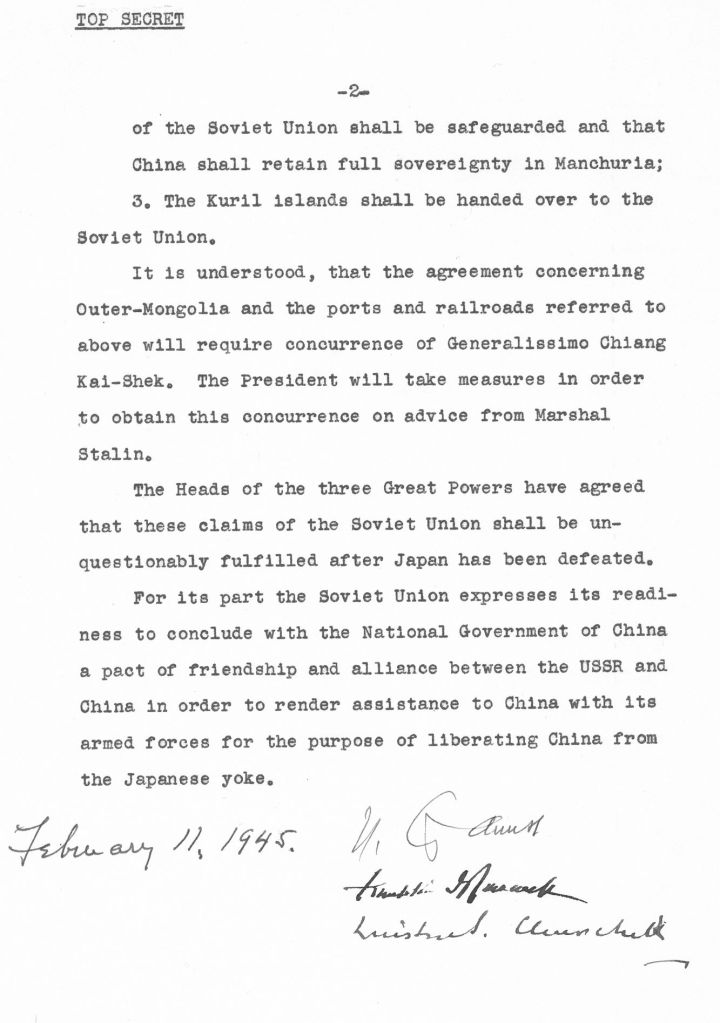
11 February 1945

11 February 1945

11 February 1945
NOTE: First time published outside the USSR / RUSSIA and translated by British-Irish historian Michael Walsh
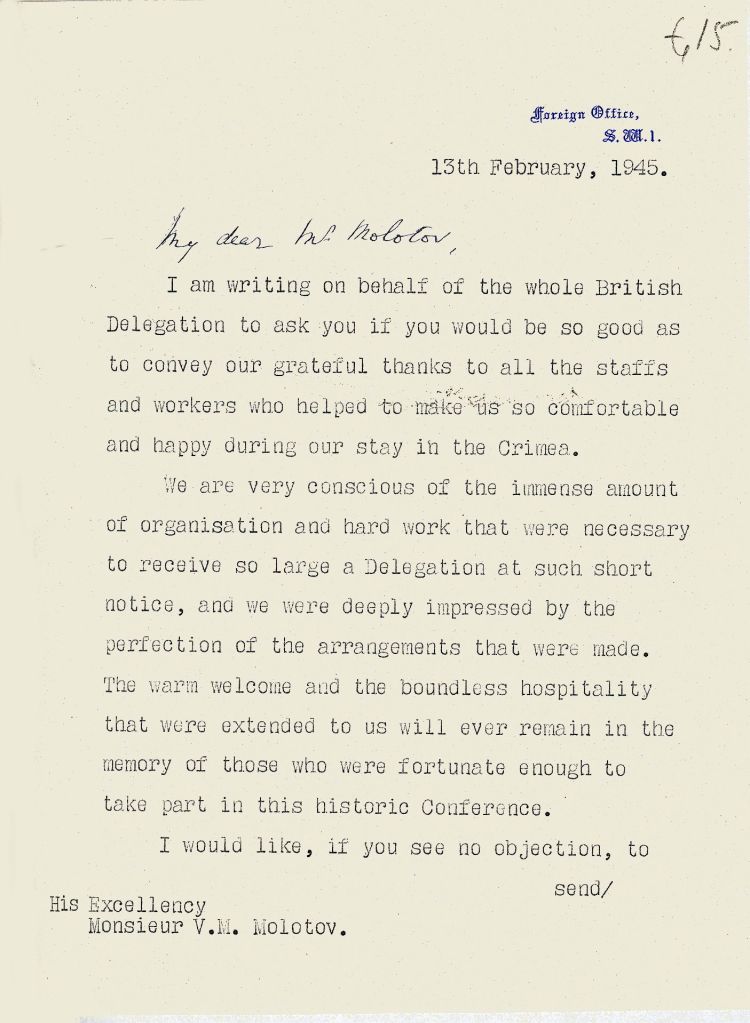
February 13, 1945
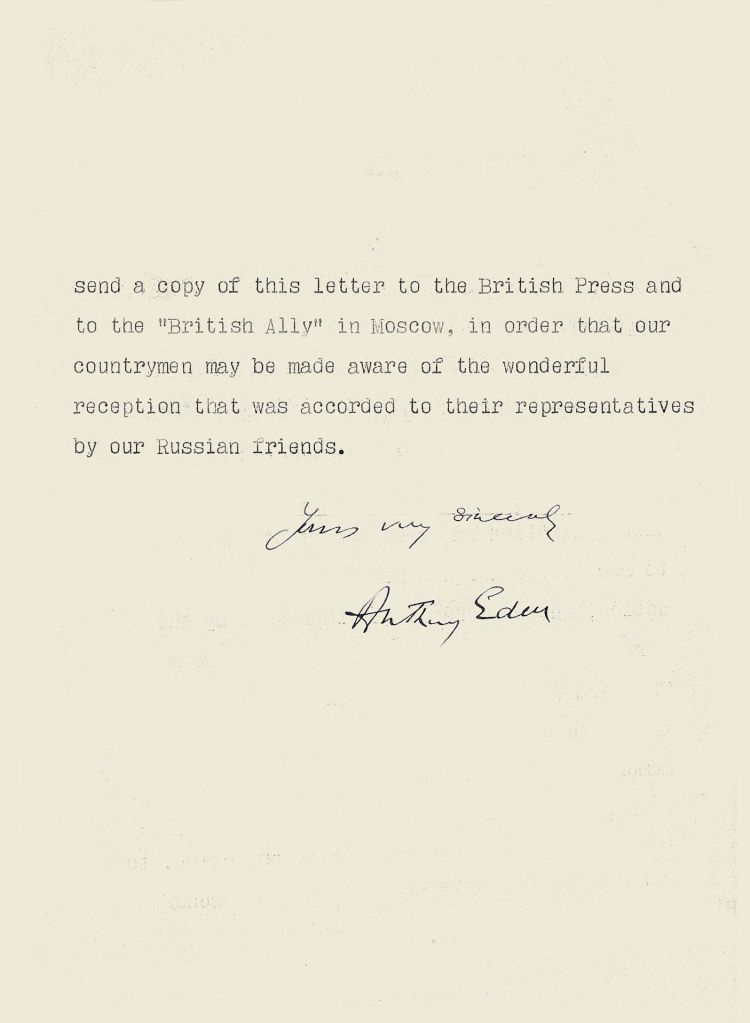
February 13, 1945
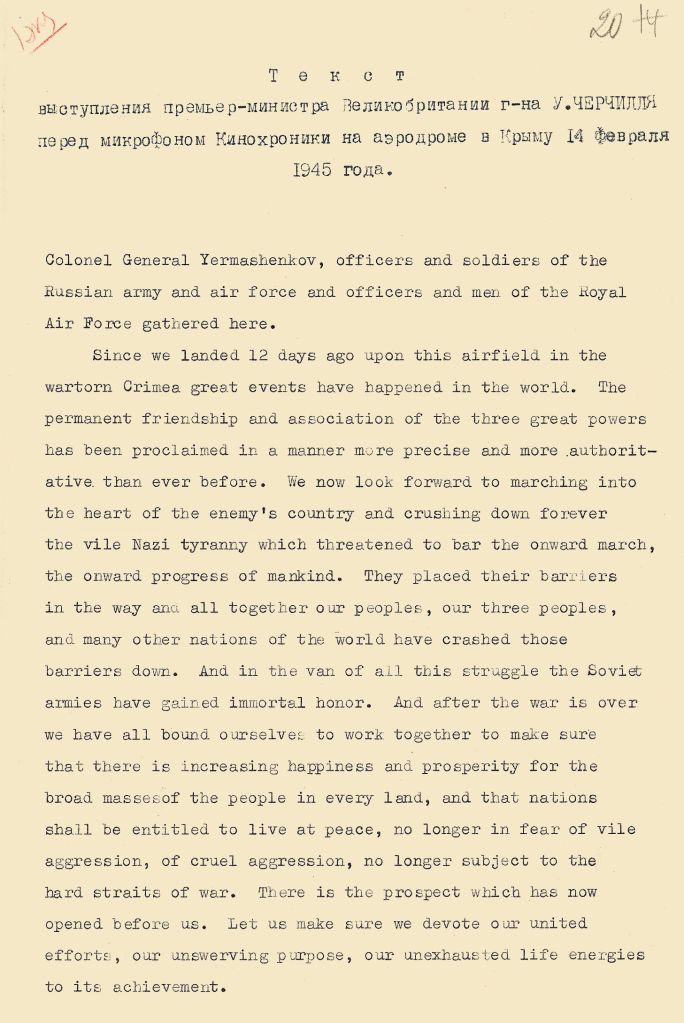


Telegram to the embassy of the USSR.
NOTE: First time published outside the USSR / RUSSIA and translated by British-Irish historian Michael Walsh




Share this:

Categories: Uncategorized



 Michael Walsh Stories and Books
At the Potsdam conference, Joseph Stalin admitted to Winston Churchill, ‘the Soviet Union has lost close to five million citizens, mostly armed forces. The propaganda that the Soviets lost 22 or 25 million combatants is pure hooey.
On Wed, May 12, 2021 at 12:07 PM Europe Renaissance wrote:
> Mike posted: ” From 4 to 12 February 1945, a conference of the leaders of > the three allied powers, the USSR, the USA and Great Britain, took place in > Crimea. The Soviet delegation was headed by Josef Stalin and Winston > Churchill, both of who were unelected having no” >
LikeLiked by 1 person
It was at the Potsdam conference that Stalin admitted to Churchill, almost five million combatants had been lost. The recent figures of 22 and 25 Soviet dead during the war is nothing but propaganda.
LikeLiked by 1 person
Stalin’s Bolsheviks slaughtered more ~ many more Russians and Slavs than Germany ever did.
LikeLike
Finally, we are beginning to get to the truth of the western betrayal of Eastern Europe to the forces of communism that occurred at Yalta. There is no doubt that there are plenty more hidden archives that show allied criminality in causing WW2 that led to the destruction of Europe, and 70 million dead.
Recently, an article by Paul Craig Roberts again verified that Germany had no choice but to attack the Soviet Union in 1941, and that Stalin wanted the Ribbentrop /Molotov pact in order to cause a war between France ,Britain and Germany.
The Soviets would then invade Europe after the western nations had exhausted themselves in fighting. The German invasion of the Soviet union in june 1941 prevented this.
LikeLiked by 1 person
Victor Suvorov’s two excellent books on this topic are must reads. ‘Ice-Breaker,’ and ‘The Chief Culprit, details Stalin’s plan for European conquest.
LikeLiked by 1 person