



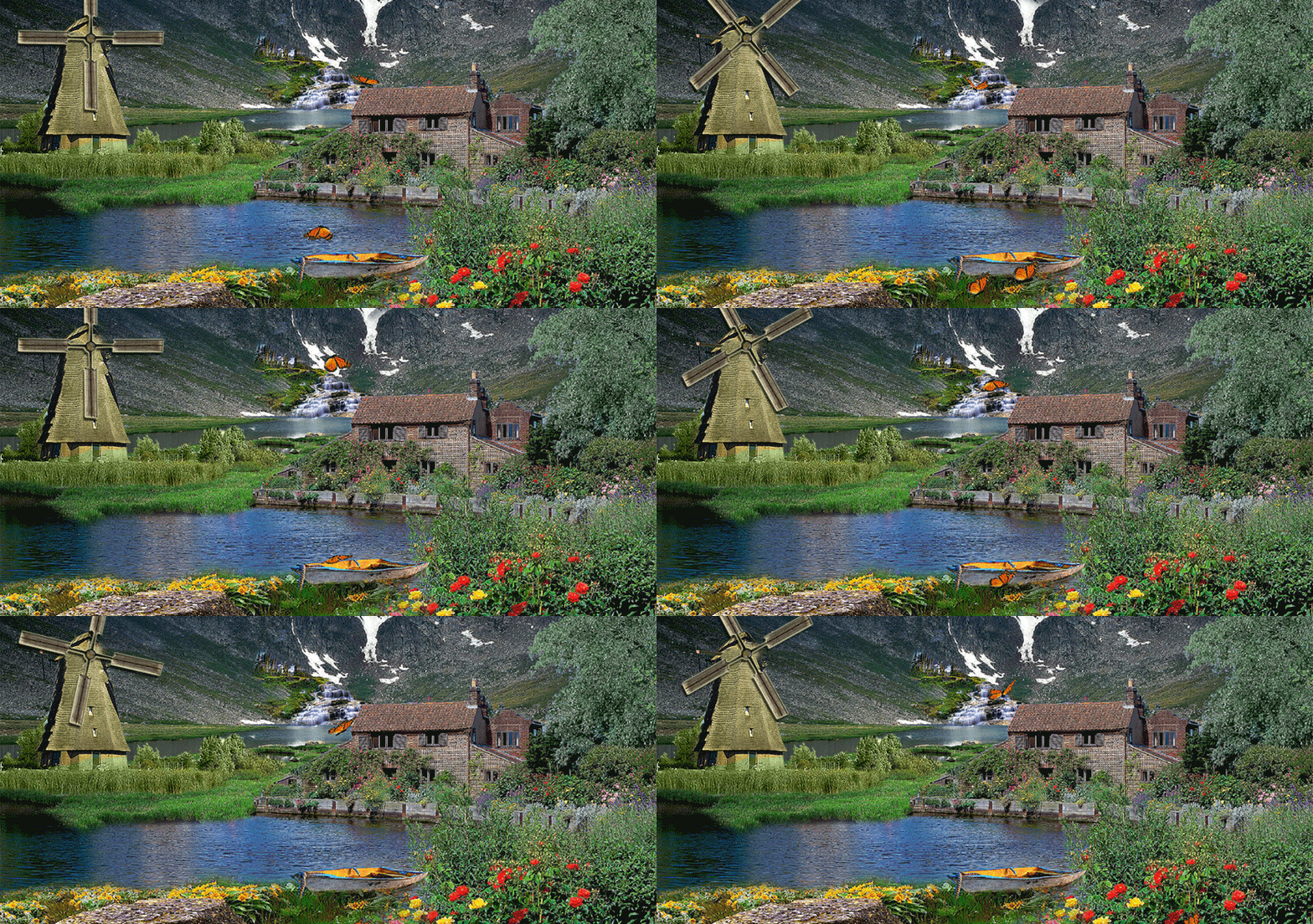
Europe Renaissance wishing everyone a Happy Easter!
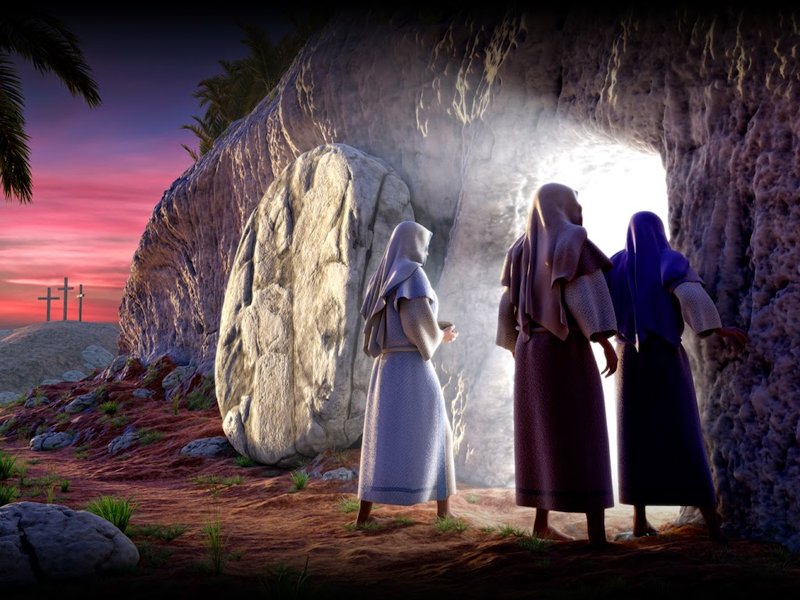
Let us remember the miracle of Jesus’ resurrection and His endless love. Wishing you all of the Lord’s blessings on this special day.

The traditional giving of painted eggs and Chocolate Easter Bunnies hidden away in secret places inside the house or in the garden was a joyful experience for all the children “going on an easter hunt”. Enjoy the beautiful Victorian Greeting cards that may bring back some memories (then scroll down to read about Ostara the Goddess of Spring).

Ostara
To all that believe in the Ancient Origin of Easter before it was adopted, changed and transformed into the Christian Faith; Ostara is a pagan festival marking the spring equinox. Though the exact roots of the festival are unknown, it certainly predates the modern Christian faith. Many historians believe that Ostara hails from an ancient Germanic pagan celebration honoring the goddess of spring and dawn, Ostara (Eostre, Eostra, Eastre to the Saxons) though it was not observed as an official holiday. It was first mentioned by Bede, an English monk and scholar in his time (673-735).
(The origin of the word east, the direction of the rising sun, comes from various Germanic, Austro-Hungarian words for dawn that share the root for the word aurora, which means “to shine”. Ostara (Oh-star-ah).
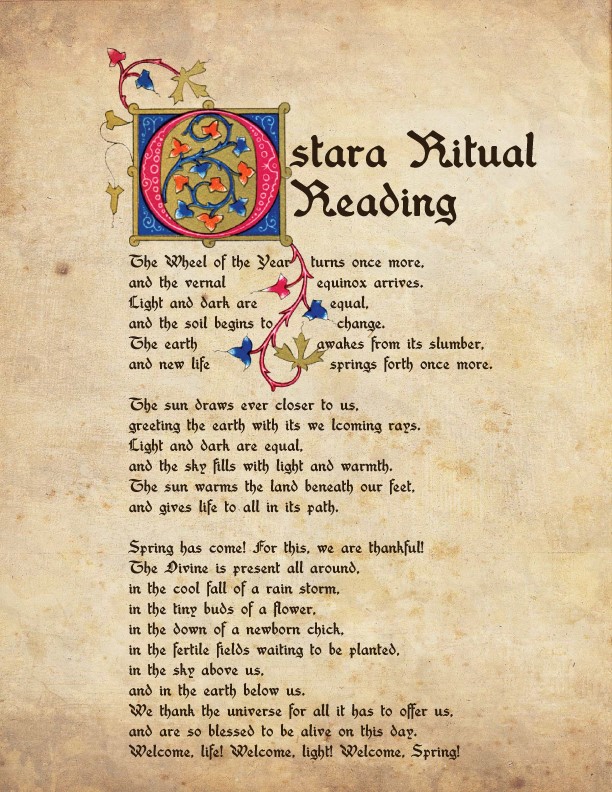
To modern pagans, the goddess Ostara is a goddess of the dawn, spring, and fertility. Her legends involve typical Easter symbols like rabbits, eggs, fairies, and flowers.
The earth reawakens to a burgeoning new season of life-giving, life-affirming gifts. As the sun becomes stronger there is a sense of joyful abundance. With the end of the cold, dark months, ancient pagans no longer needed to store and ration foodstuffs. Often the tastiest cured meats were presented to the spring celebrations and feasts as a sign that the people no longer needed to stockpile food.

The equinox was recognized world wide as a time for renewal, rebirth, and revivification. It was the celebration of the symbolic resurrection of earth itself, Christ, and Hathor (of Egypt) to name a few.
Ostara and the egg she carries are symbols of fertility, of new and continuing life. Some descriptions say Eostre herself is hare-headed, and the goddess of rabbits and birds. The hare is also associated with the moon in many cultures, due in part to its nighttime eating habits and in part to the image of one on the moon. Whether Eostre herself is hare-headed or her attendants are hares, she is strongly associated with the hare—and later its cousin the rabbit for obvious reasons.
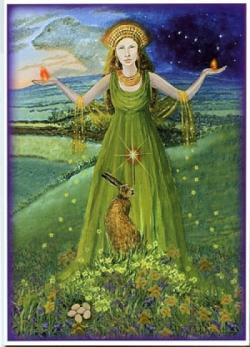
A popular myth says that the children of the time presented eggs to the goddess as a gift in return for her bringing them the spring. She was so touched by this gift that she recruited her minions (the rabbits) to return the eggs (only brightly colored now) to the children in baskets (the birds’ nests), and that is where the tradition of rabbits delivering eggs to children comes from.
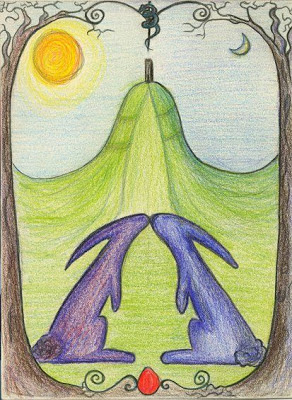
The hare is an evident fertility symbol that is undeniably tied to the Vernal Equinox, March being the rutting time of the hares. It is apparently quite a spectacle in the European countryside. It is said that the typically shy, quiet hare becomes fanatical and fervent. They run for miles and can even become aggressive and appear quite mad, hence the English and French expressions—“As mad as a March hare.”

Eggs also represent fertility and the promise of new life. The Celts often dyed the eggs red to symbolize the menstruation cycle. While dying the eggs, women and children would think carefully on their hopes and wishes for the coming year. They would then bury the eggs alongside a seedling in the ground to sustain and feed the plant through its growing season. As the plant grew, the hope or wish would also take root and come to fruition at the end of the year.
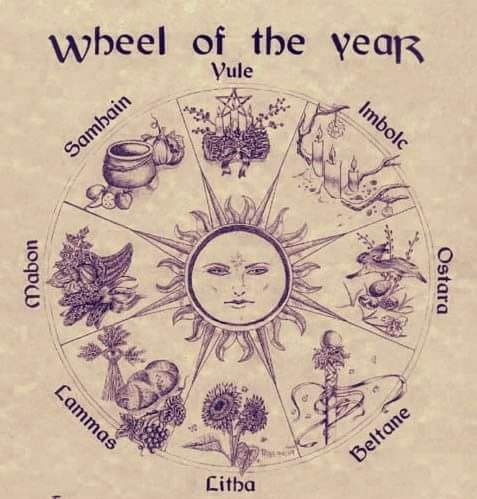
The Equinox also means balance. Literally it means “equal night” and so the day and night are each twelve hours long, and we can look forward to longer and longer days. The popular legend about balancing eggs on their end at the equinox is always a fun experiment.

Another popular tradition is making hot cross buns, which seem to have Pagan roots. There are mixed reports on the symbolism of the cross on the hot cross buns. Some suggest that the equilateral cross symbolizes the four quarters of the moon, other suggest that it expresses the uniformity of the seasonal year, and still others suggest that it expresses the equilibrium of the equinox day—equal day and equal night. One thing is for certain; the equilateral cross reaches back through time to the many ages before Christianity. Source, Spanish source
Share this:

Categories: Ethnic traditions



 Michael Walsh Stories and Books