




Is the Bulgarian “Kukeri” festival the Eastern European Halloween counterpart, proving it as paganism that predates the Christian All Saints with many centuries?
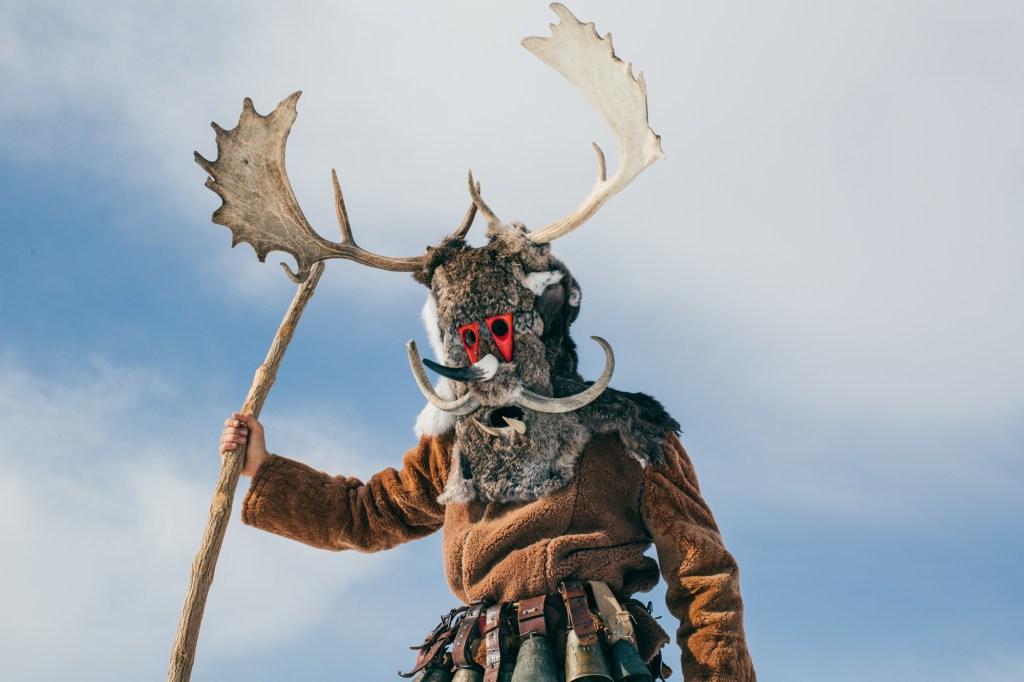
It’s related to the late winter festival cycle. According to pagan beliefs, the winter was a time of evil, so the Kukeri had the task to chase away everything evil the winter represented with their scary masques. Therefore it’s not a counterpart of Halloween. It’s rather related to the traditions that came to be associated with the Lent, even though there is no sanctioned carnival tradition in the Orthodox Church. The Lent celebrations, like Kukeri or jumping over fires, were and are very much frowned upon by the Church. The only similarity to Halloween are the scary masques.
Similar traditions exist in Romania, Slovenia and Croatia.
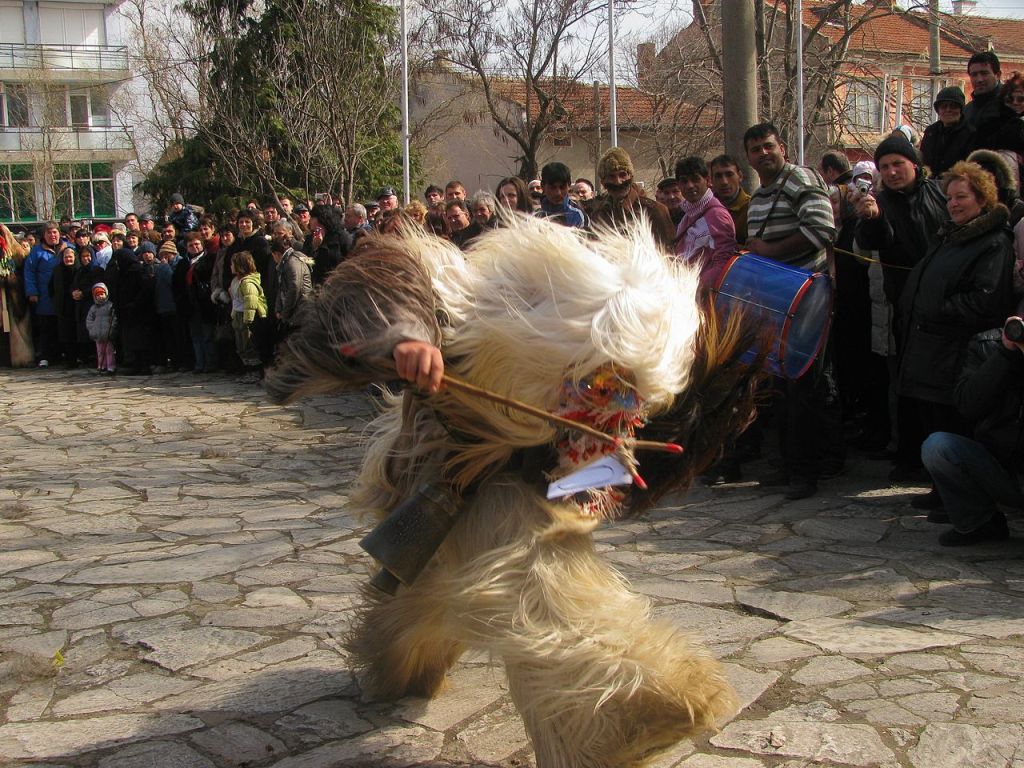
Kukeri are elaborately costumed Bulgarian men, who perform traditional rituals intended to scare away evil spirits. Closely related traditions are found throughout the Balkans and Greece (including Romania and the Pontus). The costumes cover most of the body and include decorated wooden masks of animals (sometimes double-faced) and large bells attached to the belt. Around New Year and before Lent, the kukeri walk and dance through villages to scare away evil spirits with their costumes and the sound of their bells. They are also believed to provide a good harvest, health, and happiness to the village during the year.


The kukeri traditionally visit peoples’ houses at night so that “the sun would not catch them on the road.” After parading around the village they usually gather at the village square to dance wildly and amuse the people. Kukeri rituals vary by region but remain largely the same in essence.
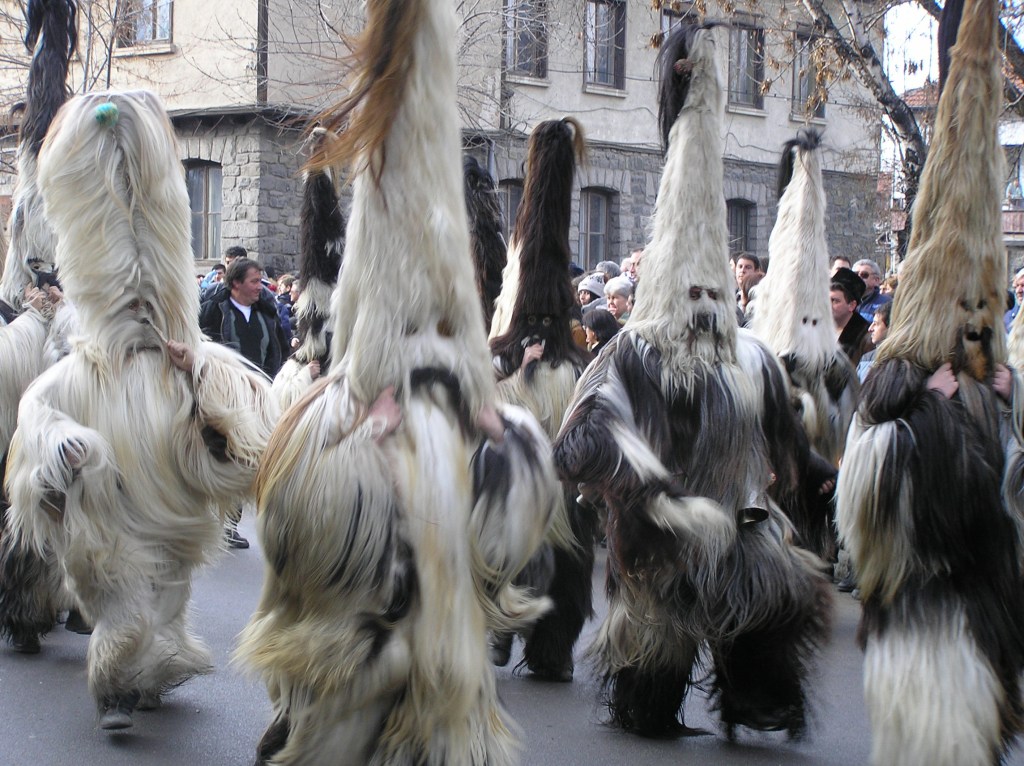
Kukeri in Razlog
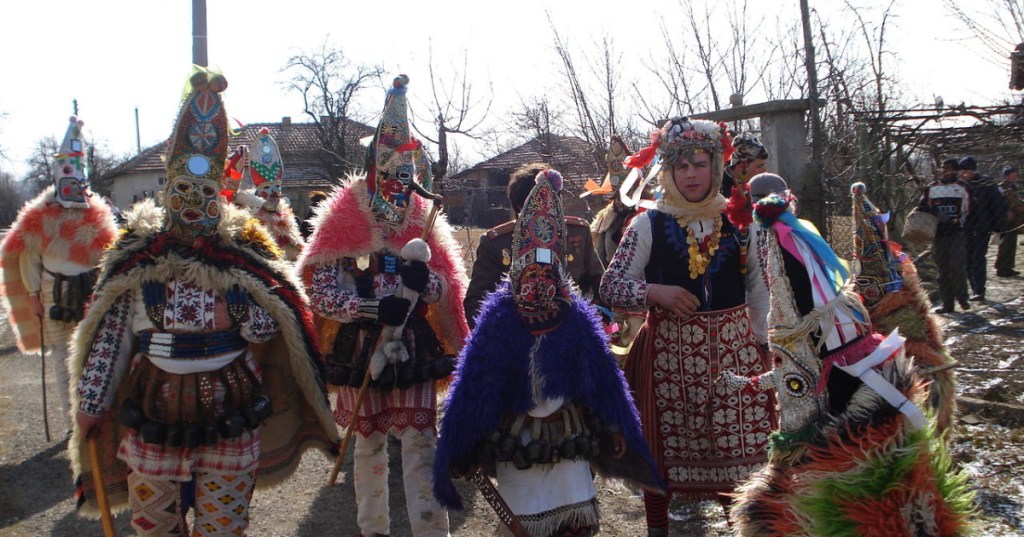
Distribution
The custom is generally thought to be related to the Thracian Dionysos cult in the wider area of Thracia and similar rituals can be also found in much of the Balkans. The term could be derived from Proto-Slavic *kuka (“evil spirit”) with the agentive suffix *-ařь (i.e. literally meaning a “chaser of evil spirits”), or from a pre-Slavic divinity named Kuk.
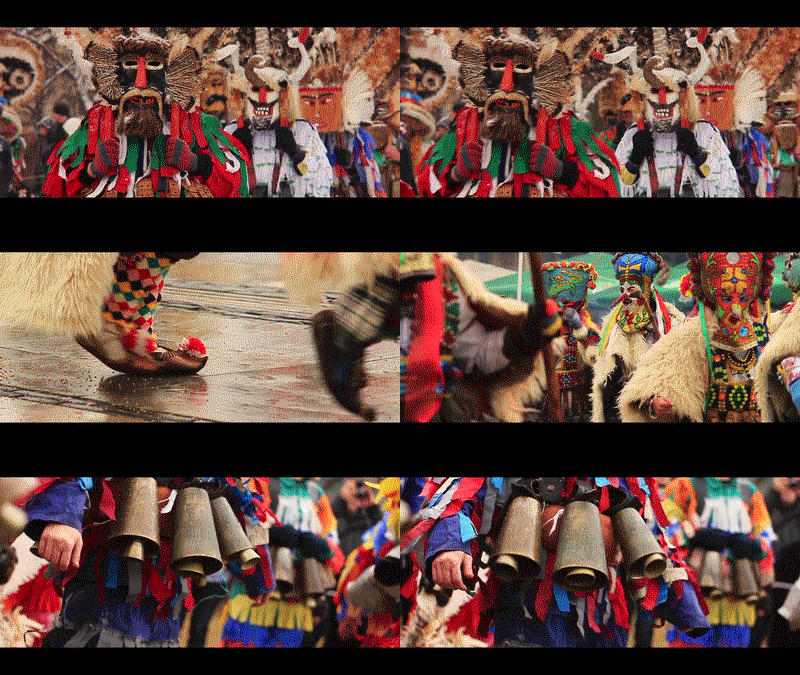
Another theory suggests the name kuker derived from Latin cuculla meaning “hood, cowl” or cucurum, “quiver” (i.e. in the sense of a container; an abbreviation of koukouros geros)., though the practice pre-dates Roman rule by several centuries.

The corresponding figure in Greek-speaking Thrace is known as Kalogeros “rod-carrier”, also shortened to cuci, in former Yugoslavia known as didi, didici, in Bulgaria as kuker or babushar, as momogeros in Pontic Anatolia. In Romania, this figure mostly appears together with a goat, known as capra, turca or brezaia.

Kukeri
Kukeri is a divinity personifying fecundity, sometimes in Bulgaria and Serbia it is a plural divinity. In Bulgaria, a ritual spectacle of spring (a sort of carnival) takes place after a scenario of folk theatre, in which Kuker’s role is interpreted by a man attired in a sheep- or goat-pelt, wearing a horned mask and girded with a large wooden phallus.

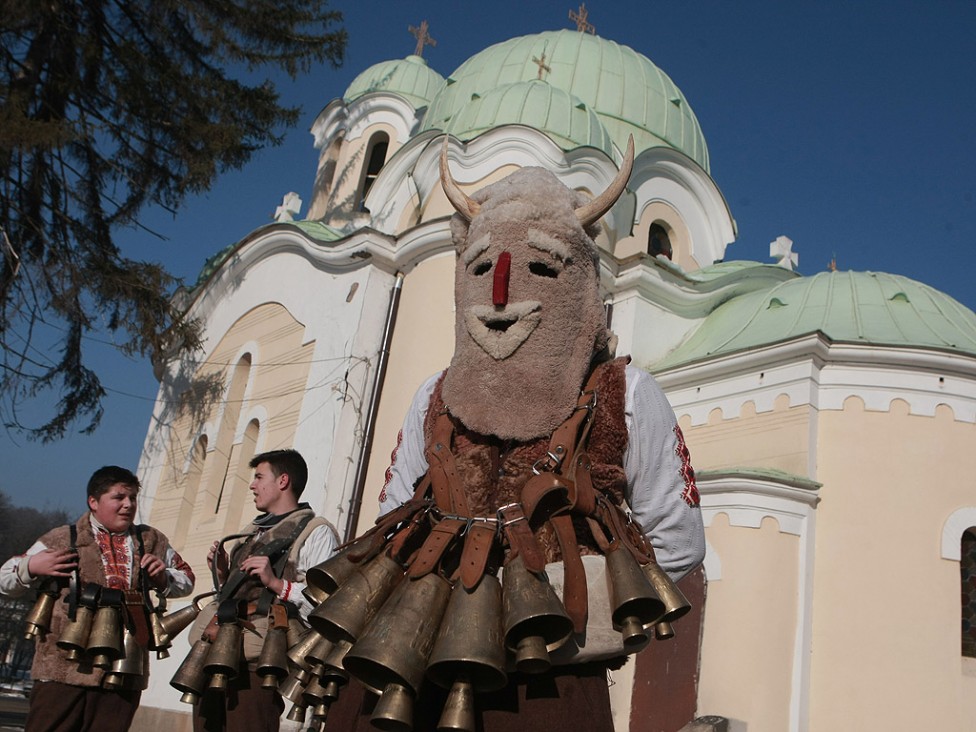
During the ritual, various physiological acts are interpreted, including the sexual act, as a symbol of the god’s sacred marriage, while the symbolical wife, appearing pregnant, mimes the pains of giving birth. This ritual inaugurates the labours of the fields (ploughing, sowing) and is carried out with the participation of numerous allegorical personages, among which is the Emperor and his entourage.

Capra
Capra comes from the Latin capra, meaning goat. A halo like head piece was worn as a crown to symbolize the spiritual divine realm while fur, feathers and other external body-parts of an animal attached to represent the natural world. The fact that nature has good and evil, and that humans are the intermediary between spirit and nature. It was a time to pay homage to the Spieth gods. Some cultures imbibed in human flesh to satiate the gods thirst for blood, as an act of solidarity for the gods.
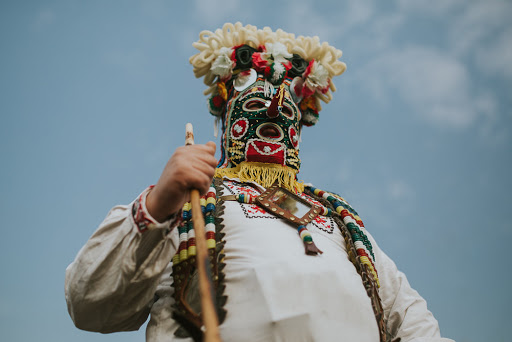

The Kukeri Nunataks, rock formations on Livingston Island in the South Shetland Islands, Antarctica are named after the Bulgarian Kukeri. Source 1, Source 2, Source 3
Above: Bulgarian Kukeri (alternative names Babugeri, Starci)
Share this:

Categories: Ethnic traditions






 Michael Walsh Stories and Books