




Even the most avid war movie fans roll their eyes in despair when Christmas TV is announced. As predictable as sprouts there will be The Great Escape and The Sound of Music. Both movies, as we might expect, are blatant propaganda that don’t allow the truth to spoil what the victor nations’ spin doctors as a good story.
All wars produce heroes; men and women who, had war not intervened, would lead lives that attract little attention. Even those inclined towards objectivity must concede that the Allies could boast very few true heroes. However, Germany and the Axis had so many that to give them all due credit would be an encyclopaedic undertaking. Picking a name out of a hat we come up with Clemens Forell. There simply is no escape to equal that of this young German lieutenant. His escape from Soviet captivity in the Far Eastern Gulag was undoubtedly the greatest escape epic of all time.
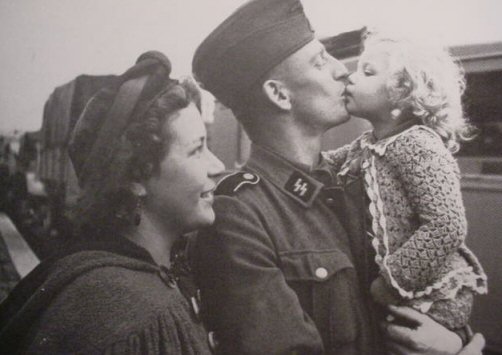
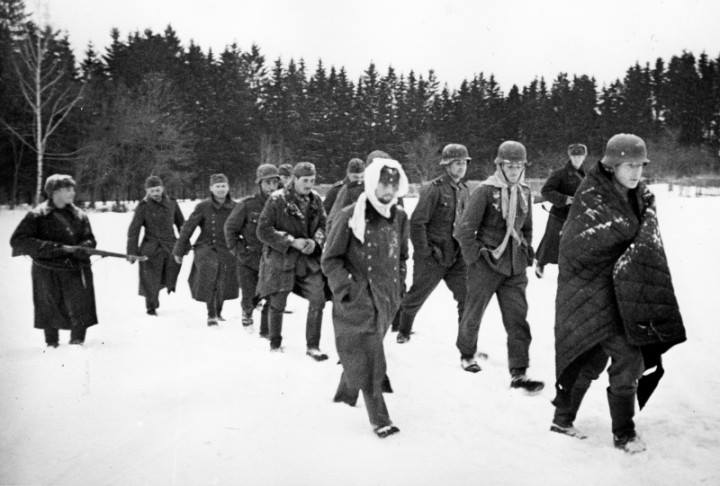
Along with hundreds of thousands of surrendered prisoners-of-war, Forell found himself enslaved as a Gulag inmate. He had been sentenced to twenty-five years penal servitude in the Siberian lead mines yet he was in international law just another conscripted prisoner-of-war. If you ever come across a book entitled As Far as my Feet will Carry Me, as narrated to J. M Bauer, pick it up and treasure it.
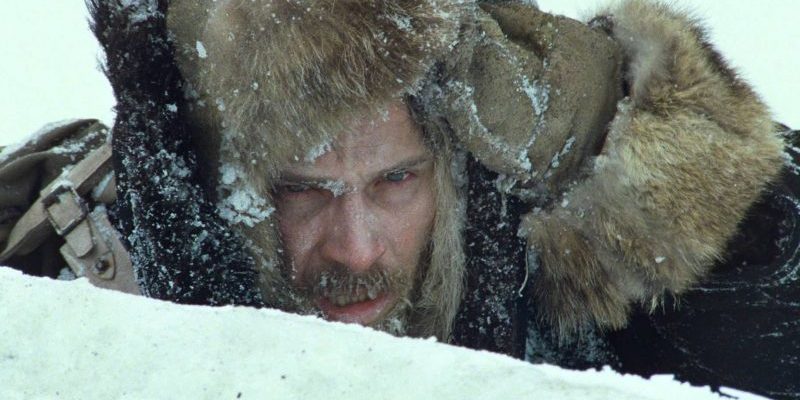
The book inspired a movie of the same name. Although movies can never match a book’s evocation it is nevertheless compelling viewing with an ending guaranteed to break the coldest of hearts. The enslaved German with 5 million others giften to Stalin’s regime by Churchill and Roosevelt spent several years as a slave labourer digging for ore in Bolshevism’s lead Siberian mines. Deep in the bowels of the frozen earth was to be discovered the most demonic environment imaginable. Very few survived the Allies’ Soviet Gulag where temperatures plummet to – 50C.
Eventually the young captive made the amazing decision to walk home to Germany or to die in the attempt. As he was going to die anyway, he might as well end his life in the tundra as in the misery of the mines. He set out on his odyssey far too ill-equipped and lacking in provisions to trek 5k let alone through 8,000 miles of enemy occupied land home to his German homeland.
During his incredible journey Forell suffered untold hardships. He learned how to live off the tundra of hostile Siberian wastes. He repeatedly fell ill and somehow recovered. Ever onwards, through the most hostile wildernesses on earth he wandered in the general direction of the west. The escapee often fell in with nomadic tribes. Occasionally, Forell arrived at the edges of lakes large enough to be better described as seas or arrived at rivers so broad it was impossible to see the far banks. As he made his odyssey through the sub-temperatures of the Siberian wilderness, the officer occasionally fell in with brigands and criminals.
Keeping one step ahead of the secret police and informers; such men would kill for the meagre contents of a fellow traveller’s pockets. Forell worked at lumber camps. He would then wander on, but always following the rise and fall of the east to West sun. On numerous occasions he was within a hair’s breadth of being identified as an escapee. Had such a disaster befallen him he would be returned to face death in the Gulag or be gunned down on the spot.
The young prisoner-of-war often roamed the Siberian forests and tundra in the company of desperate bands of Russian criminals. Barely surviving, one step ahead of capture, week in and month out, the convict was always on the run from the ever oppressive presence of the notorious Narodny Kommisariat Vnutrennikh Del (NKVD). Stealing, living off his wits, surviving on charity, often starving, ill and close to death, Forell grimly contrived to drift southwards and westwards until three years later he … read it yourself.
British mainstream newspaper Daily Herald described As Far as my Feet Will Carry Me as one of the most fantastic episodes of human courage and endurance ever written. The Observer:
The book stands out in the readers’ memory with moving, tragically and sometimes frightening impressiveness.
The escapee’s biographer says,
The whole story was so nightmarish, the incidents and situations he claimed to be true so incredible, and that kept on raising doubts, yielding only to the stubbornness with which he stuck to history or to corroboration from other sources. Time and again, when I did turn elsewhere for corroboration his story was confirmed. Such is the epic that be warned you will not put it down the whole night through.
Share this:

Categories: Uncategorized



 Michael Walsh Stories and Books