




In 1891, when geologist Erwin H. Barbour was conducting an expedition in the poorlands near White River, Nebraska, locals drew his attention to unusual fossils. They were sand-filled spiral tubes up to 3 meters long with walls of white fibrous material. Such fossils were found in an area that at the time was considered the bottom of a dried-up ancient lake.

The local population called them Devil’s corkscrews, and Barbour, believing he had discovered a new, hitherto unknown genus of freshwater fossil sponges, gave it the Latin name Dæmonelix, translating the name from English. Later, when it became clear that the area where the Dæmonelix fossils were found was not a lake but a semi-arid steppe 22 million years ago, Barbaur assumed that his find was an unknown terrestrial plant.
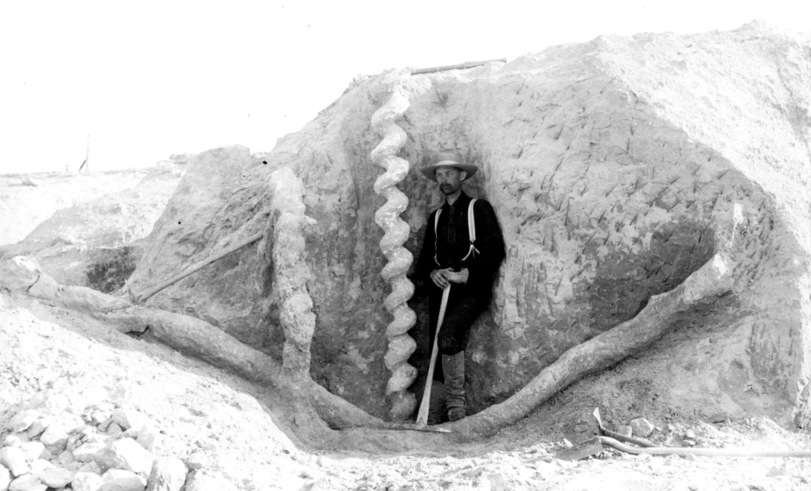
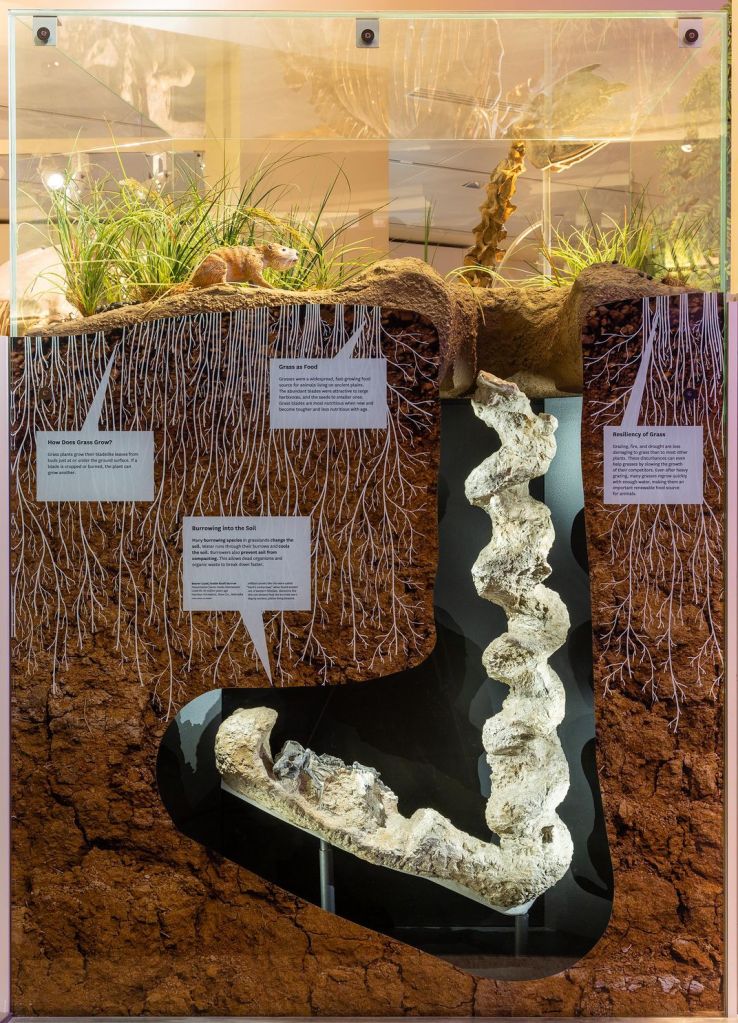
However, paleontologists Edward Drinker Cope and Theodore Fuchs, who drew attention to the fact that in one of the “corkscrews” found bones of an unknown rodent, already in 1893 independently of each other put forward the hypothesis that Daimonelix were not fossils of organisms, but burrows of animals. In 1905, Olaf Peterson of the Carnegie Museum confirmed that Barbour’s findings were fossilized burrows, and the rodents who dug them were fossilized relatives of beavers. The whitish substance that made up the walls of the tubes included plant roots, which, due to the high silicon content of the groundwater, turned into a glassy mass that retained the spiral shape of the burrows.
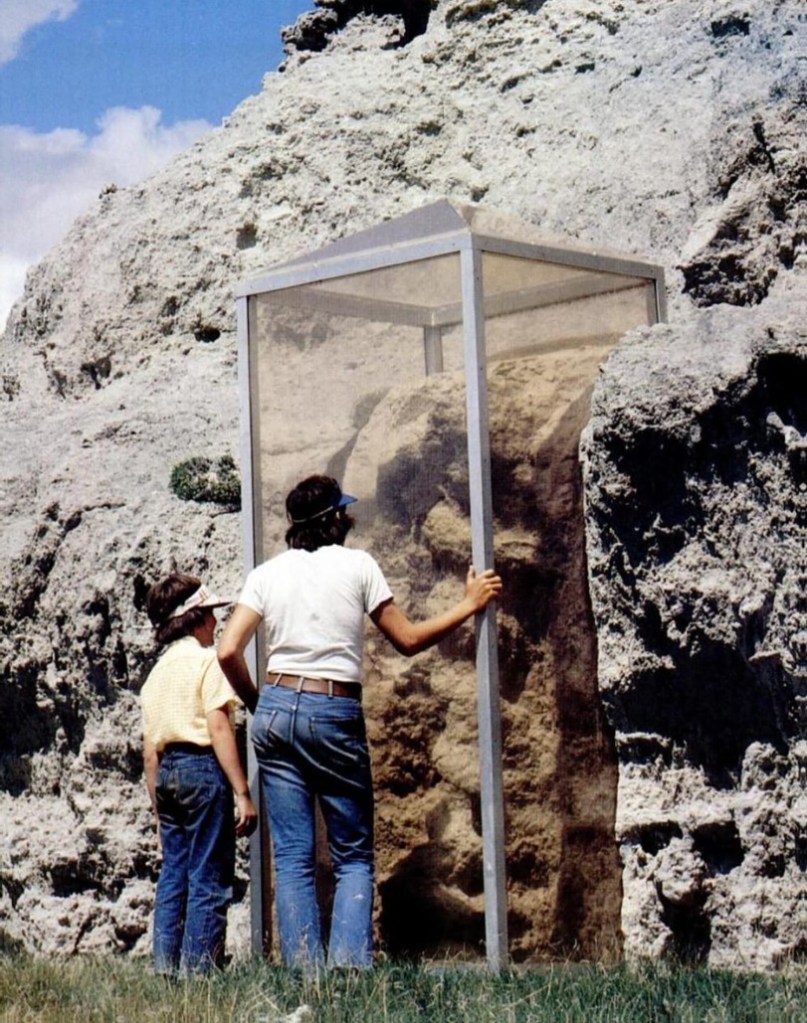
Peterson described the found remains of beavers as two new species of the genus Steneofiber, but later they were assigned to the genus Palaeocastor. Palaeocastor is a genus of extinct beavers that lived in North America during the late Oligocene and early Miocene. Source 1, Source 2 ( more information)

Such beavers are architects!
Share this:

Categories: Amazing




 Michael Walsh Stories and Books
