



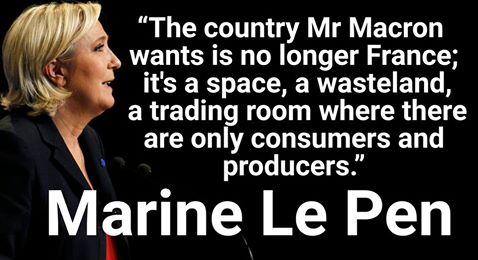
France is preparing to hold presidential elections in April 2022 that will probably see polarised rivalry between despised President Emanuel Macron and his 2017 opposing Marine Le Pen. Four years ago, the President of the National Rally decisively lost to Macron in the second round.

However, as in the United States presidential elections, there was a widespread belief that the electoral system, deeply flawed, was tampered with. The unpopularity of Macron appears to reinforce the belief that he is as fake as Joe Biden.
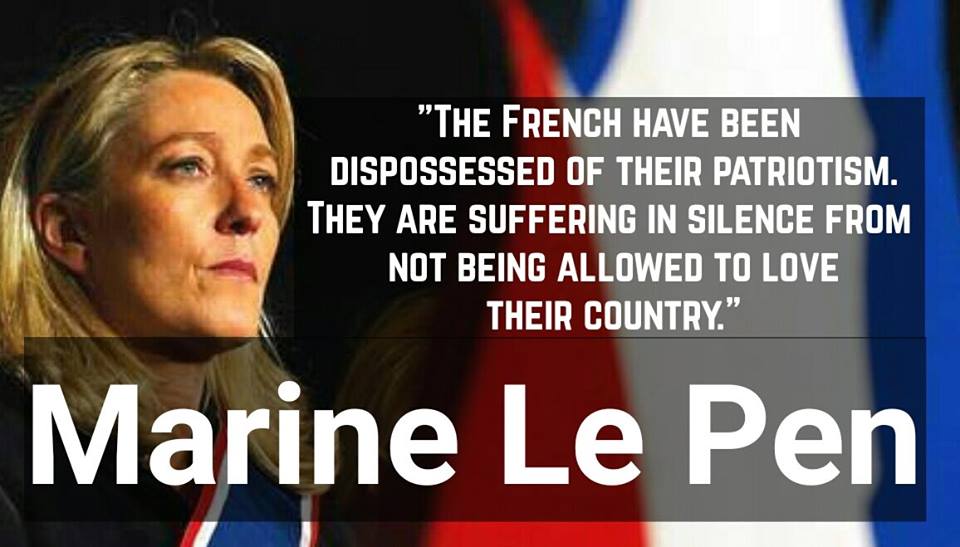
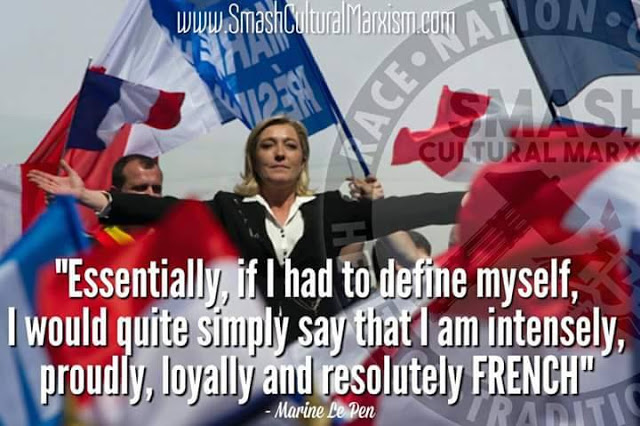
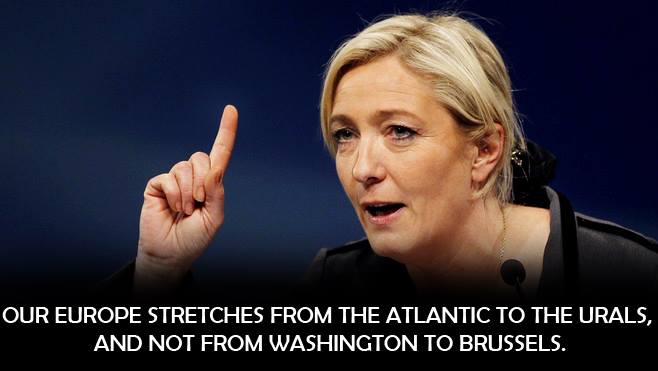
French nation-first politician and presidential candidate Marine Le Pen proposed to ban ‘Islamist ideologies’ during a press conference on Friday, the strategy that would also include a restriction on hijab-wearing in all public places, France 24 reports.

The 52-year-old politician, who leads France’s National Rally party, told reporters that Muslim headscarves should be considered ‘an Islamist item of clothing’. The popular politician unveiled a plan to outlaw ‘totalitarian and murderous’ ideologies related to Islamic fundamentalism.
Her words come after an online poll from Harris Interactive published on Wednesday suggested that if the final run-off of French presidential elections, currently scheduled for April 2022, were held today, Le Pen would gain 48% of the votes in comparison to Macron’s 52%, the most support the conservative politician has had in the past years. The survey was conducted among 1,403 people over 18 years of age, the majority of which are registered electoral voters.

In 2017, National Rally received 7.6 million votes in comparison to Macron’s 8.6 million in the first round of the presidential election. However, no candidate managed to gain 50% support to be proclaimed the French president. In the runoff election, Le Pen lost to Macron with a claimed 34% of the vote.
But Le Pen’s anti-immigration rhetoric received a new wave of attention last year following the death of French teacher Samuel Paty, who was brutally beheaded in October 2020 by an Islamist terrorist of Chechen origin. The act was inspired by Paty’s decision to show his students caricatures of Islamic prophet Muhammad during a freedom of expression class. The cartoons in question were first published in Charlie Hebdo magazine in 2012. This simple act generated condemnation throughout the Islamic world, which considers them blasphemous. Several years later, 12 people were killed and many more injured in a shooting attack at Charlie Hebdo headquarters in Paris by Islamic terrorists claiming their allegiance to al-Qaeda*.
Just two weeks after Paty’s killing, three people were stabbed to death in the French city of Nice by a Tunisian. One of the victims, an elderly woman, was partially beheaded during the attack that was carried out at the premises of local Notre-Dame basilica. The attack was blamed on Islamic extremism.
In 2011, France became the first country in Europe to prohibit the full-face coverings in public places, including Islamic burqa and niqab. Seven years prior to that, France also introduced a ban on headscarves and other ‘conspicuous’ religious symbols at public schools in line with secular state laws. These measures have sparked an array of debates and legal challenges from certain sections of the public, the usual suspects who argued that they had undermined individual rights to freedom of expression. Source

Share this:

Categories: Uncategorized






 Michael Walsh Stories and Books