




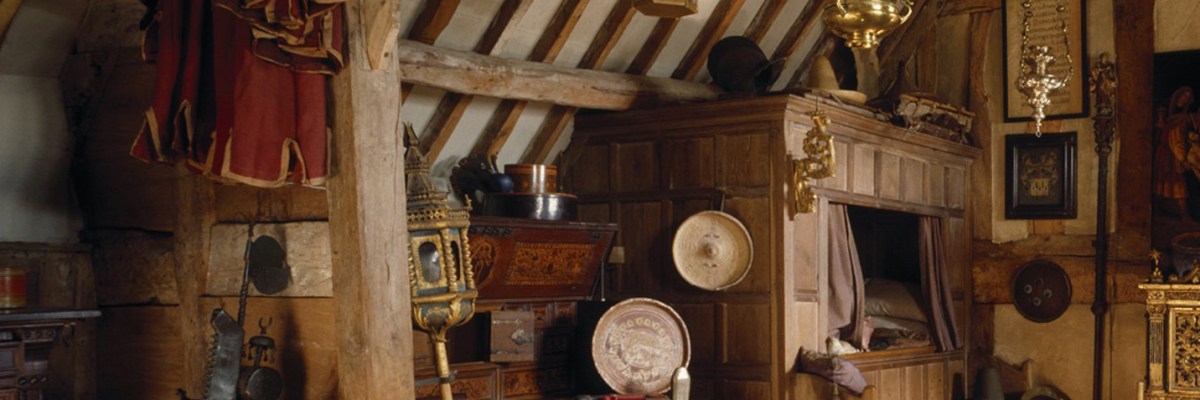
For much of human history, privacy during bedtime was an alien concept. Many poor families lived in small houses, where there was only one or two rooms, the larger of which functioned as bedroom and living room both shared by every occupant of the house, including any guests. Even in large houses and palaces, it was not uncommon for servants to sleep in the same room as the master’s. When King Henry V bedded Catherine of Valois, writes Bill Bryson in At Home, both his steward and chamberlain were present in the room. In such circumstances, bed curtains provided a little privacy. But if you wanted true privacy, you had to sleep in a box bed.
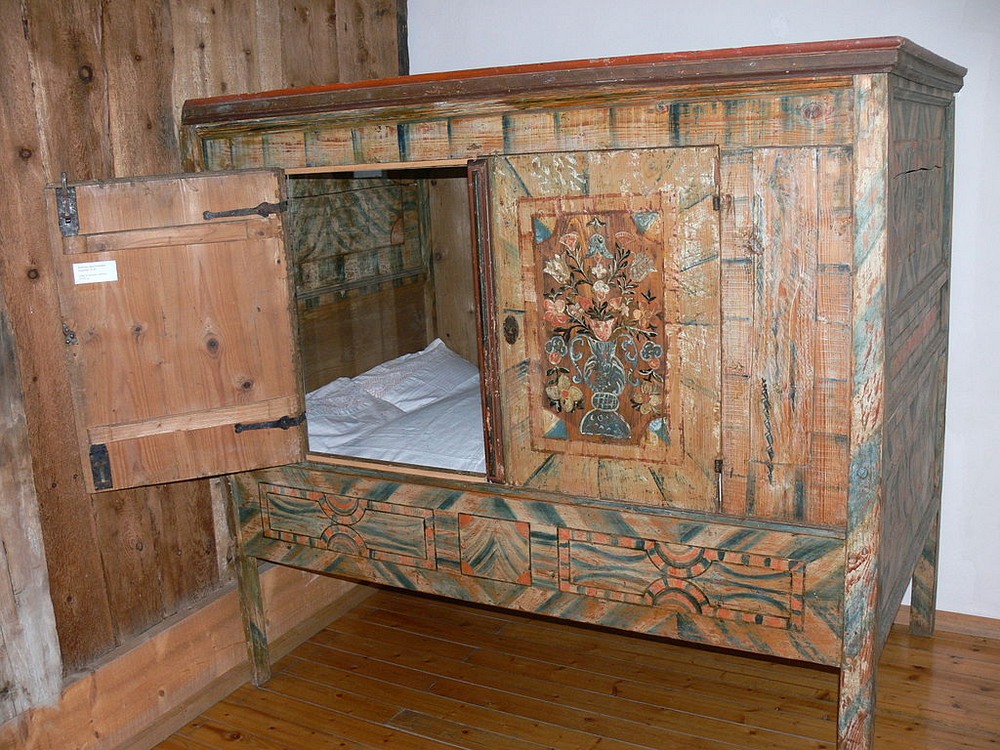
In many rural homes in Scotland, France and parts of Netherlands and UK, people slept in box beds, which were essentially large wooden cupboards with a bed inside and doors to shut others out while you slept. Some box beds were free-standing furniture; others were built into recesses and attached to the structure of the house. Instead of door panels, some were equipped with curtains, which when drawn across created a nice and cozy, semi-private cabin. Aside from privacy, the small enclosed space of the box bed trapped body heat keeping the sleeping person warm during winter. It’s also possible that the beds offered some degree of protection against intruders, especially wolves and other animals, that might have entered the house. It has been suggested that peasants kept their children inside box beds while they went to work in the fields.
According to the Encyclopedia of Cottage, Farmhouse and Villa Architecture and Furniture, first published in 1833, many box beds had “a shelf, and sometimes two, fixed to the inside of the bottom of the bed, just above the bedclothes; and sometimes there is one at top, close under the roof. There are also sometimes one or two shelves against the back of the bed; so that this piece of furniture no only serves as a bed, but as a wardrobe and linen chest.”
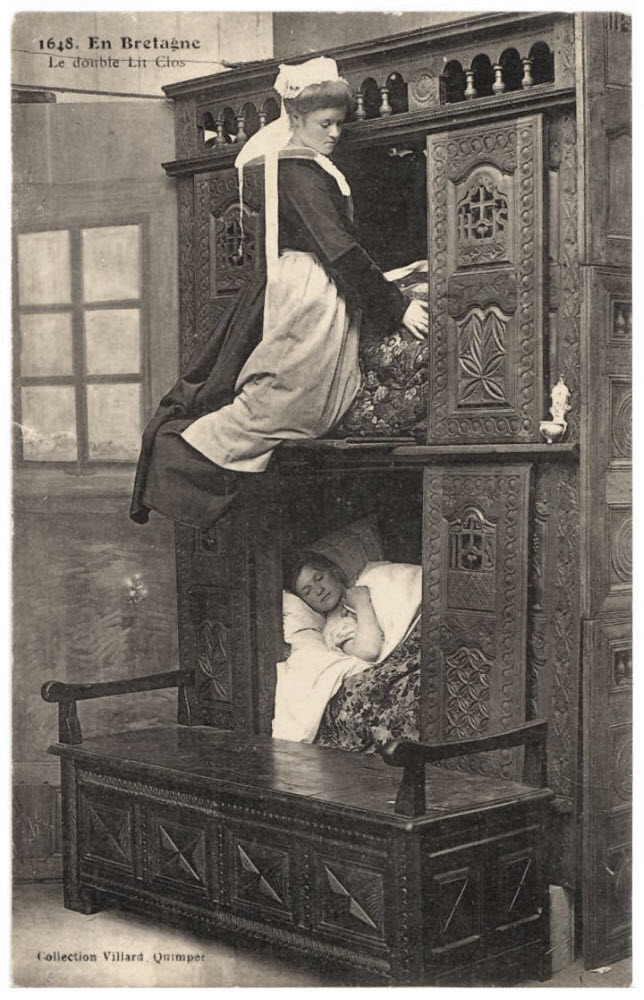
The encyclopedia entry continues: “In some parts of the country the bed doors fix within by bolts, or have a lock to fasten them on the outside; so that a person going to bed, with all his treasure round him on the surrounding shelves, may secure it while he is asleep at night, or going out to work in the daytime, by bolting or locking the doors.”
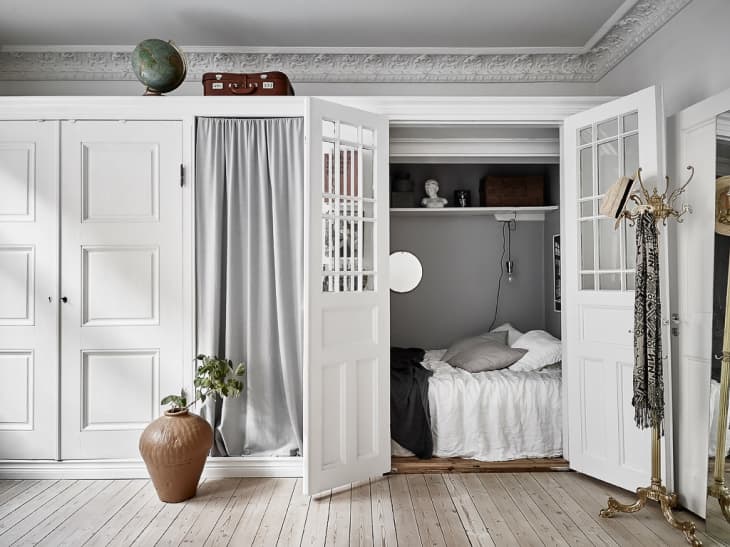
Box-bed eventually became a fashionable piece of furniture, and even larger houses with multiple bedrooms and no pressing need for privacy began to have them. Many 18th century cabinet-makers designed secret box-beds disguised as wardrobes or sideboards, or hidden behind rows of bookshelves and drawers.
Box-beds fell out of use starting from the 19th century with rising concerns for hygiene and stale air, but in many parts in Scotland, the practice of sleeping in box beds continued well into the 1900s.

A Mother’s Duty by Pieter de Hooch shows a woman delousing her child’s hair in front of a raised box bed that can be climbed into from the chest below it. ~ Source
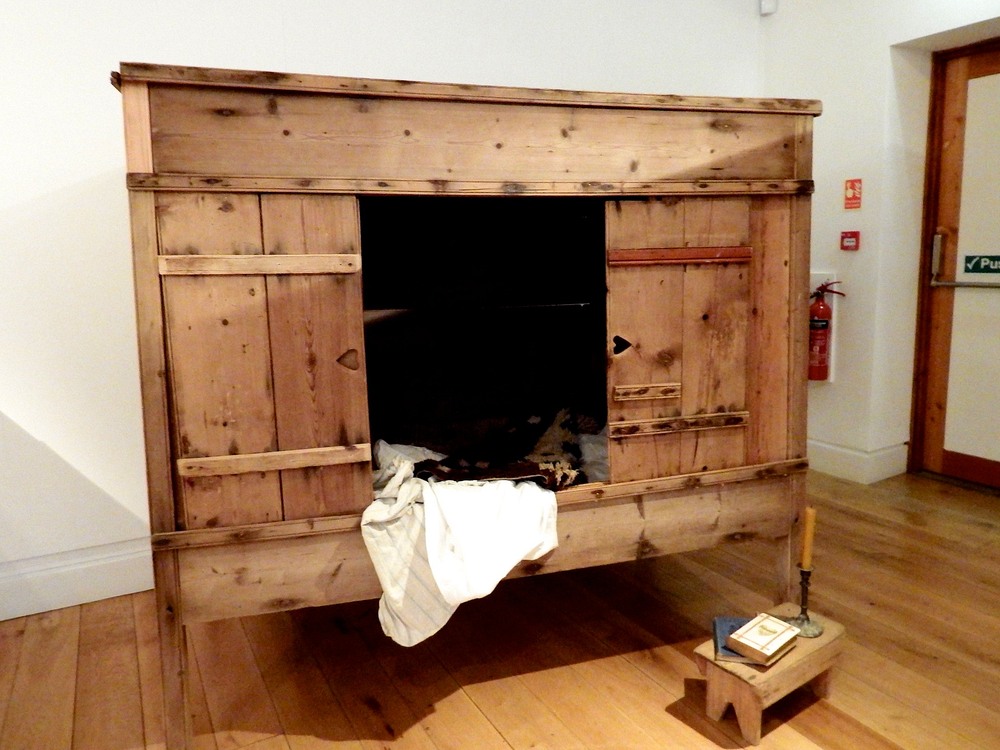
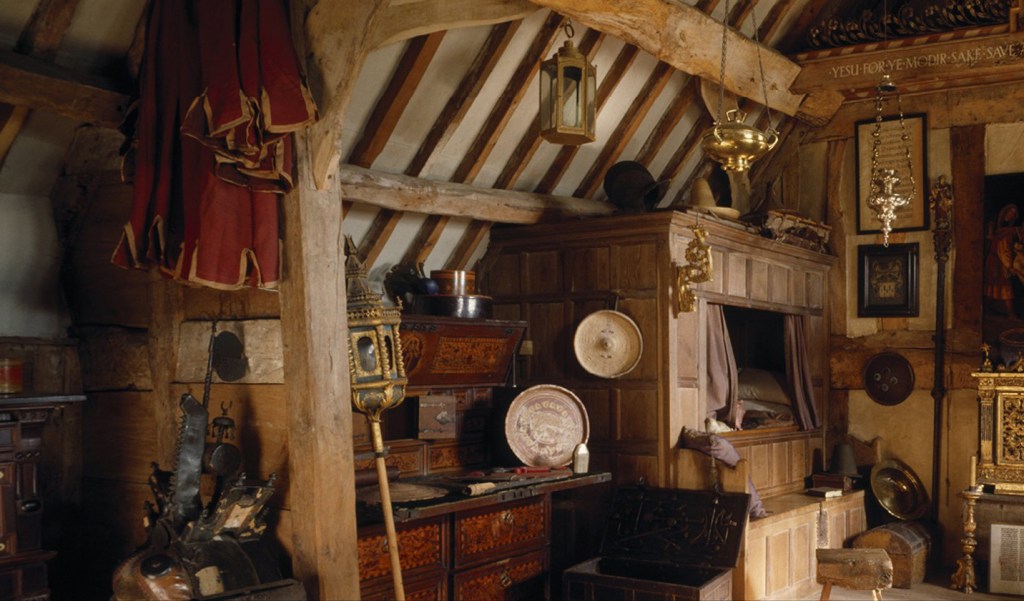
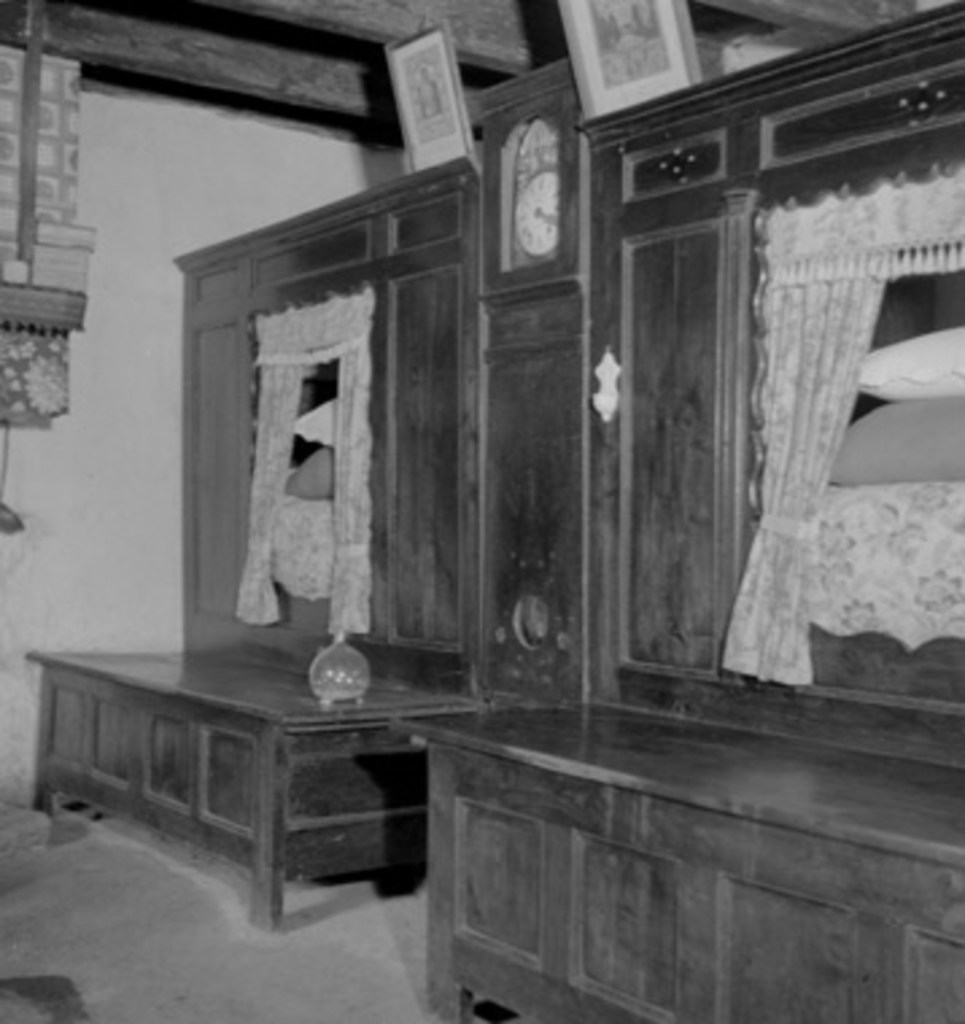
Many box beds had a bench below the opening, which would serve as a step when getting into the bed. The bench would have storage underneath, and during the day could be used for seating. Some box beds, like the one pictured up top, were double decker affairs. You can see here a whole series of postcards with pictures of people using (and climbing in and out of) the lit clos.

The box bed, which originated in the late medieval period, appeared in various forms throughout Europe: there are examples from Brittany, from Scotland, from Austria, the Netherlands, and Scandinavia. In some places they were in use well into the 20th century, which makes sense when you consider cold European winters and homes where the only heat came from a wood fire. (Also, pre-electricity, people just did not heat their houses as much, so cold outside meant cold inside, too.)

Share this:

Categories: Readers Coffee Shop



 Michael Walsh Stories and Books
