




Globalist Ban Christmas and Children’s Toys, what now? A couple took their 3-year-old son to a faraway beach and then calamity. Thoughtlessly, they hadn’t brought with them any beach toys, not even a bucket and spade.
‘What kind of parents doesn’t bring toys to the beach? I felt like a failure only my son wasn’t bothered. Without skipping a beat he started playing in the sand with shells. He found sticks and drew dinosaurs. He gathered empty shells filling them with sand and water to make mud. He played with hermit crabs, floated leaves in the waves and spotted fish from the shore. A few days later, we found a set of buckets and spades. We decided not to buy it.
Our son was having too much fun, his imagination running wild. We felt as though we were witnessing his creativity expanding with each passing day.
They say that the fewer toys kids have, the more they play. It seems that they were right. Twenty years ago, a German project called, ‘Der Spielzeugfreie Kindergarten’ (the nursery without toys) wanted to see what would happen if they took toys away from kindergartens. All toys from participating classrooms were removed for three months.
One of the teachers, Gisela Marti, said: ’In these three months we offer the children space and time to get to know themselves and because they are not being directed by teachers or toys, the children have to find new ways to master their day in their own individual way. The aim was to nourish self-confidence, imagination, creativity, problem-solving abilities and socialization.
Their days were deliberately unstructured to avoid children being rushed from one activity to the next. Instead, they were free to do what they wanted and how they wanted to do it. A video of the children was taken each day. On the first day, the children appeared confused and bored as they peered apprehensively around their big empty classroom. But, by the second day, the kids were playing with chairs and blankets, making dens by draping blankets over tables and weighing them down with shoes.
Soon they started running around the room, chatting and laughing excitedly. By the end of the third month, they were engaged in wildly imaginative play, able to concentrate better and communicate more effectively.
Kathy Sylva, Professor of Educational Psychology at Oxford University concluded after studying over 3,000 children aged three to five that ‘when children have a large number of toys there seems to be a distraction element, and when children are distracted they do not learn or play well.’

Her research shows that children with fewer toys whose parents spend more time reading, singing or playing with them surpass those from even more affluent backgrounds.
Christopher Willard, Clinical Psychologist and Author of Child’s Mind, reminds us that repetition has a purpose; reading the same books, singing the same song, playing the same games. Repetition serves to cement learning while enhancing cognitive development. After all, play is the work of childhood. Play is the highest form of research.’ Albert Einstein.

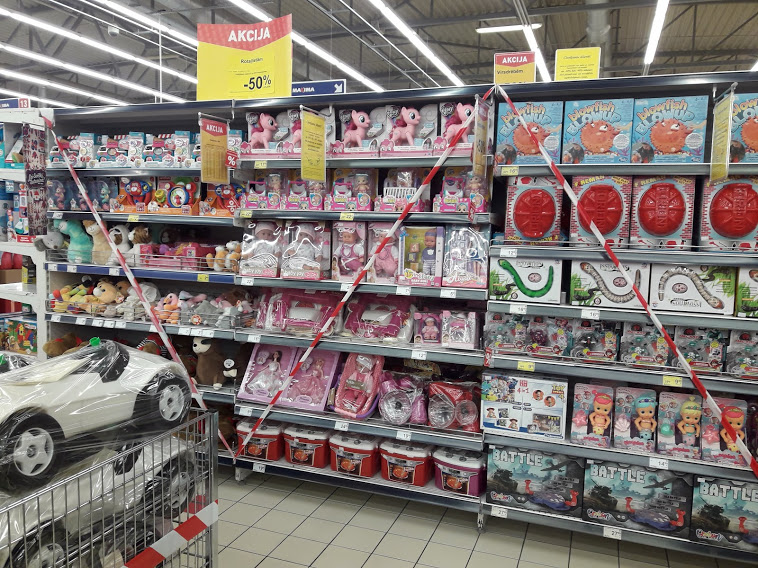
The fact is, fewer toys help children use and develop their imagination, lengthen attention span, promotes taking care of and valuing the toys they do have more while creating greater opportunities to explore nature. As a benefit to parents, fewer toys results in less clutter in our homes, helping us to feel more grounded, have more time to play with our kids and more patience to extend to our kids.
If our kids have fewer toys we want to make sure that the toys they do have provide the greatest play value. If, for example, a toy lights up or makes noises and all the child needs to do is press a button, that toy holds very little play value. Toys like wooden blocks or magnatiles or silk scarves don’t dictate the play to the child, they hold greater play value as the child is free to use their imagination for endless play possibilities.

The great irony is that, as a modern parent, it feels as though it is more difficult to have fewer toys in our homes than more. It’s hard to swim against the tide of the mainstream, but the juice sure is worth the squeeze.
In our own home, our family is very much still on this journey. As our son grows older new challenges present themselves and I find myself constantly evolving and explaining why he can’t have everything he sees. But the more we reinforce our family values, the easier it seems to become.
‘Minimalism is the intentional promotion of the things we most value and the removal of everything that distracts us from it. When we say no to more toys, we say yes to more important life lessons. We give our children the opportunity to be able to learn to truly value what they have. And we communicate that they don’t need to look to external sources of materialism to bring them temporary happiness or reassurance. Source


Share this:

Categories: Uncategorized



 Michael Walsh Stories and Books
One or two educational toys and teach them to read ( they can learn to read as soon as they start to speak) and supply as many books as possible.
LikeLiked by 1 person