




Elton John spoke for many people when he said: ‘I regard all pop music as irrelevant in the sense that people in 200 years won‘t be listening to what is being written and played today. I think they will be listening to Beethoven.’
Music we leave for the enjoyment of future generations will likely be compilations from the movies? Often, more money is taken from movie soundtracks than is taken at the box office. The story behind these compositions can be as interesting as the movie. One of the 20th Century’s most poignant melodies was Lara’s Theme that featured in Doctor Zhivago.
This haunting melody was not David Lean’s first choice. Unable to ascertain rights to a preferred Russian ballad, the film director turned to the composer Maurice Jarre.
‘Go up into the mountains and take your girlfriend with you. Write the music, not for the movie but for her.’
Lara’s Theme was the outcome but begs the question, who was the real Lara?
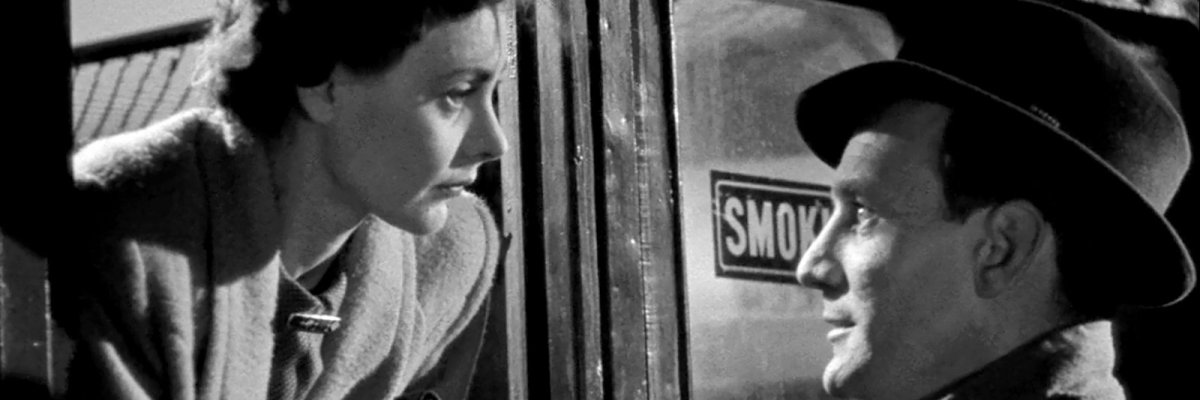
A similar mystery lies behind Sergei Rachmaninoff’s Piano Concerto No. 2. Voted the most romantic music ever composed it was the musical score for the award winning movie Brief Encounter. The 1945 film tells the heart-wrenching story of a middle class English wife and mum. Fate brings her to a brief encounter (hence the movie’s title) with a doctor travelling on the same train.
The tender romance between these two strangers begins when Laura Jesson (Celia Johnson) suffers a little grit in her eye whilst returning home from her weekly shop. A sympathetic Alec Harvey (Trevor Howard), a local doctor comes to her aid and removes the irritation.
The action or rather the lack of it, for the dalliance remains unconsummated, takes place at an urban railway station during the closing months of World War II.
Brief Encounter was a triumph for David Lean for the movie captured the mood of a sombre nation. The film came second in a British Film Institute poll (1999) of Top British films. But the big question is why Sergei Rachmaninoff’s Piano Concerto was chosen as the movie’s theme music. This remains one of the most profound mysteries.
As an interesting aside the movie was made in 1965 when it would have been impossible to make such a movie in the Soviet Union. David Lean chose instead Spain. The haunting panoramas of the steppe drew on Spain’s landscape with added studio magic but some parts were filmed in General Franco’s Madrid too. Do watch out for Don Quixote.
The answer reveals that David Lean, who took an interest in Russia, was likely inspired by the story of what inspired the Russian composer to compose what is regarded as the world’s most romantic composition.
Depressed after the failure of his first concerto the musician was referred to neurologist and amateur musician Dr Nikolai Dahl. Only after four months of remedial sessions did Rachmaninoff’s creativity return and his Second Concerto was the result. Howard Shelley, an expert on Rachmaninoff, reveals the true inspiration behind the Second Concert:
‘One member of Rachmaninoff’s family suggested to me that rather than Dr Nikolai Dahl’s hypnotherapy having been responsible for Rachmaninoff’s miraculous recovery, it was actually his interest in Dahl’s highly attractive daughter that got him composing again. Was that a brief encounter too? ~ Michael Walsh
FOLLOW MY BLOG to receive free stories as they break.

Share this:

Categories: Art and Culture




 Michael Walsh Stories and Books