




The ancient Spanish city of Salamanca, situated on the banks of the River Tormes, is one of the oldest university towns in Europe with a rich and elegant collection of Renaissance, Roman, Gothic and Baroque monuments. Among them are two majestic cathedrals built between the 12th and 18th centuries. The New Cathedral, constructed between the 16th and 18th centuries, features late Gothic style with a Baroque styled cupola. The cathedral’s vaulted stone ceilings contain graceful paintings and its sandstone walls are intricately carved. But one element is peculiarly out of place and out of time.

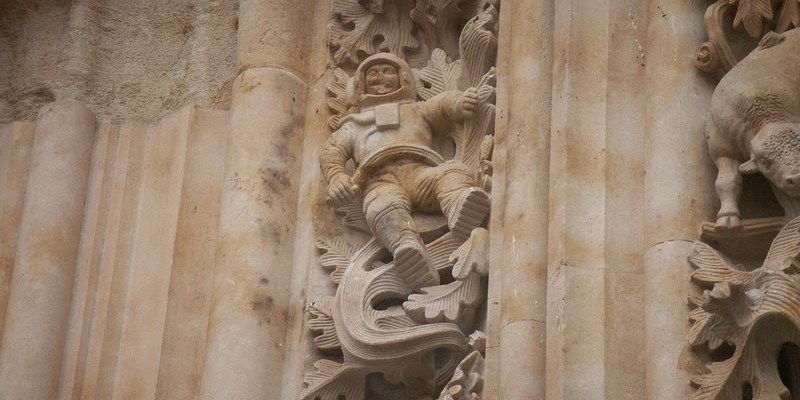
Over the cathedral’s northern entrance, perched high among the ornate carvings, is the unmistakable figure of a tiny modern astronaut floating in space. He sits on a stalk complete with boots, helmet, and breathing apparatus on his back with tubes attached to the front of his suit.
Photographs of this astronaut figure has been circulating on the Internet via email, online forums and blogs for years now, generating a considerable amount of debate. Some skeptical commenters believe that the photograph is a fake and the astronaut was added using image manipulation software, while other observers suggest outlandish theories of ancient alien visits and time travel.
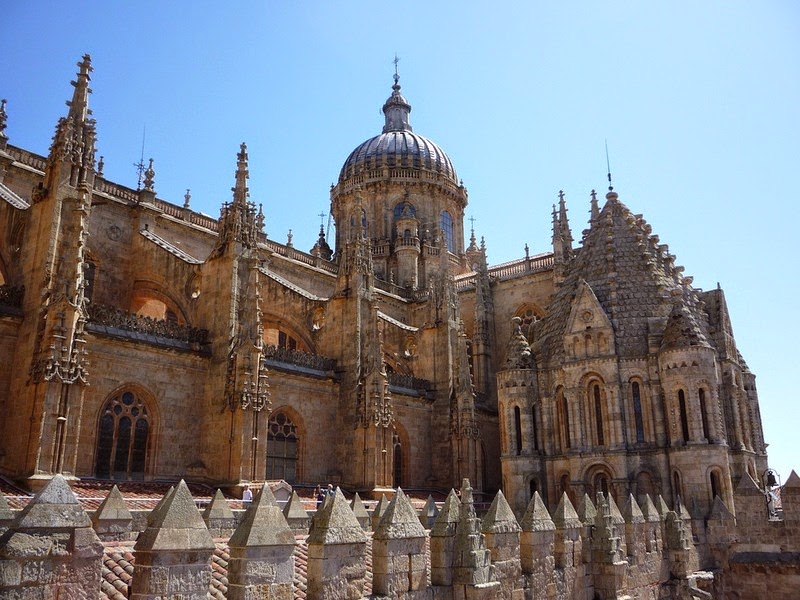
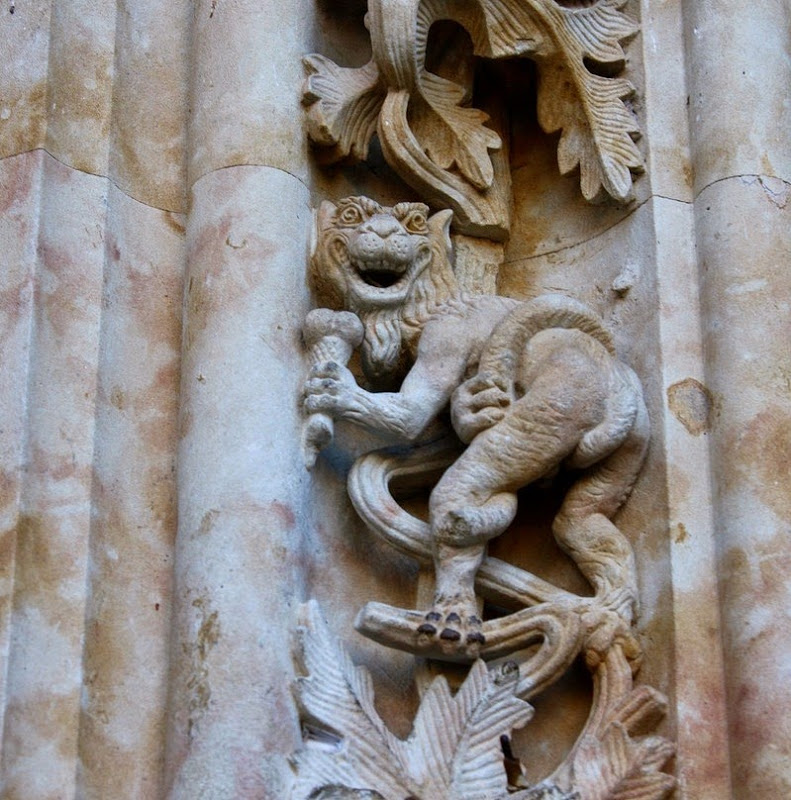
The figure of the astronaut exist for real, but it wasn’t carved in the 16th century but added much later during a restoration work that was done to the cathedral in 1992. The figure was purportedly added by stonemason Miguel Romero under the supervision of Jeronimo Garcia, the person responsible for the restoration, who reportedly chose an astronaut as a fitting symbol of the twentieth century. The use of this motif was in the tradition of cathedral builders and restorers who included contemporary motifs among older ones as a way of signing their works. Apparently, the astronaut isn’t the only contemporary symbol added to the cathedral’s facade. He is also accompanied by an ice-cream eating gargoyle grotesque, a lynx, a bull and a crayfish among others. Source



Apparently at the Puerta de Ramos of the Cathedral of Salamanca, several figures that are part of “their secrets” are gathered. We cannot leave out “a lucky rabbit” found there. It is claimed that the sculpture of this rabbit, or hare, gives luck to those who touch it, which is why it is already quite black, due to this contact, since the tourists who visit the Cathedral of Salamanca, do not miss an opportunity to rub it hoping to get lucky. A gypsy, who always begged at the doors of this Catholic structure, spread this belief.
Share this:

Categories: Art and Culture



 Michael Walsh Stories and Books
