




Claims that the ideals of Capitalism and Communism are diametrically opposed to each other is fake propaganda. Corporate and State Capitalism (ownership) are two sides of the same coin. The so-called Russian revolution was not accomplished by Russian speaking Russians; the regime change was financed by non-Russian banking houses, mostly but not exclusively situated in Wall Street, New York.
The profitable arms industries of the West were created by the illusion of threat from the Soviet Union (1917 – 1990). This fake news was kept going by mainstream media. ‘Ownership of the media is in the hands of the perpetrators.’ ~ Alexander Solzhenitsyn.
Many fake threats and wars have been created since the collapse of the USSR; Libya, Syria, Afghanistan, Iraq, Iran, North Korea, China and Russia. As a consequence, arms suppliers that invest heavily in politicians and the decision making process became omnipotent from the illusion that this dictator or that country is a threat to ‘our way of life’.
There is no confrontation between NATO and Russia or China. It is posturing. However, the illusion that the threat of conflict is ever-present keeps the arms industries and those who invest in these industries wealthy.
Some conflicts are real enough when there are easy pickings. The American army landed on the shores of Russia in 1918. Then Senator Pondexter wrote in the New York Times: ‘There is not a nation anymore (Imperial Russia). Only the territory remains. ‘So the Americans decided to take possession of this territory’.

In Europe, America’s allies were also working out how to feed on the cadaver of Imperial Russia. The Romanov Dynasty and Russian parliamentary system had been ‘thrown under the bus’ by Wall Street banking houses after their investing heavily in the Bolshevik overthrow of Imperial Russia.
England and France as Russia collapsed laid claim to Crimea, Ukraine, the Caucasus and the Baltic States. The Americans and the Japanese thought about how to grab Siberia, the Urals and the Far East. In addition, the US authorities had plans for the strategic European to conquer and occupy parts of the Russian North: Murmansk and Arkhangelsk 10,000 kilometres from American occupied Vladivostok.
History shows that US troops are traditionally late in arriving at international conflicts. Wars in the Middle East do not count. With the Arabs, you can fight with a limited contingent, without endangering one’s own state or the electorate caring much about it.
When, in 1918, it became clear to the Americans that Russia no longer existed and Germany was also exhausted, the American troops made their move and landed in Russian ports.

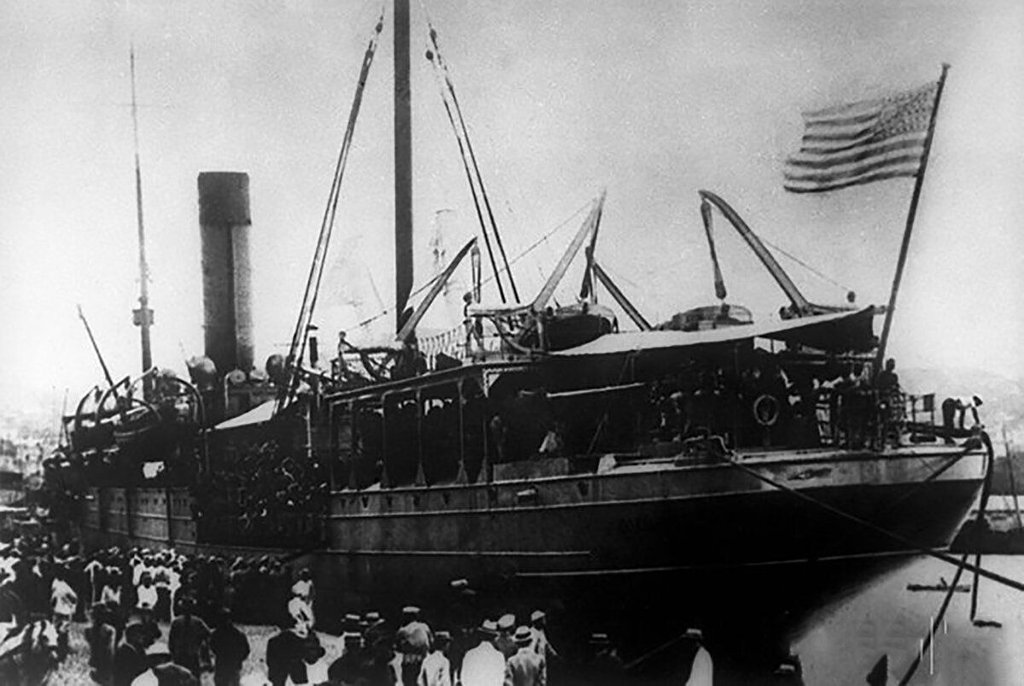
The Siberia Corps consisting of of 8,000 American soldiers appeared in Vladivostok, and in Murmansk and Arkhangelsk, American troops were called upon to carry out the mission dubbed Polar Bear.
At first glance, all this force had good intentions, according to mainstream media: to help the White Armies fighting the Bolsheviks, to protect the warehouses, and to deny the spoils of revolution from the Bolsheviks. The latter didn’t take kindly to the Americans sharing the remains of the overthrown Romanov Dynasty.
Colonel Morrow wrote in his diaries of how American soldiers shot Russian prisoners with machine guns every day. The victims, it is said by an American on-the-spot colonel, numbered 1,600 prisoners.
A concentration camp was set up in the White Sea on Mudyug Island. Everyone who was suspected of having links with the Bolsheviks were exiled there.
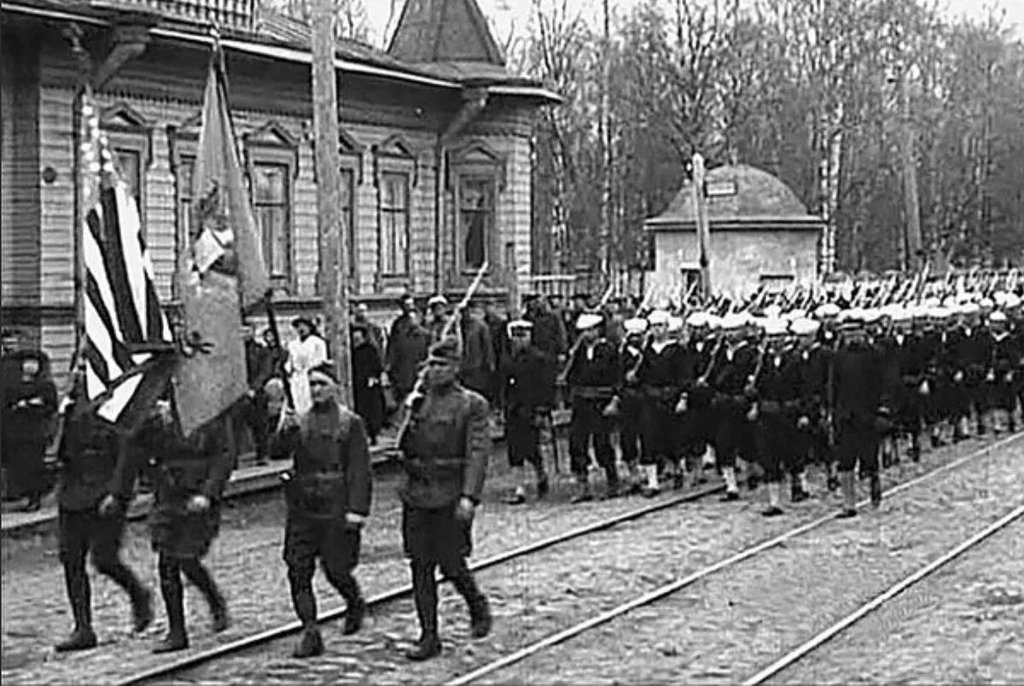
‘People were poorly fed, kept in terrible conditions, and left untreated. I was shocked by the situation; there are documents,’ said the Minister of Internal Affairs of the Northern Region Ignatiev. There were other horrifying concentration camps in the north.
Both the civilian population and the White Russians fighting the American-sponsored Bolsheviks were victims of the American marauders. American Brigadier-General Richardson recalled that his fellow soldiers robbed everyone in their path and destroyed everything. The (Russian) women and children fled from them ‘like a flock of sheep.’
In the Far East, it got to the point that the allies’ ataman Semyonov and the commander of American troops, Graves, became fierce enemies. In general, the Americans viewed the Russians as an inferior people. Let them, they say, fight among themselves, and we will look at this whole thing and take advantage of it.
The Americans, in fact, failed to seize any part of the Russian empire. Lev Trotsky’s (Bronstein) Red Army gained strength and territory whilst amassing the natural resources of the vastness of Russia whilst looting Russia’s banks.

The Americans were licking their World War I wounds and were sensitive to public disquiet and decided that it was not worth entering into armed adventures that looked likely to be prolonged, bitter and to face possible humiliation.
But, as with defeated Germany 25-years later, what parts of Russia the Americans did occupy was plundered. Timber, furs, gold, and other valuables were all taken out in wagons and shipped on to the United States. In 1919 – 1920, the American expeditions were successfully evacuated.
Occasionally, modern mainstream media and palace publishers speculate that the US is thinking about a second intervention. Allegedly by 2025 – 2030, Russia should cease to exist. Let’s see, I think such prospects are far from reality, given our thousand-year history. War cries are always the sound of arms industry salesmen rattling the begging bowls. Source, edited by Michael Walsh.
Share this:

Categories: Uncategorized



 Michael Walsh Stories and Books