




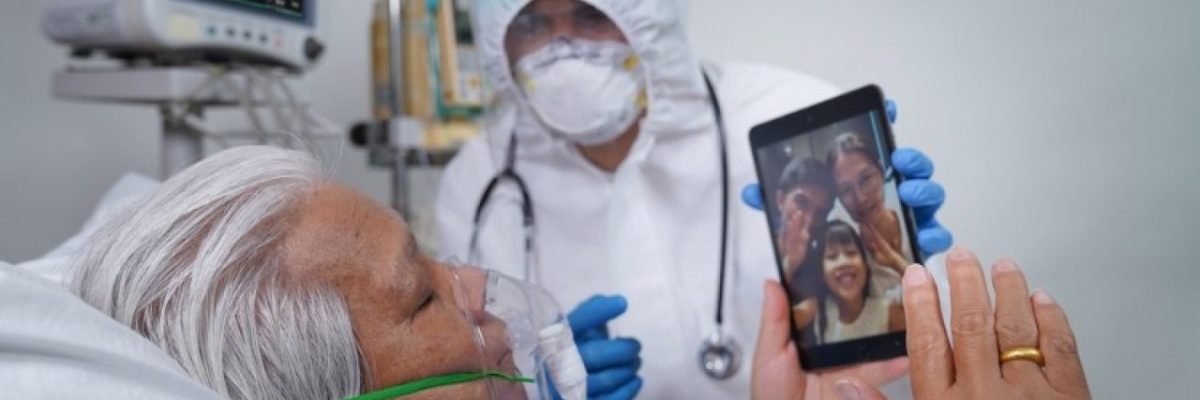
Many patients with coronavirus find themselves isolated from relatives for many months during treatment in care homes and hospitals and have no way of contacting them.
They found a way out in hospitals in the UK, USA and India, where laptop tablets are installed in wards. Nurses tell their ill patients, many of them of advanced years, how to use video communication services. In their own way, patients and doctors from Italy help out: they make farewell calls for those who want to say the last words to family and friends.
During the coronavirus pandemic, video calls are the only way to communicate with seriously ill relatives. In most cases, hospital staff will arrange the interview, Linda Gregson, a nurse in the intensive care unit in Blackburn, North West England, told CNN.
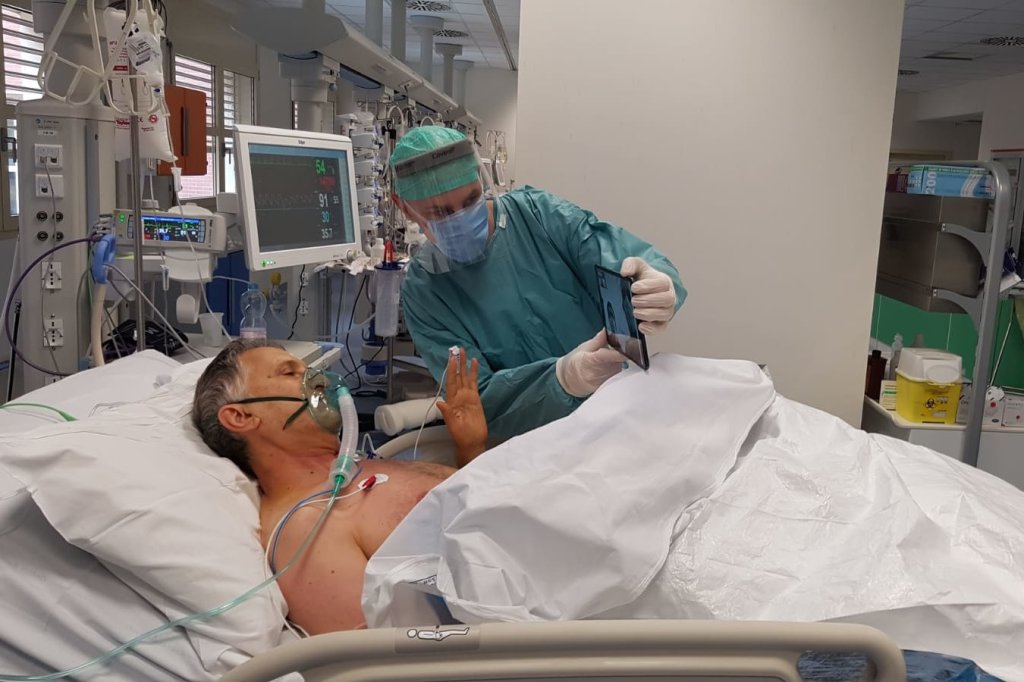
‘Some nurses show relatives via video link the procedures that the patient is going through. Sometimes you can hear the crying daughter screaming ‘please hold my father’s hand.’ Another phone call may, for some reason, end up insulting the health workers, but that does not stop us,’ says the medical worker.
The only obstacle to video calls is periodically the excessive eagerness of people to see their sick relative. Several times we had to interrupt calls to Zoom because there were too many relatives in the room, not keeping their distance. Once, 45 people gathered for such a call.
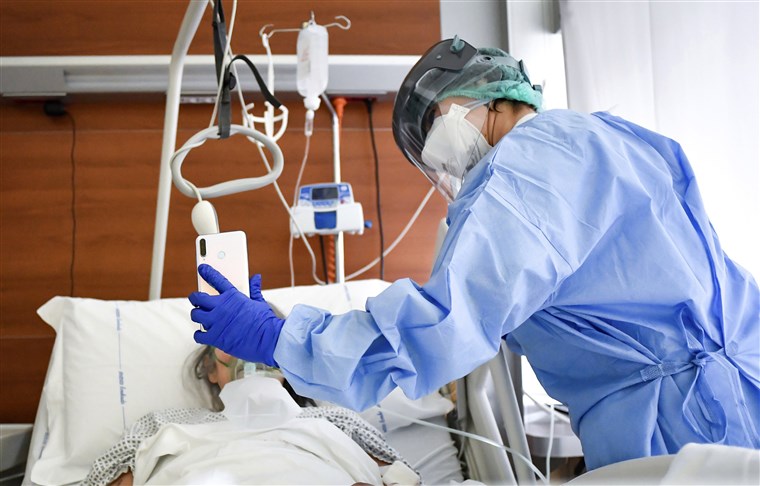
In many ways, the medical staff made it easier to communicate with the sick mother and the producer of the BBC television channel Andrew Webb. According to him, the nurses courageously put on protective equipment and went to conduct communication sessions for his family, while his mother was unable to hold the phone. Also on Skype, she was able to say goodbye to each of the relatives before her death.
‘My father said goodbye to his 50-year-old wife over the phone, even though he was only 30 km away. A few hours before her death, I connected to the phone and heard my mother shout out the names of her family and friends. I calmed her down for 15 minutes and talked to her until she fell asleep. She didn’t wake up anymore, ‘the publication quotes Webb.
In some clinics in England, doctors have also organised special ‘Liaison Hours’. So, you can organize a 15-minute communication session with a hospitalised relative from Monday to Friday from 10.00 to 18.00 and on weekends from 9.00 to 16.00. To do this, it is enough to send a letter to the hospital’s mail or call a specially designated telephone line.
In the United States, individual hospitals have also installed tablets in the wards of patients with coronavirus, from which they can make video calls to their loved ones. At the same time, it will be possible to contact relatives even if you did not have to use such services before. Trained nurses help you deal with applications and master a new type of communication.
Nevertheless, such a well-oiled mechanism does not work in every European country. For example, a doctor at the San Carlo Borromeo Hospital in Milan, Francesca Cortellaro, arranges communication sessions for patients with relatives on their own, without the help of a guide.
‘Patients with COVID-19 die alone, without the presence of relatives. When death is near, they know it because they are conscious.
In my practice, there was such a case when my grandmother wanted to see her granddaughter. I pulled out my phone and made a video call to her. They said goodbye. She died shortly thereafter. I have a long list of these video calls I call it the farewell list. I hope they give us an iPad. Just three or four will be enough to keep people from dying alone, ‘she complained to Italian Il Giornale.it. Source





Share this:

Categories: Uncategorized



 Michael Walsh Stories and Books