




PLUNDERING DEFEATED GERMANY a series of four investigations into the Soviet pillage of defeated Germany. Follow us to make sure you don’t miss this or other breaking stories. Read Part I
INTELLECTUAL TROPHIES

In addition to the removal of material values, the work of 2 million German prisoners of war who worked on Soviet construction sites and the creative potential of German scientists should also be included in the reparations account.
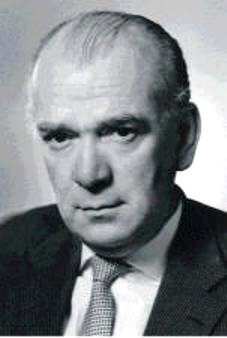
In June 1945, 39 German atomic physicists were sent to the research centre near Sukhumi, one of whom, Professor Nikolaus Riehl, later received the title of Hero of Socialist Labor. In total, about 2,0000 people were removed from Germany who were related to nuclear research. After testing the Soviet atomic bomb, they were returned to Germany in the 1950s.
Sergei Korolev successfully worked at the German missile centre on the Peenemünde Island, however, after the Americans had already removed all the most interesting from there. But Korolev also managed to deliver 150 V-2 turbines, 20 sets of graphite rudders and other equipment to the USSR.

In May 1946, more than 150 German specialists in rocket technology arrived in the USSR, along with the families of about five hundred people. Among them there were 13 professors, 32 doctors-engineers, more than a hundred graduated engineers.
In Kuybyshev, now Samara, at Experimental Plant No. 2 in the village of Upravlencheskoye, about 770 German specialists from the YUMO and BMW firms lived and worked. They created a prototype of the engine, which, after revision, was named NK-12 and was used for the Tu-95 strategic bomber.

German radar specialists worked in KB-1 during the period 1945-1953. The idea of using anti-aircraft guided missiles arose in Germany at the end of World War II, methods of protection against aviation bombings were sought, then the first complexes with radar observation and manual missile control appeared. The post-war leap in the development of Soviet radar technology was almost entirely based on German inventions.
The most famous German development of the gunsmith Hugo Schmeisser in the USSR is the StG 44 assault rifle, later called the Kalashnikov assault rifle. Schmeisser together with German specialists and documentation for the rifle, was forcibly taken to the Soviet Union, where he was engaged in fine-tuning and setting up serial production.

In total, about 10 thousand Soviet specialists sent to Germany and countless number of their colleagues at home was engaged in the study of trophy technologies. At the same time, as the researcher Mikhail Semiryaga writes in his book: ‘We were everywhere looking for German designers, jet aircraft, heavy tanks, and were not interested in what was related to the production of goods for the people.’
It would be naive to believe that with such a gigantic transfer of values from Germany to the Soviet Union, everything will end up in the people’s bins and for the people’s needs. It is clear that high military ranks, organizing the collection and dispatch of German goods, under the supervision and participation of SMERSH, were taking a little exclusive for themselves and their superiors, but more on that later.

The main consumers of thieved goods were not at the front, but sat thousands of miles away in quiet, modest offices. These are, first of all, the party and Soviet apparatus, the military command, and even the trade union bosses. Again, it would be naive to think that in a country with heightened social justice, officials will shamelessly appropriate cars, furniture and carpets, silverware and china, fur coats, shoes, suits, underwear.

Far from it! They bought it in special distributors such large and secret warehouses, where ordinary people were forbidden to enter. They bought for small change, something that cost thousands and tens of thousands of freely convertible currency.
True, this process was organized very specifically, focused on the status of an official. At first, German goods were ‘sorted out’ by Muscovites (citizens of Moscow), the central apparatus of the party, government, ministries and departments. Then it was distributed among the republics and regions. There, the process was repeated, senior bosses were selected, then younger ones, and so on along the power hierarchy. ’Illiquid’ descended into areas that, given their poverty, were happy about anything.

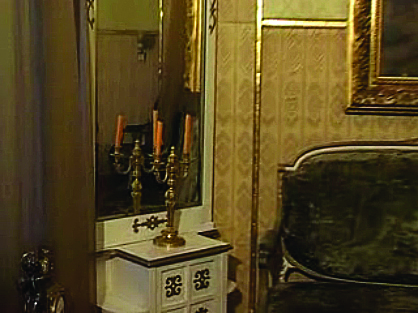

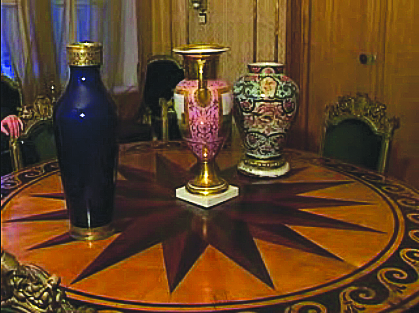
The original furniture from the old Potsdam castle of Sanssouci, where the Reichsmarschall Hermann Göring lived, was kept in the Arkhangelsk Garrison Officers’ House for almost 65 years. The collection included a table, gilded bog oak chairs with knightly coats of arms on the backs, antique handmade mirrors, Chinese vases depicting the castle where Hermann Göring lived, and many other things.
You ask: what did the people get? And the people got the lion’s share of what was exported, factories, factories, equipment, machines, and livestock. And of course, some of the ‘imported garbage’ left by the district authorities. But since there was little and unnecessary, it was solemnly distributed between sanatoriums, boarding schools, clubs, theatres so that everyone could use it and feel like a winner. And there were pianos, billiard tables, heavy chandeliers and even paintings in provincial museums for 50-70 years. In general, the good was divided quickly and fairly. To be continued…
Related books : WITNESS TO HISTORY, THE RED BRIGANDS, RANSACKING THE REICH, SCULPTURES OF THE THIRD RIECH: ARNO BREKER AND REICH SCULPTORS , SCULPTURES OF THE THIRD RIECH: JOSEF THORAK AND REICH SCULPTORS, THE ALL LIES INVASION, DEATH OF A CITY.
Based on materials from websites: http://www.perspektivy.info ; http://istorya.ru ; http://e-news.su ; http://crime.in.ua ; https://www.crimea.kp.ru ; https://novosti-n.org .
Share this:

Categories: Uncategorized



 Michael Walsh Stories and Books
*It?s hard to find knowledgeable people on this topic, but you sound like you know what you?re talking about! Thanks
LikeLike